
In Ukraine, 14 solar power stations (SPS) have been installed for state institutions – ranging from the Ministry of Internal Affairs to the Customs Service – at the expense of the Decarbonisation Fund, which is financed by an eco-tax on CO₂ emissions from private businesses. In total, such projects have been implemented in eight regions of Ukraine.
This information was provided by the Decarbonisation Fund of Ukraine.
All SPPs are equipped with energy storage systems, which allow energy to be stored during periods of peak generation for use when output drops. The work was carried out as part of the ‘Energy Independence’ programme. According to the organisation, the programme aims to enhance the energy autonomy and resilience of state authorities.
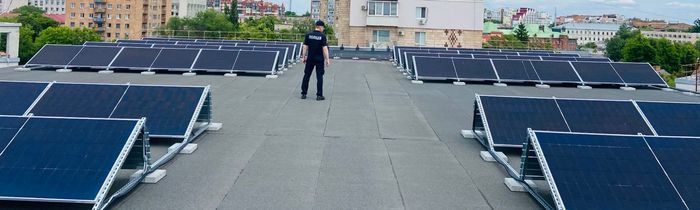
Source: Decarbonisation Fund
For instance, the State Border Guard Service in Lviv region received two SPPs, while the National Police received two in Volyn and Poltava regions. The State Property Fund and the Ministry of Youth and Sports of Ukraine have also received their own solar plants.
“Behind each such project lies a great collective effort and a simple but extremely important task-to ensure that government institutions in Ukraine operate stably, have reliable power supply, and become stronger with each new step,” emphasized Anna Zamazieieva, Head of the State Agency on Energy Efficiency and Energy Saving of Ukraine.
Energy efficiency instead of decarbonisation
As EcoPolitic previously reported, a significant share of the environmental tax on carbon dioxide emissions is accumulated in the Decarbonisation Fund. This tax is paid by enterprises that produce emissions during their manufacturing processes.
Thus, energy efficiency is one of the focus areas of the Fund. However, decarbonisation-ostensibly the institution’s main purpose-often takes a back seat.
The implementation of the “Energy Independence” program once again highlights that the private sector cannot benefit from a resource that it itself generates.
EcoPolitica has previously provided a detailed account of the Decarbonisation Fund, its sources of funding, and the projects it supports.