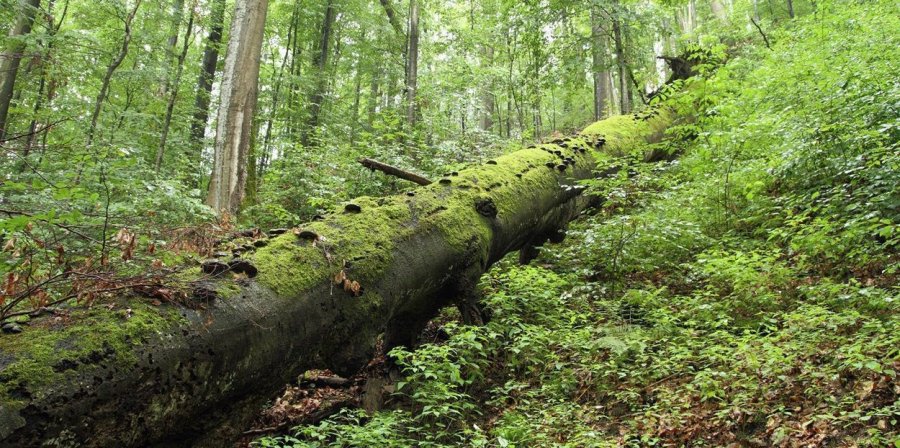
Within Ukraine, primeval forests that have not been affected by human activity cover just 100,000 hectares. This represents around 0.1 per cent of the country’s total forest area. However, the conservation of these and other natural landscapes that have not yet been spoiled by human activity will not help Ukraine reach the European benchmark. Nevertheless, it is worth striving to at least come closer to it.
This was reported by the media outlet ‘Tvoe Misto’, citing a presentation by Ukrainian environmentalists at the ECO FILM FESTIVAL, an international environmental film festival.
A huge gap
Unlike the European Union, where the proportion of land designated as protected areas stands at 26 per cent, in Ukraine only around 6.7 per cent of the territory has this status. And this figure includes protected areas that are currently under occupation.
"A significant proportion of these areas are artificial conservation zones that cannot be regarded as valuable natural ecosystems. If these are excluded, the area of truly valuable nature conservation areas in Ukraine amounts to less than 4 per cent," said Andriy Tupikov, an ecologist and leading expert at the Ukrainian Nature Conservation Group (UNCG).
Conditional protected status
Ukraine may resort to underhand tactics to increase the amount of protected land. Vasyl Movchan, head of the Department for the Support of Protected Areas at the Frankfurt Zoological Society, has stated that the Ministry of Economy is proposing to create an entirely new category of protected sites. These would include damaged, polluted or mined areas. However, the environmentalist warns that this will have a purely ‘paper’ effect and will not actually help to save valuable natural ecosystems.
"If we grant nature reserve status to mined fields, burnt-out forest strips or polluted industrial areas, the state will artificially inflate the proportion of protected areas on paper alone. At the same time, genuine wild ecosystems will remain unprotected, and we will continue to lose the natural areas that exist in the Carpathians,” emphasised Vasyl Movchan.
This approach may only be appropriate if applied to land with a high potential for self-regeneration. This includes forests, meadows and river valleys. However, it will not work on land that has simply been burnt or polluted.
The Fate of the Primeval Forests
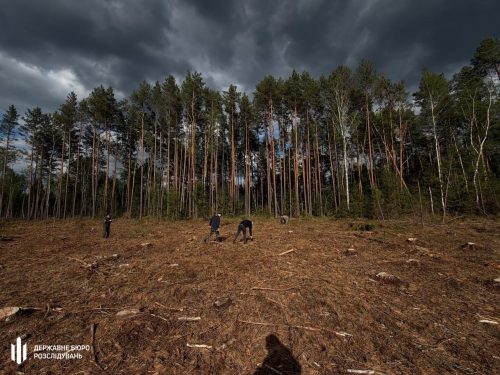
Whilst the authorities are looking for bizarre alternatives, truly valuable areas are being destroyed. First and foremost, we are talking about primeval forests. According to a conservationist, 90 hectares of such woodland were felled on the Runa mountain pasture alone. In total, only 100,000 hectares of such woodland remain in Ukraine.
Once a primeval forest has been destroyed, it cannot be restored. Such natural ecosystems took millennia to form – they developed naturally, growing and dying off. This gave rise to a unique ecosystem free from human influence.
Mission Impossible
Due to intensive economic activity, Ukraine has already missed its chance to achieve European standards of nature conservation. According to Andrii Tupikov, this is impossible, even if Ukraine were suddenly to cease all environmentally damaging activities and grant nature reserve status to all natural areas that have not yet been damaged.
"Around 56 per cent of Ukraine’s area consists of fields, arable land, settlements and road infrastructure. There is no point in designating small, isolated areas as nature reserves, as they will not be viable. If we assess the potential of Ukraine’s entire territory, then at best we can achieve 24 per cent protected area coverage," says the ecologist.
As a reminder, an area of primeval forest was cleared to make way for the construction of a road to the Runa mountain pasture – where a wind farm is being built. Subsequently, the court ruled that the felling of these trees was unlawful, but the area cannot be restored.