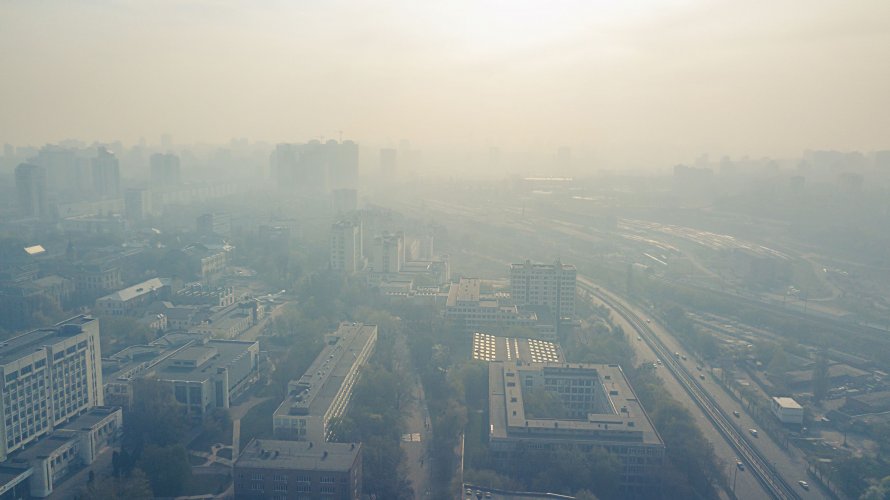
In most of Ukraine’s major cities, residents need not worry about air quality. However, there are exceptions where pollutant levels are several times higher than the norm.
This is evidenced by data from the international monitoring platform IQAir.
Based on average figures, air quality in Kyiv is in the ‘green’ category. The concentration of the main pollutant — PM2.5 particulate matter — is slightly above the limit, but not critically so. Its average concentration in the air is 6.9 µg/m3. According to World Health Organisation standards, the upper limit for PM2.5 is 5.5 µg/m3.

However, air quality is a cause for concern in some areas. For example, in Khotov, on the outskirts of the capital, pollution levels are in the ‘orange’ zone, meaning they are hazardous to vulnerable groups. There, dust levels exceed the standard by more than 8.5 times, standing at 47.4 µg/m3.
Average pollution levels have been recorded at a number of locations within the city. These include Yevhen Konovalets Street (dust concentration – 10.4 µg/m3), Sichovykh Striltsiv Street (13.9 µg/m3), Kakhovska Street (15 µg/m3) and Hotkevych Street (15 µg/m3).

As of the morning of 11 September, good air quality was recorded in virtually all regional centres. The average dust concentration in the air in some of them was:
- Dnipro — 6 µg/m3;
- Odessa — 4.6 µg/m3;
- Lviv — 3.5 µg/m3;
- Zhytomyr — 3.6 µg/m3;
- Poltava — 6.5 µg/m3;
- Vinnytsia — 4.1 µg/m3;
- Cherkasy — 3.7 µg/m3;
- Ternopil — 8.2 µg/m3;
- Chernihiv — 3.9 µg/m3.
However, there are some significant exceptions. According to IQAir’s methodology, the air quality in a number of cities falls into the medium-risk category. These include:
- Rivne — 13.9 µg/m3;
- Chernivtsi — 11 µg/m3;
- Kharkiv — 9.4 µg/m3;
- Zaporizhzhia — 10.3 µg/m3.
EcoPolitic previously reported that Ukrainian scientists had investigated the impact of the war on air quality. You can find out more about this in this article.