British startup Bactery has developed an environmentally friendly soil battery technology. It uses the electrons produced by soil bacteria in the course of their life.
Euronews reports on this latest development.
Bactery batteries powered by bacteria are based on “soil microbial fuel cells” (SMFCs). They capture energy from natural chemical reactions that occur in soil microorganisms.
Carbon electrodes are placed in the soil and connected to an external circuit. This system transmits electrons generated by certain bacteria as they consume organic compounds from the soil, converting them into electricity.
Stacks of these cells can be connected to a battery to store this energy.
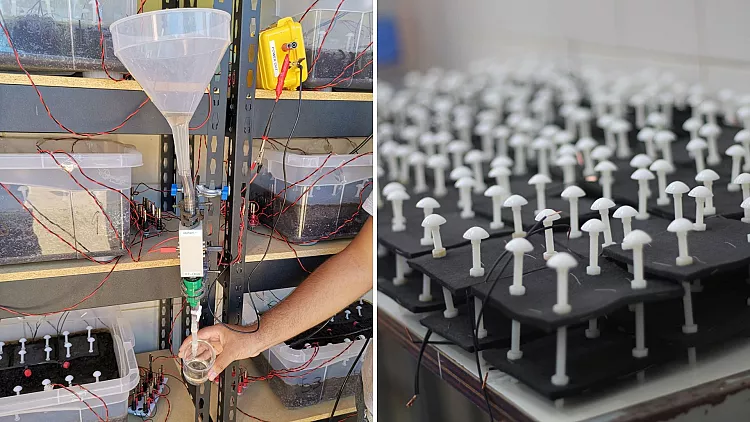
Photo:
"This know-how has allowed us to develop solutions that stimulate and control selective processes in the ground, allowing us to maximize energy extraction and maintain continuous electricity production for many years," says Dr. Jegelowski, one of the developers of the technology.
In the next 12 months, his company Bactery will continue to refine its prototypes with the goal of launching small-scale production before launching a commercial product in 2026.
The developers say the batteries, which feed soil bacteria, can last for more than 25 years and cost just £25 (€30) per unit, requiring no maintenance.
The company's founders hope the technology will accelerate the transition to data-driven agriculture, helping farmers increase yields and conserve resources without the need to install expensive and difficult-to-maintain energy infrastructure.
In March, EcoPolitic told about the Ukrainian company COR-Energy, which successfully tested a prototype of an innovative energy storage device.