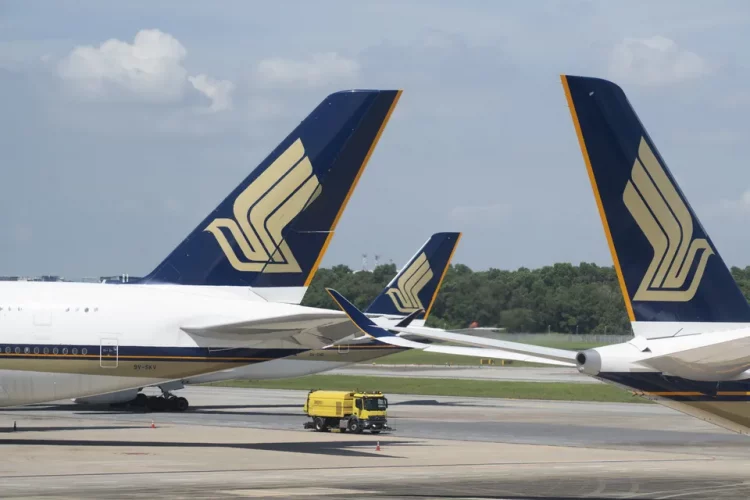
The city-state of Singapore will introduce a "green levy" on airline tickets this year. The funds will be used to centrally purchase sustainable aviation fuel (SAF) in order to reduce emissions from air travel. To ensure the program's effectiveness, it will be tested on tickets sold from April onwards.
According to Bloomberg, nine private companies will participate in the voluntary trial, including Alphabet-owned Google, Singapore Airlines, and DBS Group Holdings.
System testing
The Sustainable Aviation Fuel Company is being established in Singapore to centrally purchase eco-friendly fuel for aircraft. Testing with private companies will allow all processes—commercial, operational, and accounting—to be fine-tuned.
The "green" levy will apply to tickets sold from April 1 for flights departing from Singapore after October 1. The environmental aviation tax will amount to up to S$41.60 (approximately $32.73).
Environmental goal and obstacles to achieving it
Singapore's initial plan is to ensure a 1% share of clean fuel. This was announced in a statement by the country's Civil Aviation Authority. The goal for 2030 is to increase the share of eco-fuel in local aviation to 3-5%.
The new aviation tax is intended to finance the purchase of SAF. This type of fuel is usually made from waste oils or agricultural products.
All discussions about the need to use clean aviation fuel usually come down to its cost. It is 2-5 times more expensive than conventional jet fuel.
In 2025, SAF accounted for only 0.6% of total aviation fuel consumption. However, according to the International Air Transport Association (IATA) forecast, the pace of eco-fuel production will slow down this year.
EcoPolitiс previously reported on the environmental harm caused by civil aviation. Emissions from just 20 of the world’s largest airports are comparable to those generated by 58 coal-fired power plants.