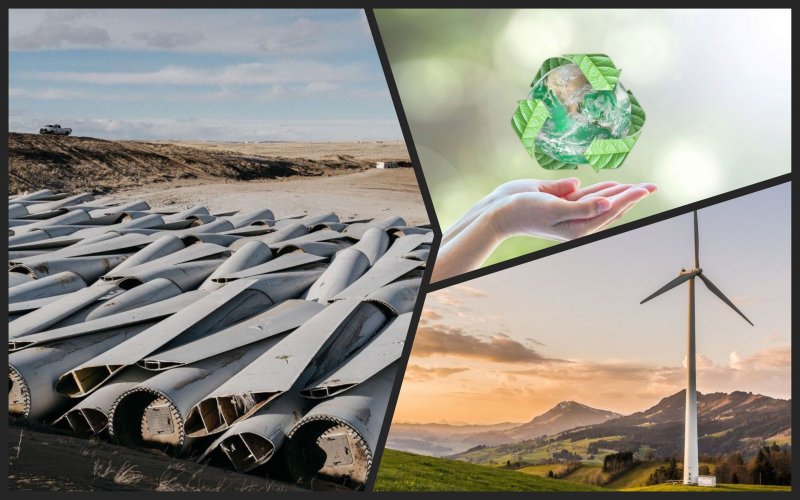
Danish wind turbine giant Vestas has announced a new chemical solution that will break down and recycle wind turbine blades made from tough epoxy resin.
Currently, at the end of their service life, the blades end up in landfills, where they remain for years, reports Bloomberg.
"This signals a new era for the wind industry," Vestas said in a statement.
The company explained that the technology can be used both on old blades that have already ended up in landfills and on operating wind power plants.
It is noted that the chemicals are the result of the joint work of scientists from Aarhus University in Denmark and the American Olin Corporation. Vestas plans to launch a pilot project to recycle the blades before expanding to commercial scale. The cost of the project is not disclosed.
"This is a potential solution to what could become a huge problem in the sustainable development of the wind industry," the article emphasized.
Industry organization Wind Europe estimates that by 2025, about 25,000 metric tons of blades per year will be decommissioned, and by 2030, this figure will reach 52,000 tons. The group called on the European authorities to ban shovels from being sent to landfills.
As EcoPolitic reported before, researchers from the University of Michigan, USA, created composite resin for wind turbine blades, which, at the end of its useful life, can be recycled into chewing candies and sports drinks.