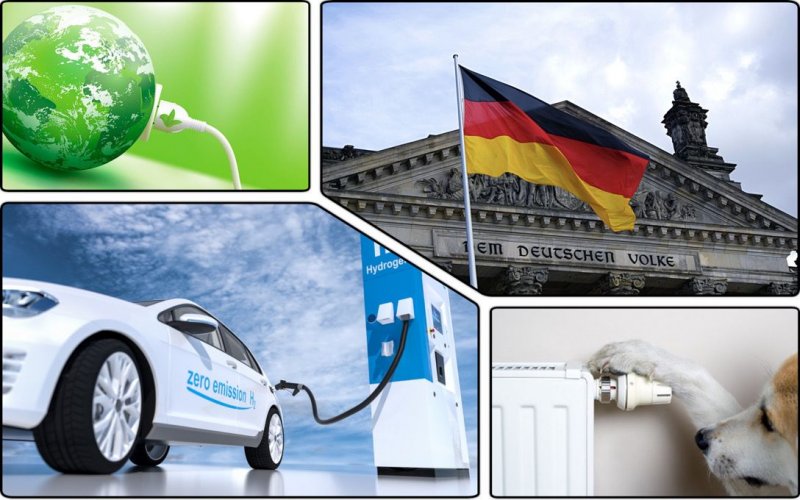
In Germany, they want to decarbonize the road transport and heating sectors through the use of green hydrogen.
The country's government is expected to approve the corresponding national hydrogen strategy by the end of July, reports Hydrogen Central.
The article emphasized that the use of green hydrogen in road transport and heating is controversial. After all, it will require more energy than switching to electricity.
"Many experts and climate activists call the use of hydrogen in heating and road transport an unrealistic 'bogus' solution supported by the fossil fuel industry," said Hydrogen Central.
It is noted that Germany's hydrogen strategy was developed for the first time in 2020. Scaling up the hydrogen economy is considered a key element in achieving national climate goals.
The material emphasized that the new strategy by 2030 increases the target capacity of the domestic electrolyzer for the production of green hydrogen to at least 10 GW from the previous 5 GW. In addition, it is planned to lay 1,800 kilometers of pipelines by 2027-2028.
Earlier, EcoPolitic wrote, that German Chancellor Olaf Scholz announced that new gas-fired power plants will be built in the country, which will run on hydrogen.
As EcoPolitic previously reported, a network of more than 100 hydrogen stations for heavy transport will be built on the main roads of Europe, in particular Germany.