Accounting firm Ernst & Young has named India – along with the US and China – as one of the world's most attractive solar markets in 2022, as the country is set to install a record amount of solar power in 2022.
India's latest National Power Plan has set a target of increasing solar power generation by 24% by 2027, marking a "quantum leap" for the country's renewable energy sector, reports NPR
The article said that India currently gets about 70% of its electricity from burning coal, adding to air pollution that is already among the worst in the world.
According to UN forecasts, the country will soon become the most populous country in the world, and in 2023 it will surpass China in terms of this indicator.
“As India grows and its 1.4 billion people become wealthier, its energy needs grow. Unlike many Western countries that have committed to curbing overall emissions, India measures its emissions in proportion to its gross domestic product," the article says.
The authors emphasized that the Indian government has pledged to reduce the so-called "emissions intensity of its GDP" by 45% by 2030. And at the Climate Summit COP27, the country promised to provide half of its energy needs with non-fossil fuels by 2030.
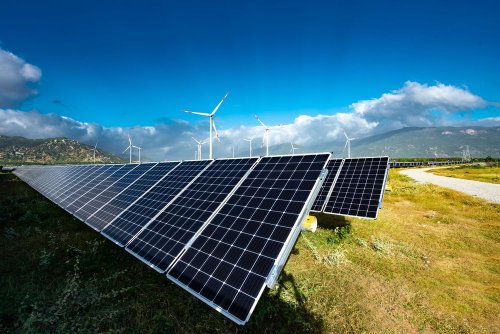
The article pointed out that most of India's renewable energy comes from huge solar power plants in the deserts of Rajasthan and Gujarat. Many are public-private partnerships run by utility companies that send power to the grid. The Indian government is also opening up more coastal areas for offshore wind energy.
In addition, Indian farmers often use one or two solar panels to power irrigation pumps in rural areas where the electricity grid is shaky. But solar panels on the roof have not become widespread in Indian cities.
"I think it's one of the fastest-growing industries in the country," said climate change expert Suruchi Bhadwal. "Even the US hasn't increased its installed capacity that fast."
The authors emphasized that China and the US are still investing more annually in renewable energy sources. But India's investment – particularly in solar – is growing faster because of what Bhadwal calls an "aggressive" government campaign.
Energy economist Vibhuti Garg of the Indian Institute of Energy Economics and Financial Analysis explained that to achieve its goals, the government is offshoring the production of solar panels on land, subsidizing investments by Indian companies and waiving renewable energy transmission fees.
"India is making tremendous progress in renewable energy deployment, investment as well as capacity. In fiscal year 2021-22, we saw a record $14.5 billion investment in renewable energy alone," he said. "In addition, there was investment in infrastructure development." transmission and distribution, network modernization. A certain amount of money even went to battery storage."
Garg also added that to increase the number of residential solar rooftops, the government has launched a new solar web portal where anyone who wants to install solar panels can register for government subsidies.
The article also noted that solar panels manufactured in India have also started to be used in the country. Although silicon for them is supplied from China, such panels are much cheaper, which, according to experts, will contribute to the deployment of SPP. And in the next 10 years, according to economists, solar energy may become the cheapest source of energy in India.
Earlier, EcoPolitic wrote, that the Indian company Adani Green Energy Limited put into operation the country's first hybrid wind-solar power plant.
As EcoPolitic previously reported, Oil India Limited, the state oil company of India, commissioned the country's first green hydrogen plant with a purity of 99.999%.