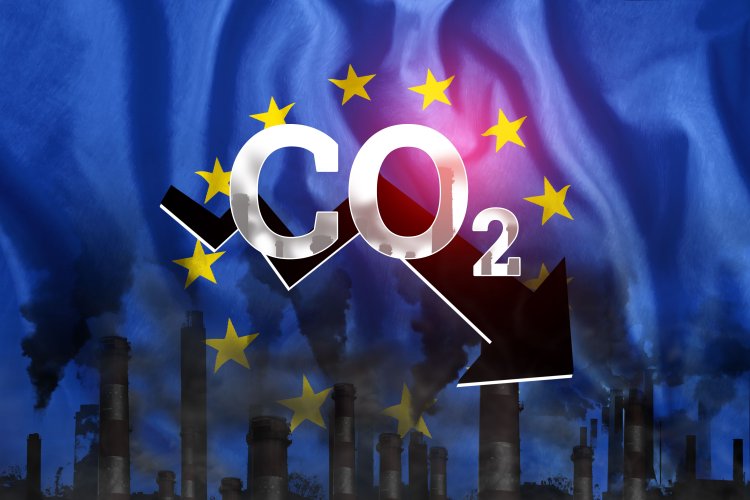
The European Commission has unveiled ambitious climate targets for 2040, which include a 90% reduction in emissions.
This has sparked a powerful political debate and pressure from energy-intensive businesses on national governments over fears of an economic crisis, Bloomberg reports.
This happened four months before the all-bloc parliamentary elections.
It is noted that the new target provides for a deepening of emission reductions by 2 percentage points compared to the current plan. Also:
- wider phase-out of fossil fuels;
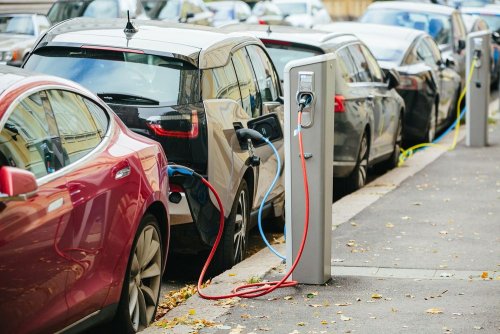
- rapid electrification of road transport and heat supply sectors;
- strengthened industrial policy with financing mechanisms;
- a plan to attract private capital.
The EU estimates that to achieve the goals, it will need to invest about €1.5 trillion annually between 2031 and 2040. In addition, the new target sets stricter rules for the agricultural sector.
It is noted that the announcement of the target came after farmers' protests in France and Belgium, which creates political risks for the bloc. As well as for the President of the European Commission Ursula von der Leyen, who is likely to run for a second term in office.
MEP Peter Liese emphasized that in order to realize such an ambitious goal, the EU should make more efforts to:
- solving issues of international cooperation in the field of climate;
- improving net investment conditions for industry;
- providing incentives for farmers;
- more targeted support for the most vulnerable segments of the population.
"It's easy to set a number, but it's more ambitious to make the transition for the industry and citizens," he said.
In a press release, the European Steel Association (Eurofer) also criticized the new climate target, as it requires an unprecedented transformation of society and almost complete decarbonization of industry in just 16 years. However, there is still no clear business case for the steel industry to make the transition, and investment remains at an alarmingly low level.
Eurofer stated that the EU needs a concrete approach that would urgently provide an investment-attractive framework with affordable energy and an international market.
"The EU steel industry supports the EU's goal of climate neutrality by 2050 and has launched more than 60 projects which, if effectively supported, will deliver significant emissions reductions by 2030. The EU-wide 90% target by 2040 means almost complete decarbonisation of energy-intensive industries such as as a metallurgical industry," said CEO of Eurofer, Axel Eggert.
He noted that in the absence of proper enabling conditions and a sharp increase in investment needed for the transition, such a climate target calls into question the economic and technical feasibility of EU climate policy.
According to him, it could contribute to deindustrialization, which would undermine the EU's sustainability and strategic autonomy. Therefore, achieving this goal requires a more in-depth assessment, taking into account international competitiveness.
Earlier, EcoPolitic wrote, that the interim analysis of the European Environment Agency provided a disappointing assessment of progress in achieving most of the EU's environmental goals and contains skeptical forecasts for achieving these goals in the future.
As EcoPolitic previously reported, a study by the climate activist group Global Witness showed that demand for natural gas in Europe will lead to new investments in the production of this fuel worldwide in the amount of $223 billion by 2033.