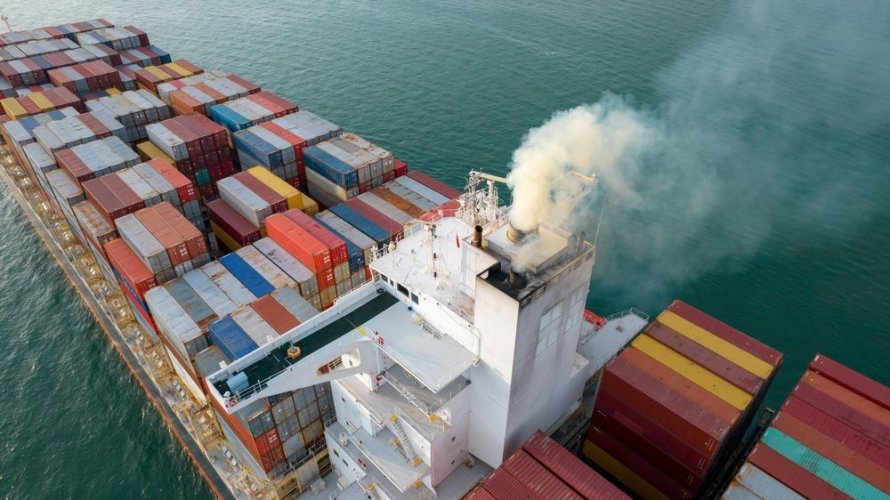
French transport company CMA CGM Group, engaged mainly in sea container transportation, creates a Special Energy Fund of $1.5 billion over 5 years to accelerate the energy transition.
The fund will invest in renewable energy projects for all the group's enterprises and will cooperate with other corporations and researchers in the search for solutions for decarbonization, reports The Maritime Executive.
The program will start in October 2022 and will focus on the industrial production of new fuels, as well as low-emission mobile solutions for sea, land and air transport.
In addition, CMA's port and logistics services and offices focused on producing renewable fuels, accelerating the decarbonisation of land-based operations, supporting new projects, creating a management plan for the group's offices and engaging employees in such efforts, including working from home and changing travel patterns.
"This fund will allow us to make significant investments in innovative projects to decarbonize our business," said Rodolphe Saade, Chairman and CEO of CMA CGM Group. "We have allocated the resources needed to accelerate our energy transition and the entire shipping and logistics industry."
The article noted that the CMA has already taken steps to introduce vessels running on liquefied natural gas and support alternative fuel production projects. However, the fund should facilitate the emergence of capacities for the industrial production of biofuels, biomethane, e-methane, carbon-free methanol and other alternative fuels and ensure the availability of sufficient volume to meet the group's needs.
In addition to the shipping fleet, the fund will also seek to accelerate the decarbonization of port terminals, warehouses and truck fleets managed by CMA CGM. Among the efforts are wind, solar, biomass and hydrogen solutions. A transition plan will be developed for the fleet with an emphasis on electrification.
The fund will also expand the group's work with research projects. In particular, participation in Energy Observer 2, which is working on a prototype of an intra-regional container ship on liquid hydrogen.
Earlier, EcoPolitic wrote, that in Belgium, in the port of Antwerp-Bruges, the manufacturer of electrolyzers Plug Power from the USA will launch a plant in 2025 with production of 12,500 tons of green hydrogen every year and with a capacity of 100 MW.
As EcoPolitic previously reported, NATO is planning to reduce emissions by 45% by 2030 and to reach net zero by 2050, because it views climate change as a serious challenge in the field of security.