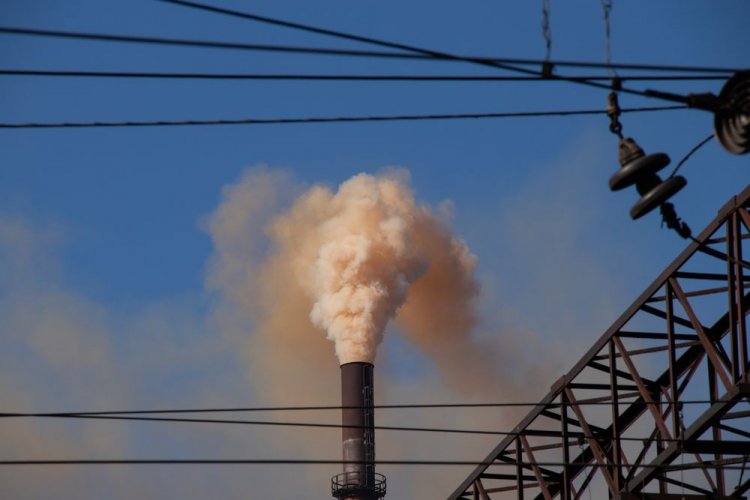
Iron ore pellet company Ferrexpo has strengthened its decarbonisation targets, with plans to cut Scope 1 and 2 carbon emissions by 50% by 2030 and Scope 3 by 10%.
The main areas of decarbonization of Ferrexpo production will be three key activities, which account for 80-90% of the carbon footprint, GMK Center reports.
It is noted that the previous goal provided for a reduction of Scope 1 and 2 emissions by 30% and did not include Scope 3. The company set 2019 as the base year.
The material emphasized that in the 2022 annual report, Ferrexpo confirmed its intention to achieve net zero emissions in Scope 1 and 2 by 2050 and to reduce emissions in Scope 3 by 50% during this period.
"All target indicators are calculated per ton of production, so the volume of production will not affect them," the authors explained.
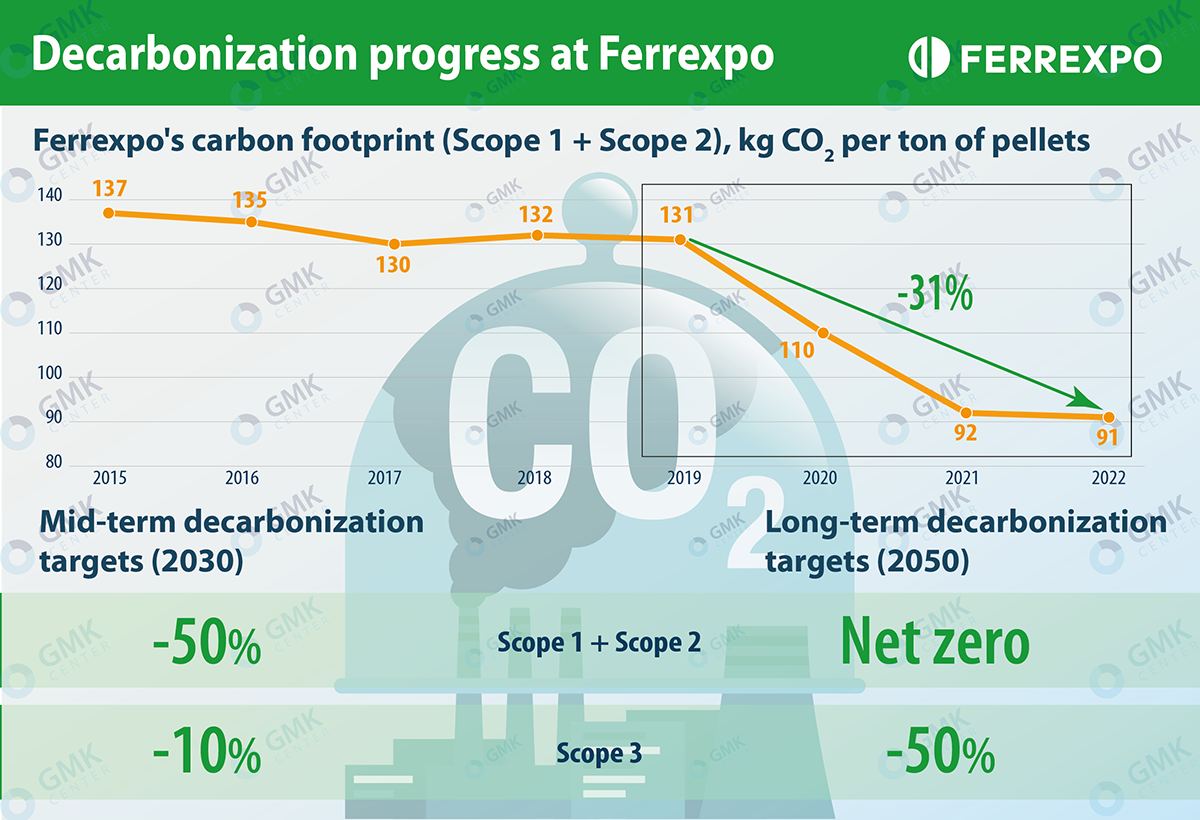
Ferrexpo CEO Jim North emphasized that the company managed to reduce emissions by 31% from 2019 levels.
"We intend to maintain our positive momentum in reducing our emissions. We are delighted with the willingness of our stakeholders to understand our decarbonisation journey and we are looking for ways to collaborate in the future," he said.
It is noted that in Ferrexpo's carbon footprint is linked to three key activities, namely consumption:
- diesel fuel at the Group's mining park (Scope 1);
- of electricity at the processing plant (Scope 2)
- of natural gas in a pelletizer (Scope 1).
The material explained that these activities account for 80-90% of the carbon footprint of Scope 1 and 2. Therefore, they will become the main areas of decarbonization of Ferrexpo production.
The authors emphasized that in its report on climate change, Ferrexpo considers the implementation of a number of decarbonization technologies, including:
- technologies of batteries and trolleybuses in quarry trucks;
- green hydrogen in pelletizers;
- construction of renewable energy facilities.
In 2021 the company built a solar power plant with a capacity of 5 MW and increased the purchase of green electricity by 50%.
Scope 1 covers direct emissions of greenhouse gases, Scope 2 – indirect emissions associated with the purchase of electricity, a Scope 3 – emissions that are not controlled by the company, but indirectly affected in its value chain.
As EcoPolitic previously reported, Ferrexpo, a mining company with assets in Ukraine, has launched a complex of solar batteries with a capacity of 5 MW without a green tariff at the current industrial site of the Poltava Mining and Processing Plant (PGZK).