Energy-intensive industries in Europe have made significant progress in decarbonization over the past decades, but progress has stalled. Their emissions costs are now enormous—over €73 billion per year. Combined with expensive energy, this could lead to a loss of competitiveness for entire sectors of the economy. Only accelerating technological transformation in manufacturing can help avoid this.
This was reported by the European Environment Agency (EEA).
Environmental progress
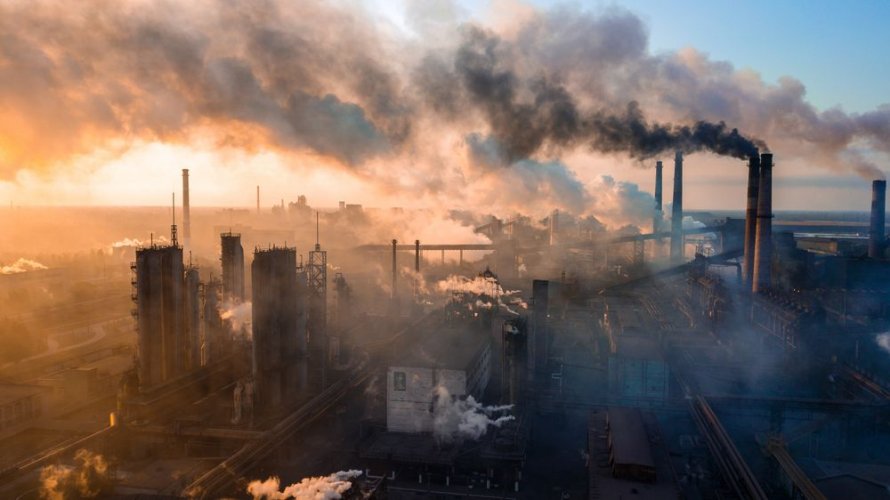
About 27% of all industrial greenhouse gas emissions in the EU come from energy-intensive industries. At the same time, these industrial segments are also responsible for a significant amount of emissions of the main pollutants – sulfur oxides and nitrogen oxides.
However, the situation used to be much worse. Over the past 20 years, energy-intensive industries have managed to reduce their emissions by 42%. The EEA also noted that the intensity of air pollution with such harmful substances has significantly decreased:
- dioxins – by 63%;
- nickel – by 64%;
- nitrogen oxides – by 55%.
The agency also noted a correlation between emissions reductions and economic indicators. A significant reduction in emissions was observed in 2020. At the same time, gross value added also fell. Therefore, structural economic changes are playing an increasingly important role in decarbonization alongside technological eco-modernization.
Energy intensity as a risk factor
The analysis covers industries such as ferrous and non-ferrous metallurgy, chemicals and cement, lime, paper, glass, and ceramics. These industries account for more than 60% of energy consumption in the entire manufacturing sector.
It is precisely because of their energy intensity that these industries have been hit hardest by the energy crisis. Global overproduction and weaker demand have also had a negative impact on competitiveness. At the same time, companies are also feeling financial pressure – in the EU, the cost of electricity is still 2-4 times higher than that of trading partners from other countries.
Eco-modernization as a path to competitiveness
According to the analysis, the resilience of the industrial sector directly depends on the speed of industrial transformation. The EEA notes that in order to achieve progress, the implementation of environmental and climate legislation must be combined with technological changes in the most polluting processes.
The European Environment Agency highlights the following main transformation directions: electrification and the use of alternative materials and raw materials, including recycled resources.
EcoPolitic previously reported that due to high emission costs, European industry faces critical problems with energy prices.