Over the past year, the state has restored reporting, liquidated the relevant ministry, adopted climate targets, and simultaneously postponed environmental regulations. Activists won court cases, while the forestry industry consistently generated criminal news stories involving millions and even billions of dollars.
EcoPolitic has compiled the main events that will make 2025 memorable in terms of ecology — from international decisions to local disasters and corruption schemes.
January: the return of reporting and the US's rejection of climate leadership
The year began with the resumption of mandatory reporting under the UNFCCC – monitoring, reporting, and verification of greenhouse gas emissions.
The Verkhovna Rada supported the relevant bill, which was subsequently signed by the president. This decision reinstated a basic tool for controlling emissions, which had been suspended after the start of the full-scale war.
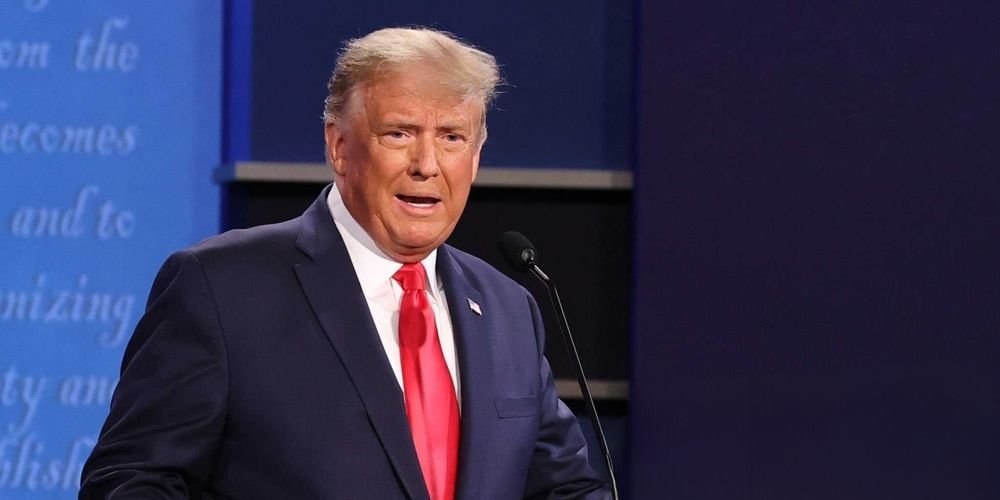
On the first day of his new presidential term, Donald Trump withdrew the US from the Paris Climate Agreement for the second time, immediately calling into question global climate solidarity.
On the domestic front, the year started with a victory for civil society: activists won their appeal against the Cabinet of Ministers in the case defending the Markhaliv Forest. However, this did not stop further logging in the area.
February: grand ambitions and European signals
In February, the VITAGRO group of companies became the first domestic producer to export biomethane to Europe.
In February, the government approved an action plan for the creation of a national emissions trading system. This was a necessary step for Ukraine's full adaptation to European climate regulation.
The EU published the Net-Zero Industry Act, which made it clear: environmental transformation is now as much about competitiveness and protecting the internal market as it is about the environment.
March: US retreat and Ukrainian legislative conflicts
March was marked by global climate backsliding in the US. Donald Trump shut down a large number of environmental programs, the country withdrew from the United Nations fund for climate change loss and damage compensation, and its State Department suspended the Global Air Pollution Monitoring Program.
In Ukraine, members of parliament passed draft law No. 12089 despite opposition from activists and the public, once again highlighting the gap between grassroots environmental policy and parliamentary decisions.
A Russian drone damaged the arch over the Chornobyl Nuclear Power Plant, causing the confinement structure to potentially allow harmful radiation to escape.
April: court cases, declarations, and destroyed primeval forests
April became a month of court victories and high-profile exposés. Activists, through the courts, revoked a construction permit for the "Osokorky" eco-park, protecting one of the capital's green zones.
The head of the parliamentary environmental committee declared cryptocurrency holdings worth 279 million UAH, raising many questions.
In the Carpathians, primeval forests were destroyed to build a forest road. Activists had warned of the risks of such logging, but the authorities did not respond.
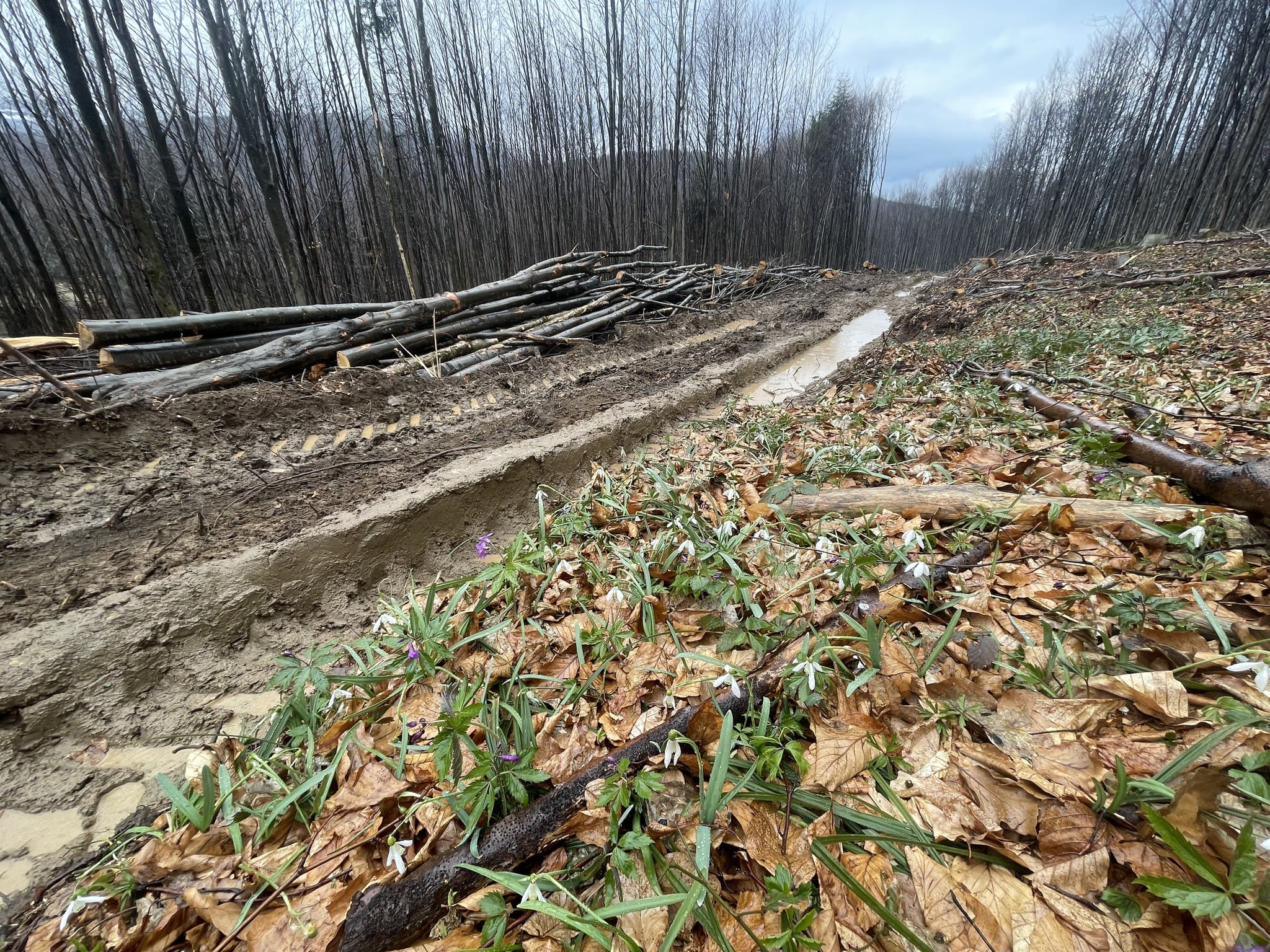
Photo: facebook.com / ekosphera.ua
May: water, coastlines, and personnel decisions
In May, a notable event was a decision by the Northern Appellate Commercial Court. It ordered the demolition of a recreation complex in the protected coastal zone of the Dnipro River in Kyiv, confirming that even elite developments are not untouchable.
The State Inspectorate for Architecture and Urban Planning sided with the developer on the Runa Polonyna in the Carpathians, who began pouring foundations for wind turbines without conducting an environmental impact assessment. Later, the State Environmental Inspectorate (SEI) joined as well.
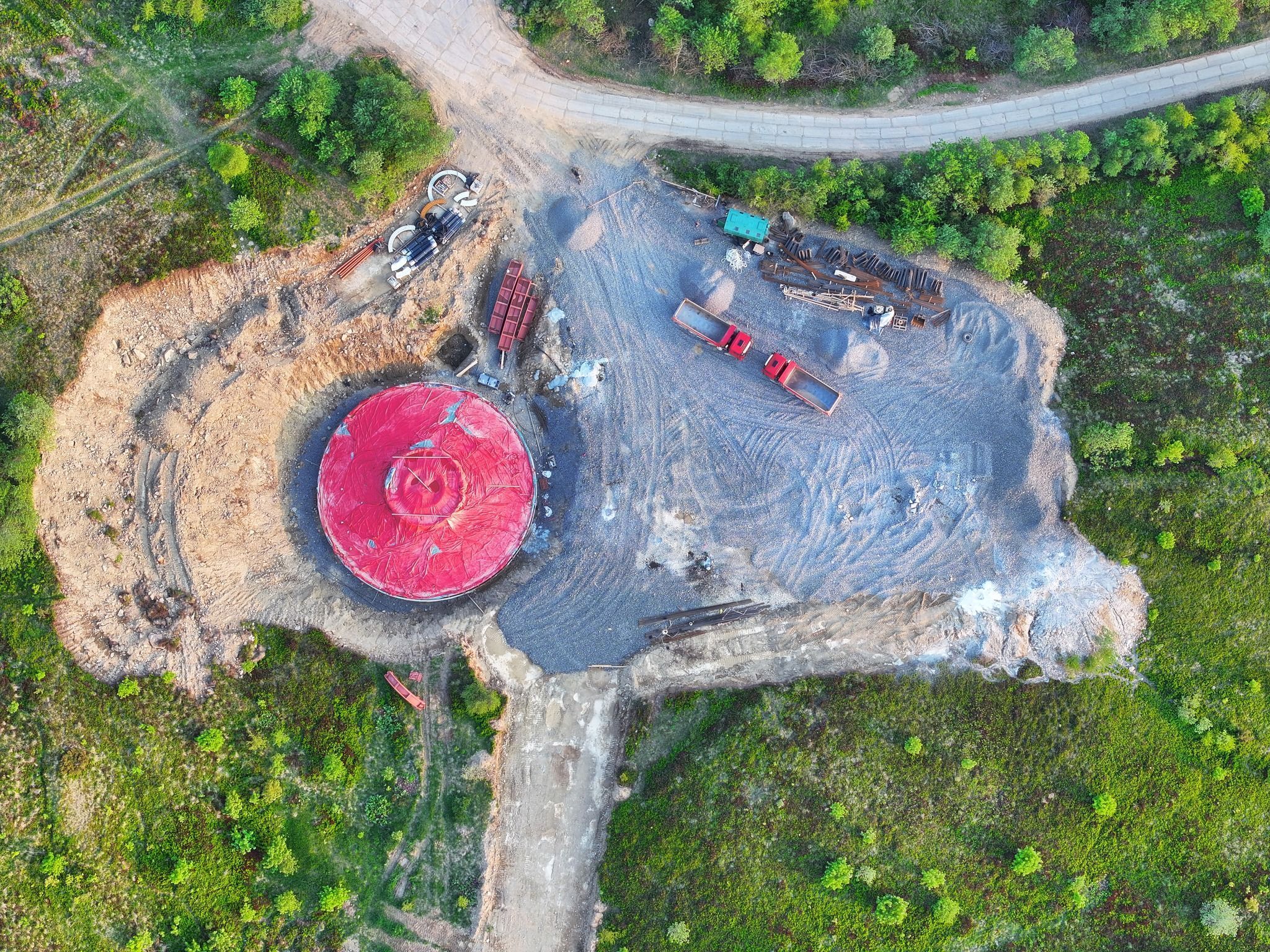
Photo: facebook.com / SavePikuy
In Zaporizhzhia, the Mokra Moskovka River became covered with a thick black substance resembling fuel oil. The scale of pollution was such that locals spoke of an environmental disaster. The SEI has not released official information about the source of this pollution.
In the capital, mayor Vitalii Klitschko dismissed the scandalous director of the KMDA Department of Environmental Protection, Oleksandr Voznyi. This was a decision that the city’s environmental community had long demanded.
June: climate goals and waste realities
At the beginning of the summer, the Ministry of Environmental Protection and Natural Resources of Ukraine announced the very ambitious targets set by our country for reducing greenhouse gas emissions by 2035 as part of the Nationally Determined Contribution (NDC2) to the Paris Climate Agreement.
Ukraine became the first country in Europe to adopt a national standard for eco-industrial parks.
The State Environmental Inspectorate (SEI) caught public utility workers in Berezan organizing unauthorized landfills, which vividly demonstrated the gap between strategies and on-the-ground realities.
July: Dissolution of the Ministry of Environment and Climate Precedents
In July, it became official: despite numerous warnings from experts and the public, the Cabinet of Ministers transferred the functions of the Ministry of Environment to the newly merged Ministry of Economy, Environment, and Agriculture of Ukraine.
On the international stage, the largest climate lawsuit in history concluded. In its historic advisory opinion, the UN Supreme Court declared that states can violate international law if they fail to take measures to protect the planet from climate change.
In Ukraine, a farmer almost caused an environmental disaster in the Kyiv region when he, together with accomplices, organized a large-scale quarry for illegal sand extraction.
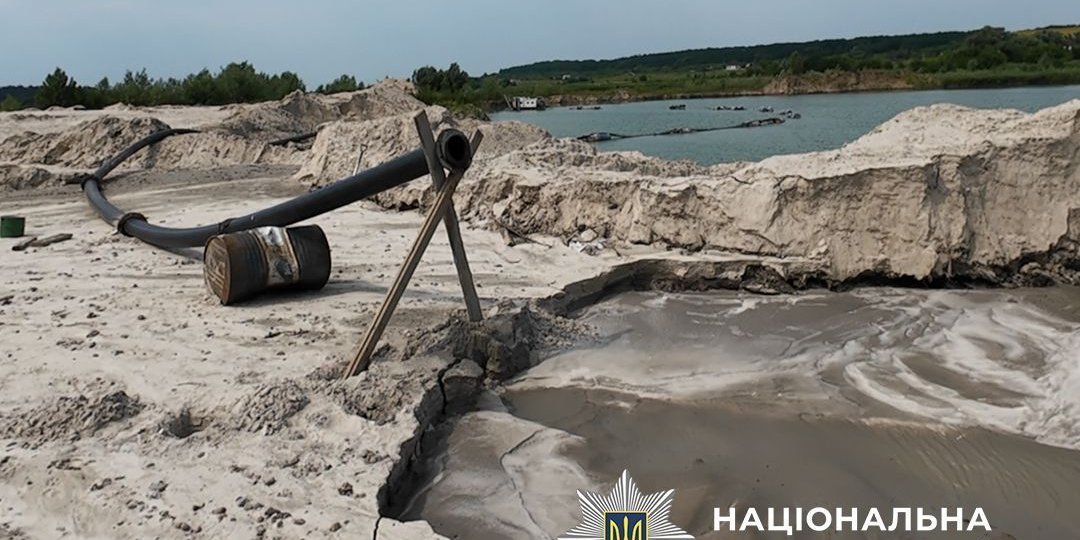
Photo: npu.gov.ua
August: New Rules for Industry and International Cooperation
In August, Ukrainian law No. 3855-IX on the prevention of industrial pollution entered into force. This document, which could not be adopted for years, is set to become the foundation for eco-modernization of domestic industry in line with European environmental standards.
Ukraine signed the High Seas Treaty, joining global efforts to preserve marine ecosystems beyond national jurisdictions.
September: New Government Plans and Local Achievements
In September, the action program of the new Cabinet led by Yulia Svyrydenko was introduced, in which the environmental bloc once again ended up somewhere between the economy, reconstruction, and European integration. Environmental protection was mentioned only briefly, and the practical substance of these plans raised many questions.

Photo: kmu.gov.ua
There was also positive news: Obolon Island in Kyiv received the international Green Flag Award, which confirms that the recreation area meets safety, accessibility, and environmental standards.
October: Green Deal Rollback and Ukrainian Steps Toward Control
In October, European environmental policy cracked: the main political parties of the EU agreed to weaken the Green Deal. The drive for competitiveness outweighed climate goals and ambitions.
In the EU, the regulation entered into force, simplifying the Carbon Border Adjustment Mechanism (CBAM), making the rules easier for importers.
In Ukraine, October was marked by two positive events: the team of Tuzlivski Lymany National Nature Park (NNP) was recognized as the World Rangers of the Year, and the first environmental control point in Ukraine began operating in Zhytomyr region – an instrument long lacking in practice.
November: COP30, Climate Ambitions, and Questionable Outcomes
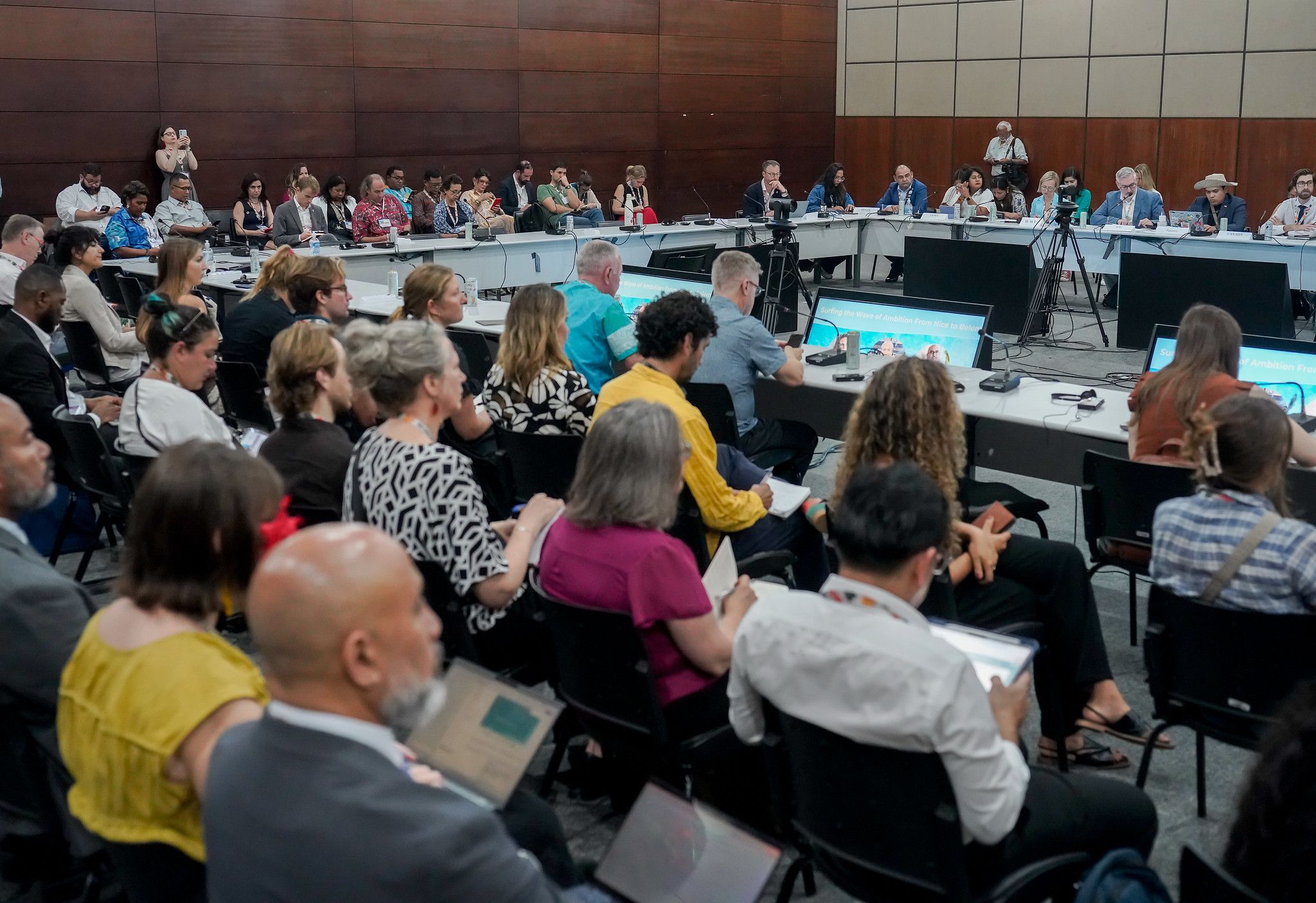
November was marked by the largest climate summit, COP30. After lengthy negotiations, delegates drafted a call for concrete action – the Global Mutirão, supported by nearly 200 countries. However, the main compromise – abandoning fossil fuels – was not achieved.
In Ukraine, State Enterprise “Forests of Ukraine” made loud and prolonged reports about completing the program to plant one billion trees as part of the President's “Green Country” initiative. Behind these positive reports, journalists and experts identified systemic issues in the enterprise's work.
A pilot project for waste management in accordance with EU standards was launched in Ukraine.
In November, EU countries finally agreed on climate targets for COP30 – reducing emissions by 90%, albeit with significant compromises. Ukraine officially approved NDC2, declaring a reduction in emissions of more than 65%.
December: Deferred Regulations and Stricter EU Rules
The end of the year turned out to be controversial. In December, the Government of Ukraine postponed the implementation of new chemical safety regulations, effectively acknowledging the system's unpreparedness for European standards in this area.
The European Commission has proposed strengthening the Carbon Border Adjustment Mechanism (CBAM): expanding its scope, closing loopholes, and establishing support mechanisms for producers. Stakeholders are still waiting for official information regarding a possible postponement of this mechanism’s application to Ukraine.