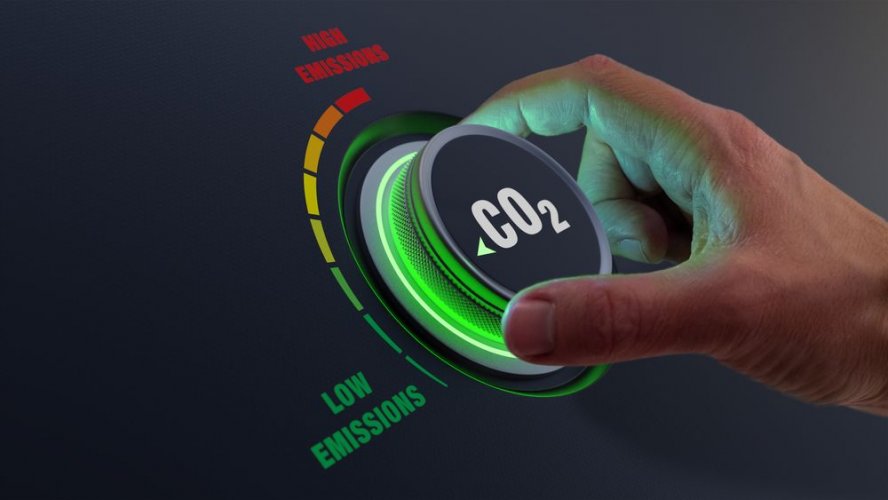
The Ukrainian government has approved its second Nationally Determined Contribution (NDC) to the Paris Agreement, which provides for a reduction in greenhouse gas emissions. Ukraine's commitment is to reduce emissions by more than 65% from 1990 levels by 2035.
This was announced by Deputy Minister of Economy, Environment, and Agriculture Pavlo Kartashov.
The Ministry of Economy coordinated the preparation of the NDC2 project with the support of "IKI Interface: GreenUkraine," which is being implemented by GIZ on behalf of the German government.
"The updated contribution is about adapting to climate change, fair economic transformation, and biodiversity conservation. It is a strategy that combines climate policy, recovery, and European integration," Pavlo Kartashov emphasized.
Experts note the government's moderation in defining its climate obligations to the world.
"The Cabinet of Ministers of Ukraine has shown considerable caution in strengthening its climate commitments, given the significant uncertainties surrounding post-war recovery, especially 'green' recovery," said Oleksandr Dyachuk, a researcher at the Institute for Economics and Forecasting.
In discussions of the report, Ukrainians point to the realism of the climate goal. War-induced losses, deindustrialization, and the transition to gas instead of coal will "contribute" to the implementation of the plan.

facebook.com
From bravado to restraint
As reported by EcoPolitics, in June, the Ministry of Environment set the level of greenhouse gas emissions reduction at 68-73% in the NDC2 project. At that time, the government faced criticism from industrialists. In particular, the European Business Association insisted on taking into account the current economic situation and revising the NDC.
This is not the first time that the authorities have failed to take into account the position of business and the real state of affairs. Ukraine's first NDC set a national climate goal for 2030 to reduce emissions to 60% of 1990 levels. The rather modest commitments were updated in 2021 to an ambitious 35% reduction in greenhouse gas emissions from 1990 levels.
Declarative, not real impact
International experience shows that NDCs are more about finding compromises within the country and trying to look better than other countries. Earlier, EcoPolitic wrote that in practice, the implementation of climate goals faces a balancing act between environmental responsibility, economic development, and the interests of businesses that are in no hurry to abandon fossil fuels or invest significant funds in the eco-modernization of their production facilities.
It should be noted that prior to the COP30 climate summit, over 100 countries had not updated their NDCs.