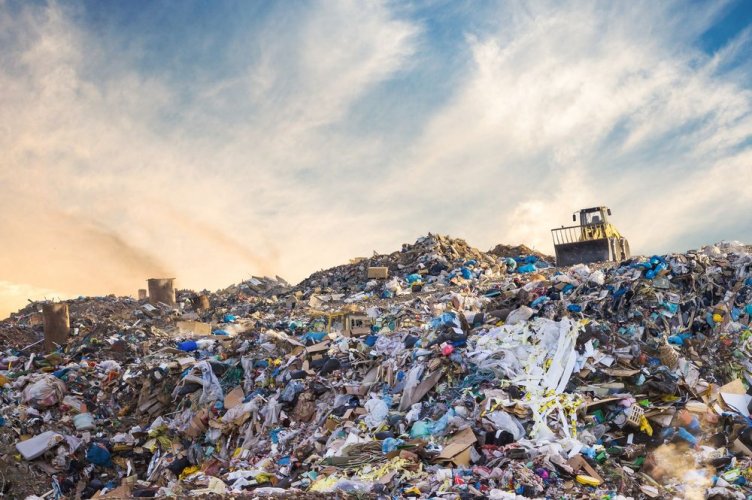
The Cabinet of Ministers has updated the rules for businesses operating in the field of waste management. These changes are intended to balance the real operating conditions of companies in the sector with environmental requirements.
This was reported by the Cabinet of Ministers of Ukraine.
Key updates
The decision, adopted by the government on 30 October, simplifies certain procedures and closes regulatory gaps. The main changes include:
- a landfill control and monitoring programme now has to be developed once every five years. Previously, it had to be updated annually;
- it has become easier to classify production residues as by-products rather than waste;
- obtaining an opinion on the transboundary shipment of certain types of waste has been made easier;
- environmental measures will be aligned with the new waste legislation. This will remove legal uncertainty when such steps are financed from the State Fund for Environmental Protection.
In addition, transition periods will be set for businesses that took part in the experimental project on a simplified procedure for obtaining a permit for waste treatment operations. During this "bonus" time, companies must bring their waste treatment activities into compliance with the following documents:
- the Law "On Waste Management";
- the procedure for issuing, refusing to issue and terminating a permit for waste treatment operations, approved by Cabinet of Ministers Resolution No. 1328 of 19 December 2023.
"The planned changes will support the competitiveness of national producers in the European dimension and contribute to environmental protection and public health," the government believes.
The regulation has not yet been published on the government portal.
As a reminder, the above-mentioned experiment ended in September after running for two years. However, its results proved far from impressive: only 10% of the companies required to obtain an environmental impact assessment (EIA) opinion completed or at least started this procedure. The project's shortcomings included the mixing of waste during landfilling and a lack of accurate reporting.