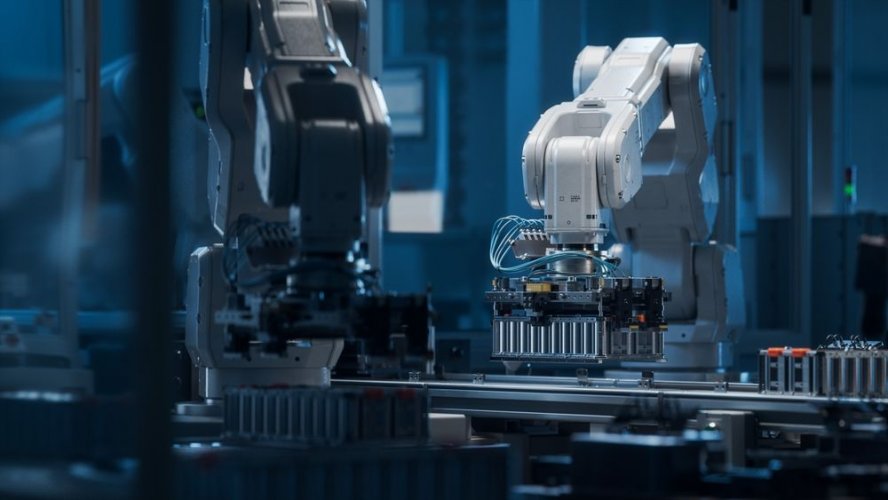
Chinese automaker Chery has announced a prototype solid-state battery capable of providing a range of up to 1,300 kilometers on a single charge. Pilot production is scheduled to start in 2026, with series production beginning in 2027.
This was reported by CarNewsChina.
The development was carried out at the Chery Solid-State Battery Research Institute. The main component is a polymer-based solid electrolyte, which is formed directly in the battery cell. It is combined with a cathode enriched with lithium and manganese.
This approach has made it possible to achieve an energy density of approximately 600 Wh/kg in the battery, which is almost twice that of the leading lithium-ion cells currently used in China.
The company also emphasizes the increased level of safety, as the new battery continues to function even after mechanical damage, such as being punctured by a nail or drilled, and is not susceptible to thermal runaway. In particular, according to the manufacturer, the battery will continue to function even underwater.
Chery does not disclose the exact charging speed of this battery. However, the company expects it to charge significantly faster than the current LFP and NMC cells widely used in batteries.
In March, Chinese automaker BYD unveiled a new charging system for electric vehicles that provides a range of 470 km in just 5 minutes of charging.
In particular, the top five electric vehicles in 2025 include:
1) Kia EV3;
2) Hyundai Ioniq 5 N;
3) Cupra Born;
4) Renault 5 EV;
5) Volkswagen ID.7.