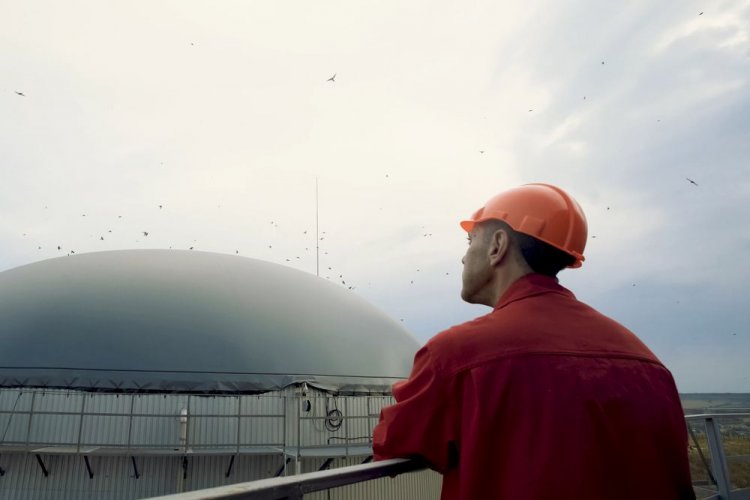
A report by the European Biogas Association showed that biomethane and biogas are becoming increasingly important sources of energy in the EU's energy mix, and their production will increase over the decade.
Thus, in the European Union in 2021, biomethane production increased by 20% – to 3.5 billion m3, the State Agency for Energy Efficiency and Energy Saving reports on Facebook.
The report noted that the combined production of biogas and biomethane in 2021 reached 18.4 billion m3, which is 4.5% of gas consumption in the block. The leader in this field is Denmark, which, thanks to biogas and biomethane, replaces 24% of the use of natural gas.
TOP-5 countries that are actively developing bioenergy:
- Denmark;
- Sweden;
- Slovakia;
- Germany;
- Czech Republic

The authors emphasized that the trend in the production of biomethane is the use of agricultural residues, solid organic household waste and sewage sludge as raw materials.
They also noted that the trend in biomethane production is expected to increase in the next 10 years. After all, biomethane is a universal energy carrier, suitable for a number of sectors, in particular for transport, industry and energy.
"This is an opportunity to partially replace gas imports, as well as contribute to the development of the local economy by creating additional jobs," the message says.
Earlier, EcoPolitic wrote, that the EU is planning replace more than a fifth of Russian gas imports with biomethane, which will help reduce carbon emissions and ensure energy security.
As EcoPolitics previously reported, in Estonia, in the city of Tartu, the whole public transport was switched to biomethane.