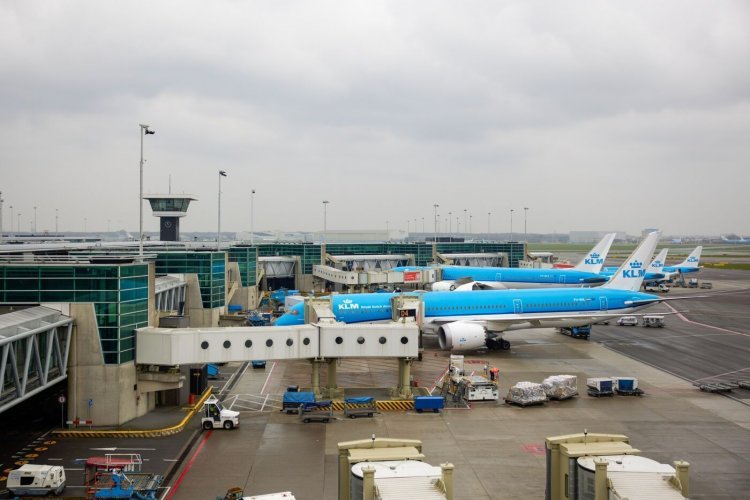
The largest airport in the Netherlands, Schiphol, in Amsterdam, wants to ban private planes from 2026.
In 2022, the airport hosted about 17,000 private jet flights, causing a disproportionate amount of noise and 20 times more CO2 emissions per passenger than commercial flights, according to Bloomberg.
The article said that although the airport's intentions may not materialize, it would set a certain precedent. Schiphol's example could be a harbinger of how other countries deal with the intersection of wealth, climate policy and a growing backlash against emissions that are seen as particularly gratuitous.
"I understand that our choice may have significant consequences for the aviation industry, but it is necessary," said Ruud Sondag, interim chief executive of Royal Schiphol Group. — "It shows that we are serious."
It said measures to limit emissions and noise pollution at Schiphol airport began in 2022, when the Dutch government - majority owner Royal Schiphol Group - proposed to cut the airport's annual number of flights to 440,000 by 2024 from the current 500,000. 460,000 flights as an interim step, but airlines challenged the restrictions in court. Schiphol also announced a number of additional measures, including a ban on night flights and private jets from 2026.
According to Schiphol, about 30% to 50% of private jet flights are to holiday destinations, including Ibiza, Cannes and Innsbruck.
The article emphasized that small aviation companies criticized such intentions. After all, private jets are an important tool for business.
Other critics argue that banning private jets from one airport makes no sense because passengers will simply choose another. In addition, such aircraft are smaller than commercial ones and have more affluent users. Therefore, they are a kind of playground for such innovations as power from batteries and synthetic aviation fuel, which is obtained from waste oil, fats and sugar crops.
"Although private flights account for only 4% of the world's carbon emissions from aviation, this is an infuriating injustice," the article says.
A 2019 study found that the wealthier half of the world is responsible for 90% of air travel emissions, with a private jet emitting up to 2 metric tons of CO2 in one hour of flight.
Report The Institute for Policy Studies, USA, showed that the number of private jets worldwide has more than doubled in the last 20 years. In 2022, private jets made a record 5.3 million flights, and emissions from aviation increased by 23% since the start of the pandemic.
A study by Dutch environmental consultancy CE Delft, commissioned by Greenpeace, found that in 2022 the number of flights in Europe will increase by 64%, leading to a near doubling of CO2 emissions.
Earlier, EcoPolitic wrote, that a study by the International Energy Agency (IEA) showed that carbon emissions differ by income group, so the richest 1% of the world's population creates 1,000 times more CO2 than the poorest 1%.
As EcoPolitic previously reported, the European Commission supported the agreement between the European Parliament and the Council of the EU on the decarbonization of aviation, namely the obligation of suppliers to mix solid aviation fuel (SAF) with kerosene in increasing quantities from 2025.