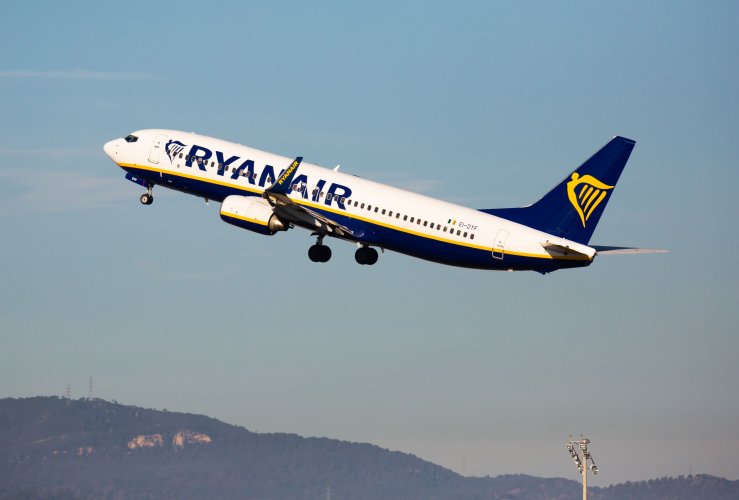
The European Commission has backed an agreement between the European Parliament and the Council of the EU on the decarbonisation of aviation, namely the commitment of suppliers to mix solid aviation fuel (SAF) with kerosene in increasing quantities from 2025
The ReFuelEU Aviation agreement will help reduce carbon emissions from aircraft by two-thirds by 2050 and improve air quality by reducing other emissions, according to the European Commission's website.
ReFuelEU Aviation is said to be the latest agreement on transport offers under the Fit for 55 package.
The message said that the new rules will require:
- aviation fuel suppliers – to supply at least 2% of SAF to EU airports from the total volume of fuel from 2025 and reach 70% by 2050;
- airlines departing from the EU – to refuel only with the amount of fuel necessary for the flight. After all, the weight of additional fuel to avoid refueling causes additional CO2 emissions;
- airports – to ensure the suitability of the infrastructure for SAF refueling.
The blending mandate covers biofuels, recycled carbon fuels and synthetic aviation fuel (e-fuel), but excludes food and feed crops, it said.
"As it will apply throughout the EU, the new mandate will ensure a level playing field in the EU's internal market, provide legal certainty to fuel producers and help launch large-scale production across the continent," the report said.
The press service added that it will also increase the energy security of the EU, reducing dependence on energy carriers from third countries.
The message added that the agreement must be formally adopted by the European Parliament and the Council before it is published in the Official Journal of the European Union and enters into force immediately.
Earlier, EcoPolitic wrote, that the head of the EU climate service, Frans Timmermans, said that the adoption by the European Parliament of the agreement on the carbon market reform brought the EU closer to completing the work on the Fit for 55 package. The reform covers the emissions trading system (ETS), the implementation of the carbon border regulation mechanism (CBAM) and the creation of a social climate fund (SCF).
As EcoPolitic previously reported, the study showed that European fuel producers could produce 1.83 million tons of e-kerosene in 2030 and save almost 5 million tons of CO2.