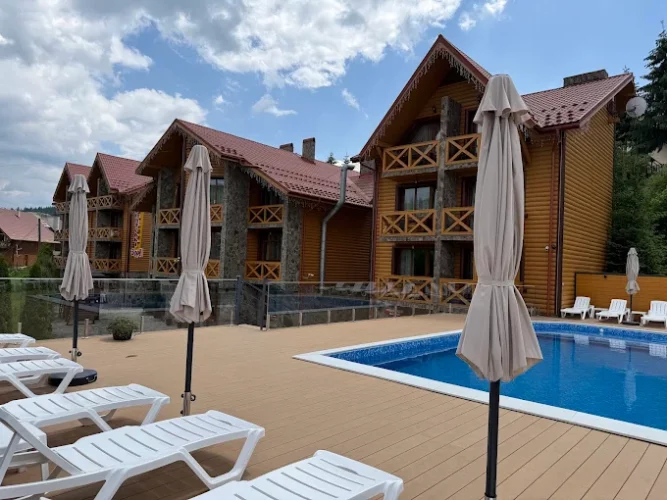
Wastewater from one of the guesthouses in the resort village of Polianytsia near Bukovel was discharged into a mountain river without any treatment. The court found the owner guilty and ordered him to pay a fine of only 85 thousand UAH for systematically poisoning the river.
This was reported by the Ivano-Frankivsk Regional Prosecutor's Office. As added by ZAHID.NET, the case concerns Serhii Konstantinov and the "Karpatski Zori" guesthouse.
A real threat to nature
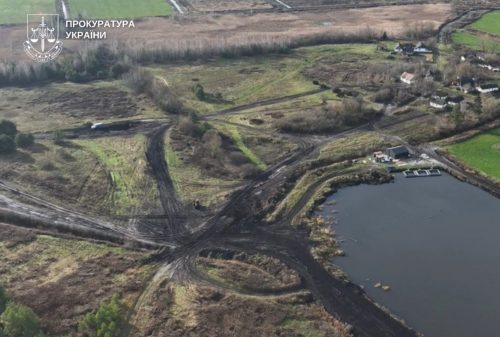
The offender has been running a hotel and restaurant business in Polianytsia since 2006. The plot where his facility is located borders directly on water fund lands, namely the protected zone of the Prutets Polianytskyi River.
In court, prosecutors managed to prove that the wastewater generated at the guesthouse was systematically discharged into the riverbed.
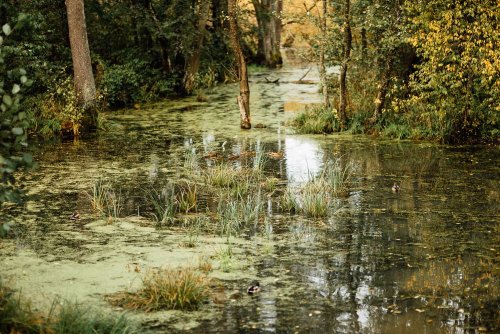
The danger to the environment is confirmed by direct laboratory tests. In particular, the maximum permissible concentrations of phosphates, total iron, ammonium nitrogen and COD (chemical oxygen demand) in the river were significantly exceeded. As a result, this led to a deterioration in the quality of surface water.
Liability for the violation
The businessman was notified of suspicion back in January 2026. In court, the prosecutor's office presented evidence that proved the entrepreneur's guilt. In particular, this included site inspection reports with liquid samples taken from the sewer pipes, the conclusions of an engineering and environmental examination and laboratory test reports.
The entrepreneur was found guilty under Part 1 of Article 242 of the Criminal Code – violation of water protection rules. He was fined 85 thousand UAH (5,000 non-taxable minimum incomes). In addition, more than 30 thousand UAH will be recovered from him for the examinations.
The prosecutor's office added that the entrepreneur voluntarily transferred 15 thousand UAH to support the Armed Forces of Ukraine.
Is this punishment proportionate to the crime?
In its statement, the prosecutor's office does not mention the period during which sewage was discharged into the river, only the "systematic" nature of this crime. However, given that the businessman has been operating at the site for about 20 years, it may be a matter of years of poisoning the river.
It should be noted that 5,000 non-taxable minimum incomes is the maximum financial penalty for the violations described in Part 1 of Article 242 of the Criminal Code of Ukraine. As an alternative punishment, the offender could even have faced restriction of liberty for up to five years.
However, the prosecutors do not mention the amount of environmental damage caused. As a rule, it should be calculated by the State Environmental Inspectorate, and this amount usually turns out to be much higher than the fine. What the amount of environmental damage was and whether the entrepreneur will be sued for compensation is currently unknown.
As a reminder, two versions of draft laws have now been registered that could significantly strengthen liability for violations in the field of water protection. Lawmakers argue that the current fines are often absurdly small.