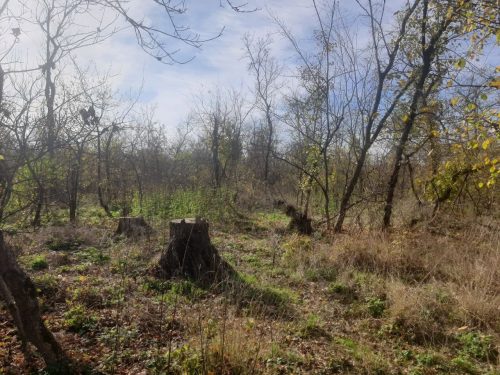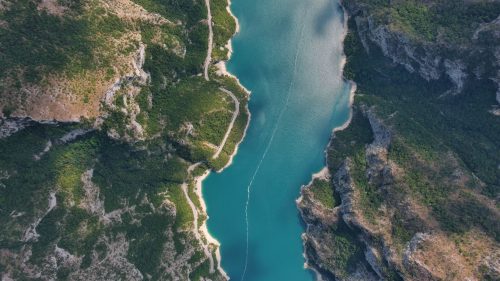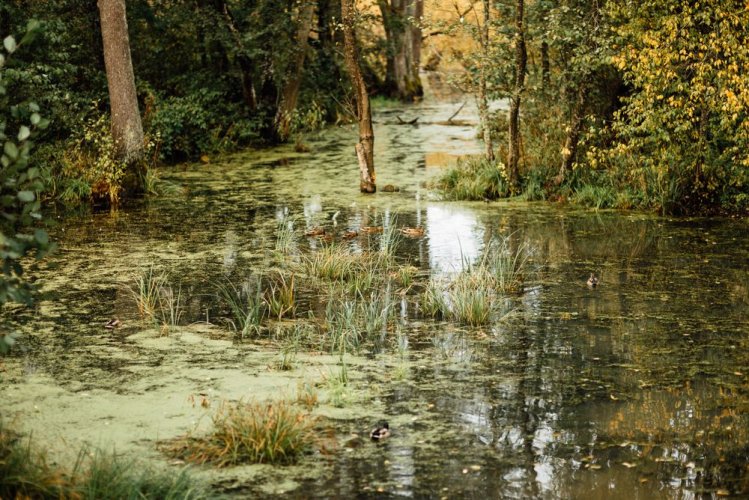
Ukraine has launched its largest-ever project for the comprehensive restoration of wetland ecosystems. The work is being carried out in the Rivne Nature Reserve, within the Somyne and Syra Pohonia bog massifs.
As reported by the Ministry of Economy, Environment and Agriculture, the project is being implemented under the international nature conservation programme "Wild Polissia" with the support of the Frankfurt Zoological Society.
The value of wetlands and threats to their preservation
Wetlands act as a kind of natural reservoir that retains water. This is especially important amid water scarcity, low precipitation and growing drought risks.
Bogs accumulate water in peat deposits, regulating the water regime of vast areas and keeping ecosystems supplied with water. This also works during excessive rainfall: bogs act like a sponge, reducing the risk of floods. They also lower the risk of large-scale fires and create conditions for specific flora and fauna to thrive.
However, long-term economic activity has disrupted the water regime of Polissia. The destructive factors include the draining of bogs, peat extraction and the construction of an extensive network of drainage canals.
The project is therefore intended to return water to the drained areas and create conditions for the gradual recovery of ecosystems.
Practical steps
Earthworks to build seven dams have already been completed on the bog massifs. The construction of water culverts is nearing completion.
At the final stage, three wooden stoplog gates are to be installed on the Somyne massif in the most inaccessible parts of the reserve. Preparations for this work are currently underway.
The main canal is to be transferred from the State Agency of Melioration and Fisheries to the Ministry of Economy. It will be on the balance sheet of the Rivne Nature Reserve. Approval has already been obtained from the State Property Fund. Once the procedure is complete, work will begin to restore the hydrological regime of the Syra Pohonia massif.
In total, two water culverts, ten earthen dams and 12 wooden stoplog gates are planned for this massif. This will help slow the flow of water in the drainage canals and retain water where it is needed for natural wetting.
The main work under the measure "Reconstruction of canals and dams to restore the natural hydrological regime of drained bogs and the biodiversity of the Syra Pohonia and Somyne massifs" is scheduled to be completed by the end of November.
Post-project monitoring
The effectiveness of the project will be tracked through scientific monitoring. Its network has already been expanded with 17 automatic groundwater level sensors. Changes in vegetation and hydrochemical indicators are also to be analysed. To this end, 30 research plots have already been set up in the reserve.
The legislative groundwork for restoring peatlands and other natural areas was laid in advance. Law No. 4795-IX of 25 February 2026 improved the management of drainage infrastructure, allowing it to be re-engineered for peatland restoration, and Cabinet of Ministers Resolution No. 1226 of 7 October 2026 provided for three options for decommissioning its facilities: with full or partial dismantling, or without dismantling.
This makes it possible to avoid unnecessary earthworks that could damage soils and vegetation and disrupt the water regime. Decisions on dismantling will be made taking into account technical requirements and the potential impact on the environment.
As a reminder, a plot of the Berezivske deposit next to the Rivne Nature Reserve was put up for auction twice in one year for peat extraction.