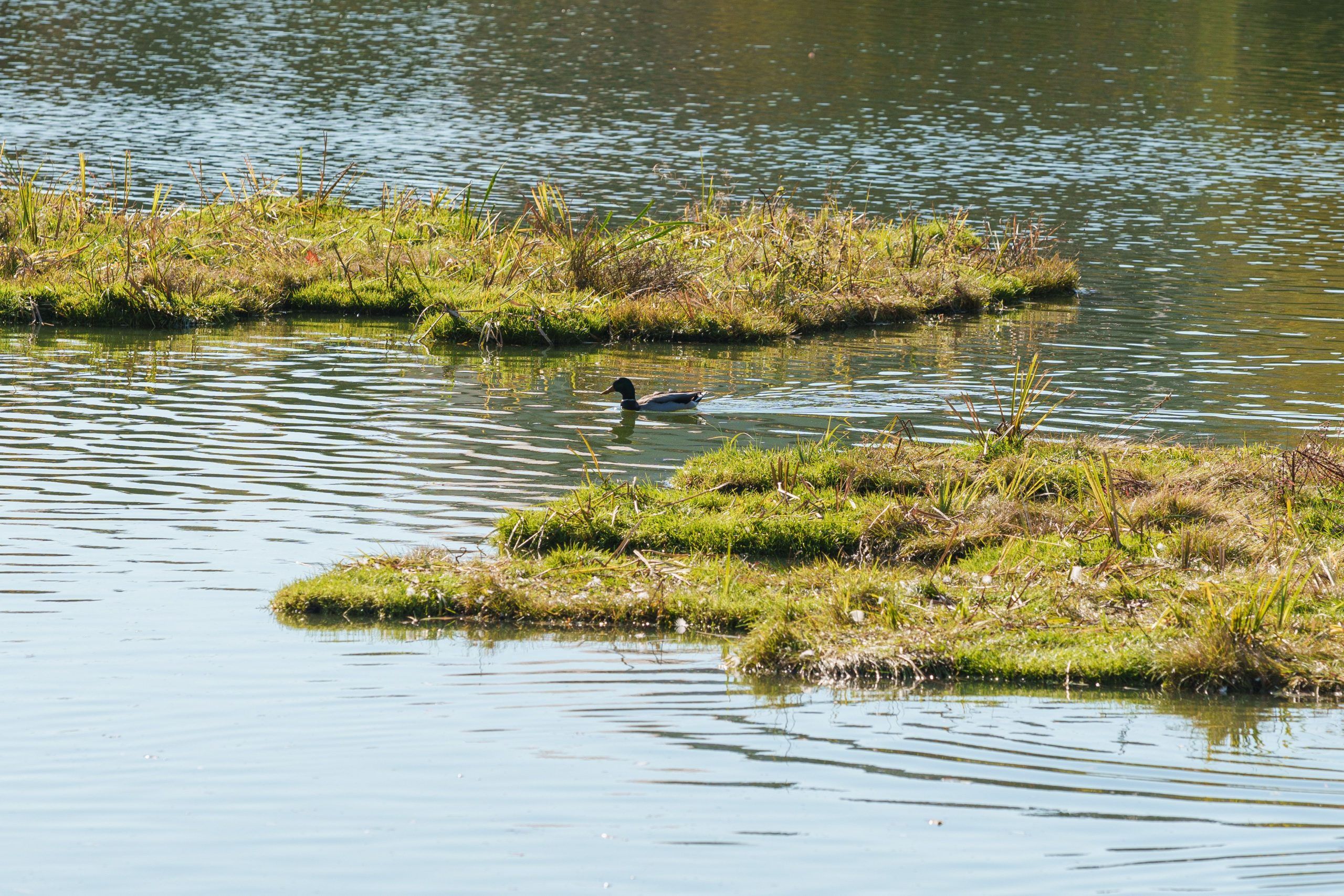
Floating filter islands are being set up on Vyshenske Lake in Vinnytsia. Pollution usually enters the lake together with rainwater, and almost three thousand plants will help retain some of the harmful impurities.
As reported by the Vinnytsia City Council, the project is being implemented with EU grant funding.
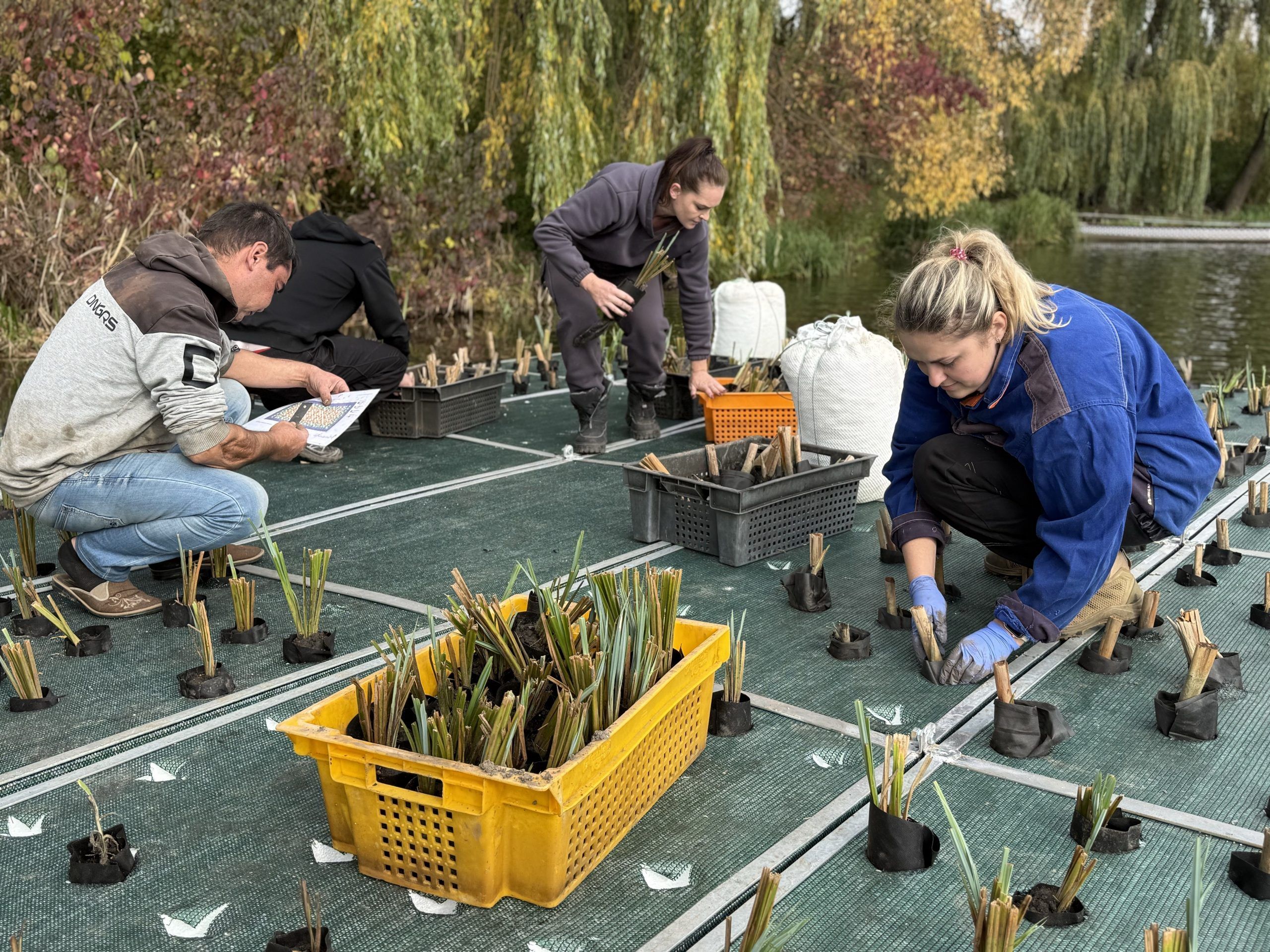
The plants will be placed on special platforms, with their roots submerged directly in the water. Together with microorganisms, the roots will create a kind of "trap" for pollution.
This solution is not new for Europe, but it is being used in Vinnytsia for the first time. The authorities say they want to test how effective this approach will be in an urban environment.
"If we get results, we will be able to scale up this experience. The floating islands are just one element of restoring the cascade of ponds on the Vyshnia River," says Deputy Mayor of Vinnytsia Ihor Otkydach.
Overall, the city is working to improve both Vyshenske Lake itself and the small Vyshnia River.
Source: Vinnytsia City Council
Near the sources of pollution
To clean the water, it is essential to understand exactly where the pollutants come from. For the lake, these are small watercourses No. 30 and No. 32, which carry rainwater and runoff from urban areas into the lake. The streams themselves are not visible, as part of them runs underground. Self-purification is also difficult in Vyshenske Lake, since the water here moves extremely slowly.
"The floating systems are being installed near the mouths of the small rivers and downstream of the bridge crossing on Yunosti Avenue. They are placed across the current so that the water passes through the roots. The platforms do not sink and can shift by a few metres, but we will anchor them in designated places," explains Suren Pohosian, project manager at the Institute for Urban Development.
Plant selection
The islands are planted with riverbank sedge, yellow-flowering yellow flag irises and narrow-leaved cattail, which can grow up to one and a half metres tall.
Source: Vinnytsia City Council
The plants are arranged in rows, with the shorter ones first and the taller ones behind. Depending on the number of planting holes, one island element can hold from 9 to 36 plants.
Creating an ecosystem of its own
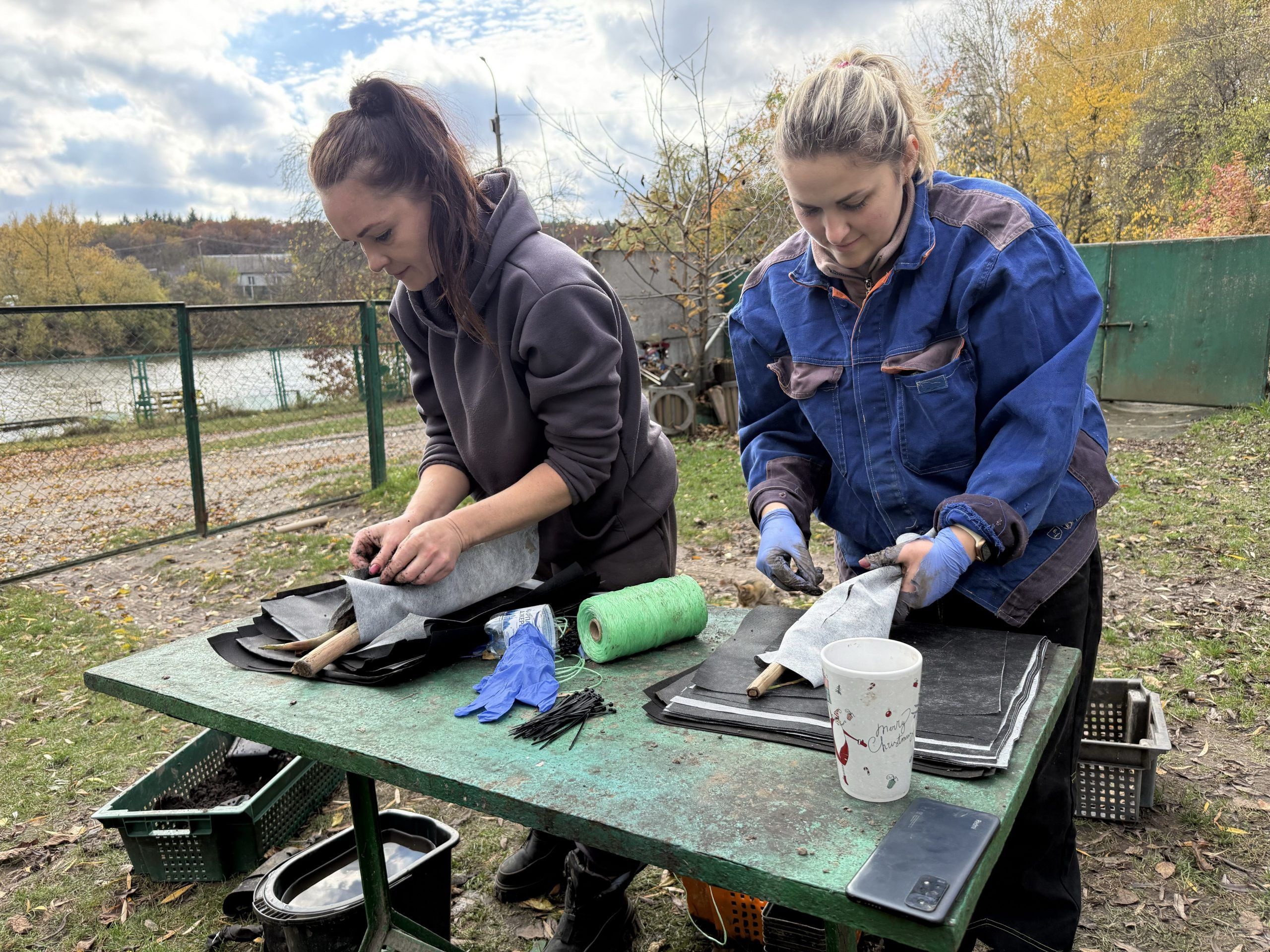
The problem of soil being washed out of the roots was solved with geotextile, which is wrapped around the rhizomes of all the plants. Together they create a large surface that will become a refuge for microorganisms and other living creatures.
Source: Vinnytsia City Council
All of this together will work as a small ecosystem. The plants will take up some of the nutrients for growth, while microorganisms will help break down organic matter. Together they retain some of the pollutants and excess nutrients that can contribute to the overgrowth of algae.
"The very principle of floating biofilters is a Serbian project. Such systems are used not only in lakes, but also in urban ponds, rivers and natural pools. In some countries, the floating islands grow so large that they become nesting sites for waterfowl," the city council added.
As a reminder, around 20,000 hectares of wetlands are being restored in the Rivne Nature Reserve. The measures are primarily aimed at ensuring that these ecosystems receive enough water, which currently "drains away" too quickly through land reclamation canals.