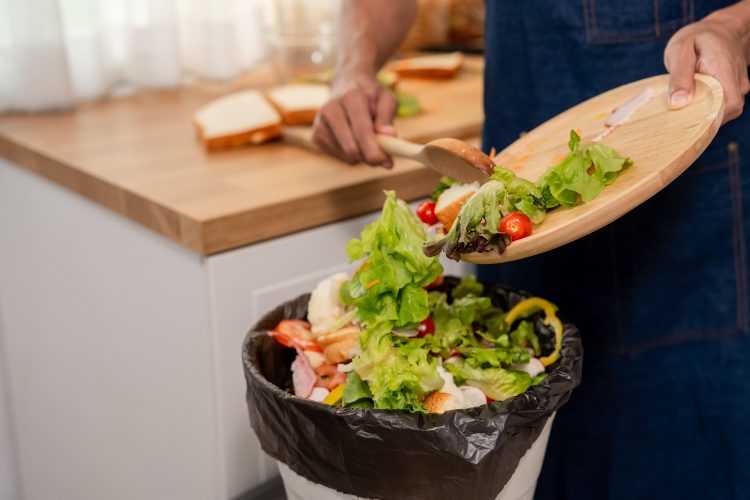
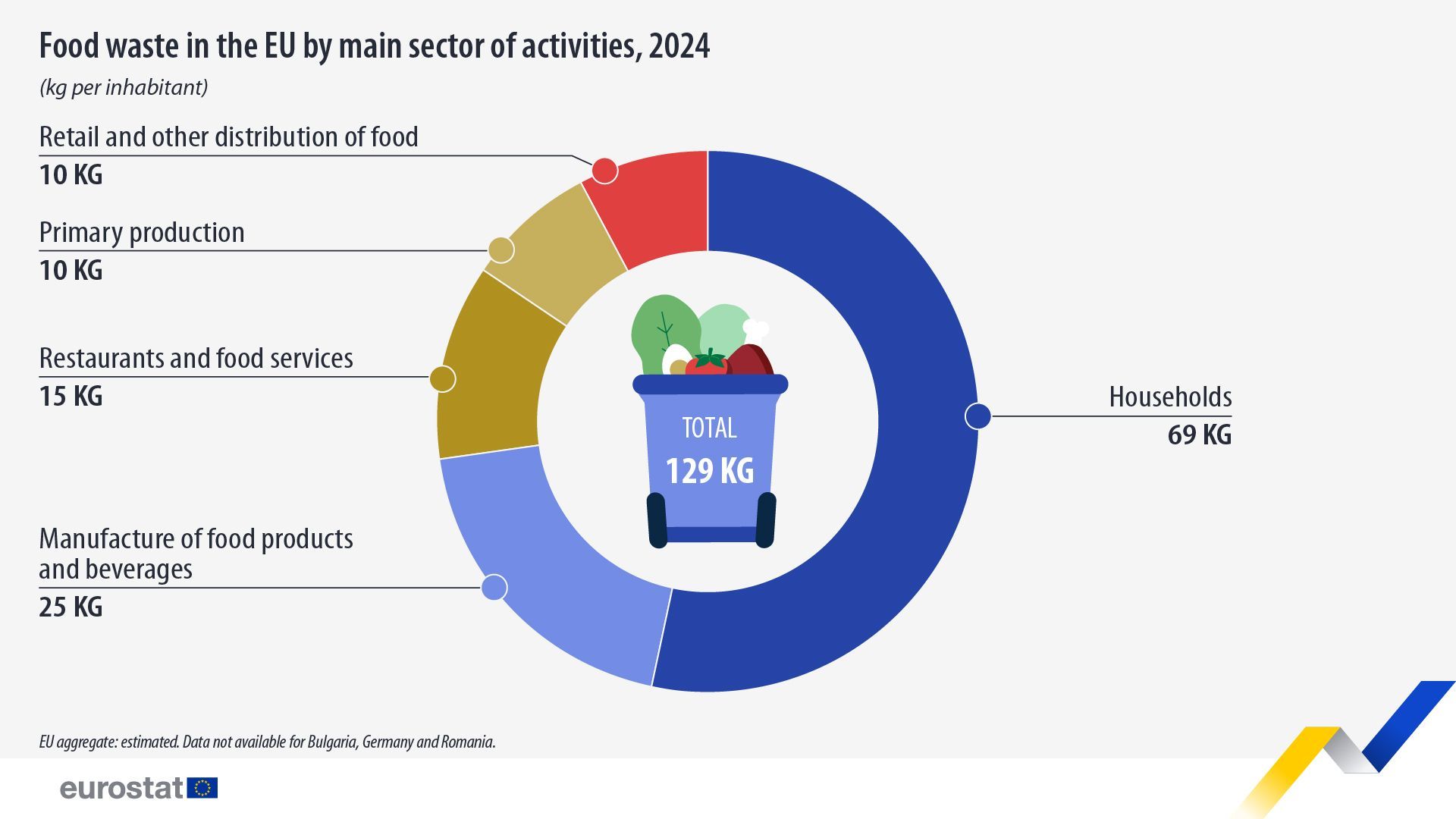
On average, each resident of the European Union generated 129 kg of food waste in 2024. This includes not only inedible parts, but also food that was fit for consumption.
This is evidenced by Eurostat data.
Overall, on an annual basis, the volume of waste increased by 0.7 per cent. Whilst 57.5 million tonnes of waste were generated in the EU in 2023, this figure rose to 57.9 million tonnes in 2024.
Sources of food waste
The lion’s share of food waste is household waste, i.e. it is produced by ordinary residents in their flats and houses. This source accounts for 53 per cent of waste ‘generation’, or 69 kg per European.
A further 15 kg per person, or 12 per cent, was generated in restaurants and other catering establishments.
The remaining 35 per cent of food waste occurred in the early stages of the food supply chain:
- 19 per cent (25 kg per capita) — during the production of food and drink;
- 8 per cent (10 kg per capita) — during primary production;
- 8 per cent (10 kg per capita) — in retail trade and other forms of food distribution.
Source: Eurostat
EcoPolitic previously reported that there are plans to set up food banks in Ukraine. According to the Ministry of Economy, 2.7 million tonnes of food are produced in the country each year, most of which is still fit for consumption at that point.
Organic waste can be sorted at home. Find out how and why to do this in this article.
We have also put together some tips on waste sorting for our readers.