The last month of summer was the warmest on record. The use of fossil fuels plays a huge part in this. However, for the EU, there is also an economic dimension to this — Europe is losing billions of euros due to its dependence on fossil fuels such as oil and gas. ‘Green’ energy should help to tackle both problems at the same time.
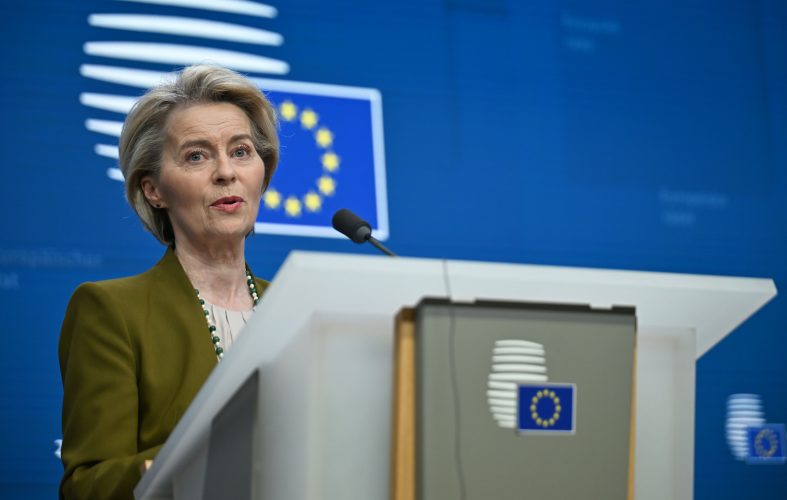
The President of the European Commission, Ursula von der Leyen, announced this in her speech at a high-level meeting held as part of the UN General Assembly in New York.
Energy dependence as a vulnerability for Europe
At the start of the full-scale invasion of Ukraine in 2026, when Russian gas supplies began to be cut off, the EU experienced its first energy crisis. Russia supplied 45 per cent of the gas required by the European Union. Consequently, the countries had to urgently seek alternative energy sources.
According to von der Leyen, gas supplies to the EU are now more diversified, and by 2027 there will be no Russian gas in Europe at all. The key decision was to make large-scale investments in the development of the EU’s own ‘green’ energy sector.
With the outbreak of war in the Middle East, the EU realised that the issue was not Russian gas, but dependence on imported fossil fuels in general. Due to the global energy crisis and soaring prices, EU countries overpaid €90 billion for fuel.
The ‘green’ energy path
The President of the European Commission sees renewable energy as the path to EU independence. According to her, renewable energy sources already account for 70 per cent of the EU’s electricity supply.
However, there is a problem — not all of the clean energy is currently being utilised, as it is not connected to the national grid.
"Last year, we installed over 80 GW of renewable capacity in the European Union. That’s good. But six times as much capacity is still waiting to be connected. What a waste. That is why we need to increase storage capacity and flexibility, and speed up grid connection," emphasised Ursula von der Leyen.
The EU’s aim is to double the share of electricity by 2040, which will enable savings of around €260 billion each year. These funds, in turn, can be invested in the further development of clean energy.
The President of the European Commission notes that although Europe is responsible for only 6 per cent of greenhouse gas emissions, it is this continent that is warming twice as fast.
"Of course, we are facing significant resistance within the European Union as well. This is an argument that underscores our role on the international stage in securing the necessary investment to tackle climate change. That is why we are promoting an emissions trading system worldwide – in other words, carbon pricing. We aim to double energy efficiency and triple the share of renewable energy sources by 2030,” concluded von der Leyen.
EcoPolitic previously reported that the high temperatures and extreme weather events of summer 2026 will cost the EU around €180 billion, which will wipe out the entire projected GDP growth.
In the second quarter of 2026, renewable energy accounted for 54 per cent of electricity generation in the EU.