Since 2024, the State Decarbonisation Fund of Ukraine has been operating as part of the national ‘green’ financing mechanism. It was established as a tool to support the implementation of energy efficiency measures and low-carbon technologies. Since its inception, the Fund has financed the implementation of 90 projects totalling nearly 2.2 billion UAH.
This was reported by the State Agency for Energy Efficiency and Energy Saving of Ukraine.
In addition to energy efficiency and decarbonisation, the Fund supports the development of distributed generation, the introduction of alternative fuels and energy storage systems.
The cumulative effect of the 90 funded projects is expected to reduce carbon dioxide emissions by 47,000 tonnes annually. At the same time, the energy savings are forecast to amount to 170 GWh of displaced energy. By 2030, the Fund plans to implement over 300 projects, providing 8.8 billion UAH in funding.
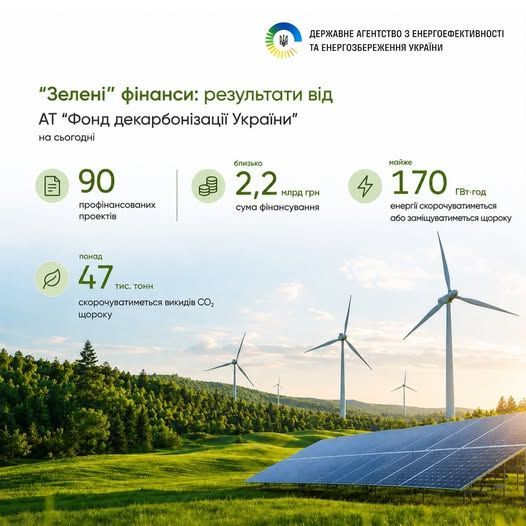
Source: State Agency on Energy Efficiency and Energy Saving
The government agency believes that the Fund helps return the funds related to carbon pricing back into the economy.
"This creates a long-term source of financing for energy efficiency and decarbonisation while enhancing the energy resilience and competitiveness of Ukrainian businesses," said First Deputy Head of the State Agency on Energy Efficiency Maria Malaia.
Set of financial instruments
The State Agency on Energy Efficiency claims that the operation of the Decarbonisation Fund aligns with the European model of green transition financing.
Currently, a variety of mechanisms can be accessed through the Fund: lending, financial leasing, factoring. At the same time, it supports the development of energy service contracts and conducts energy certification of state facilities.
More details about current programs are available on the Fund's website.
Recall that two out of the three new draft laws for the introduction of the National Emissions Trading System propose the current Decarbonisation Fund as the institution to accumulate and manage the revenues of the carbon quota market.
However, Ukrainian business categorically does not support this idea. Particularly, the European Business Association insists that a separate fund should be established for this purpose.
The Decarbonisation Fund is replenished with revenues from the CO² emissions environmental tax, as well as through support from international organisations and partner countries. The use of these funds often raises concerns. For instance, using polluters' money, the Fund installed 14 solar power plants on the roofs of public institutions. At the end of January, through the institution, 10,000 portable charging stations were purchased for children with disabilities. Anti-corruption media have also noted that the Fund awarded UAH 192 million to a single supplier without competition, change of terms, or price adjustment.