A few days ago, Ukrainian President Volodymyr Zelenskyy announced the resignation of Prime Minister Yulia Svyrydenko and a government reshuffle. Against the backdrop of the forthcoming reshuffle of the Cabinet of Ministers, environmental NGOs, experts and academics have once again called for the re-establishment of a separate Ministry of Environmental Protection and Natural Resources.
Why does the environmental community continue to insist on this? What risks are experts mentioning? How will this affect Ukraine’s European integration? Read on in the article by EcoPolitic.
Another attempt to reach the authorities
This is becoming a sad tradition: exactly one year ago, the human rights organization “Ecology – Law – Human” initiated an open statement calling on deputies and government officials to abandon plans to liquidate the Ministry of Environmental Protection. The statement was signed by over 20 NGOs, and more than 340 experts, activists, and concerned citizens.
The initiators of the document emphasized that merging the Ministry of Environmental Protection with the Ministry of Economy and the Ministry of Agrarian Policy and Food would be an institutional disaster for nature, national security, and the state’s strategic path toward European integration. However, the authorities did not heed these warnings.
Later, in November 2025, amidst the scandalous “Midas” case, the environmental community once again appealed to the authorities with an open statement on the need to restore the work of the specialized ministry.
"The Ministry of Environmental Protection is not a 'resource agency.' It is a key government body that must be independent in forming environmental policy for a healthy life in a clean environment. Integrating this ministry into a structure that is simultaneously responsible for the economy, agrarian policy, and environmental protection means neglecting environmental priorities and creating constant conflicts of interest right at the heart of decision-making, as well as presenting a very serious risk for the emergence of new corruption schemes," representatives of non-governmental environmental organizations (NGOs) stressed.
Yet, once again, their voices were not heard in high offices.
And now there is a third public statement this year. In less than 20 hours, it gathered nearly a hundred signatures from NGOs, scientists, and concerned enthusiasts.
The environmental community also recalled the previous unsuccessful merger of the environment and energy ministries in 2019. At that time, this “experiment” slowed down nature conservation reforms and weakened the environmental sector.
"Repeating this mistake now, during wartime and ongoing negotiations on accession to the European Union, creates additional risks for the environmental security of the state and the success of European integration," the conservationists’ statement reads.
The environmental crisis is worsening, yet the specialized ministry has become unnecessary
The main argument put forward by environmental community representatives is that Ukraine cannot afford to be without a dedicated environmental ministry during the greatest ecological crisis in its history since independence. The full-scale war has not only exacerbated systemic problems with air and water quality, waste management, and land degradation that existed before, but also created many new threats.
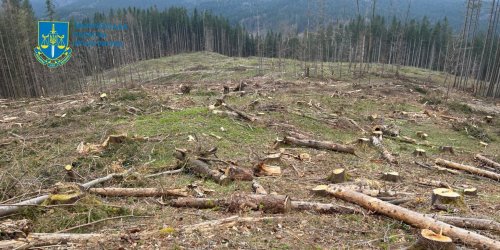
“Hundreds of thousands of hectares of destroyed forests, soils and water bodies contaminated with explosive remnants, large-scale destruction of natural ecosystems, degradation of protected area territories, and loss of unique biodiversity-all of these pose a direct threat to human life and health, the state's environmental security, and the future of Ukraine,” the statement says.
Nevertheless, it is at this moment the government has decided the state no longer needs a separate environmental ministry.
Activists consider such a decision absurd: the larger the environmental crisis becomes, the weaker the domestic institution tasked with responding to it appears to be.
Eurointegration obligations at risk
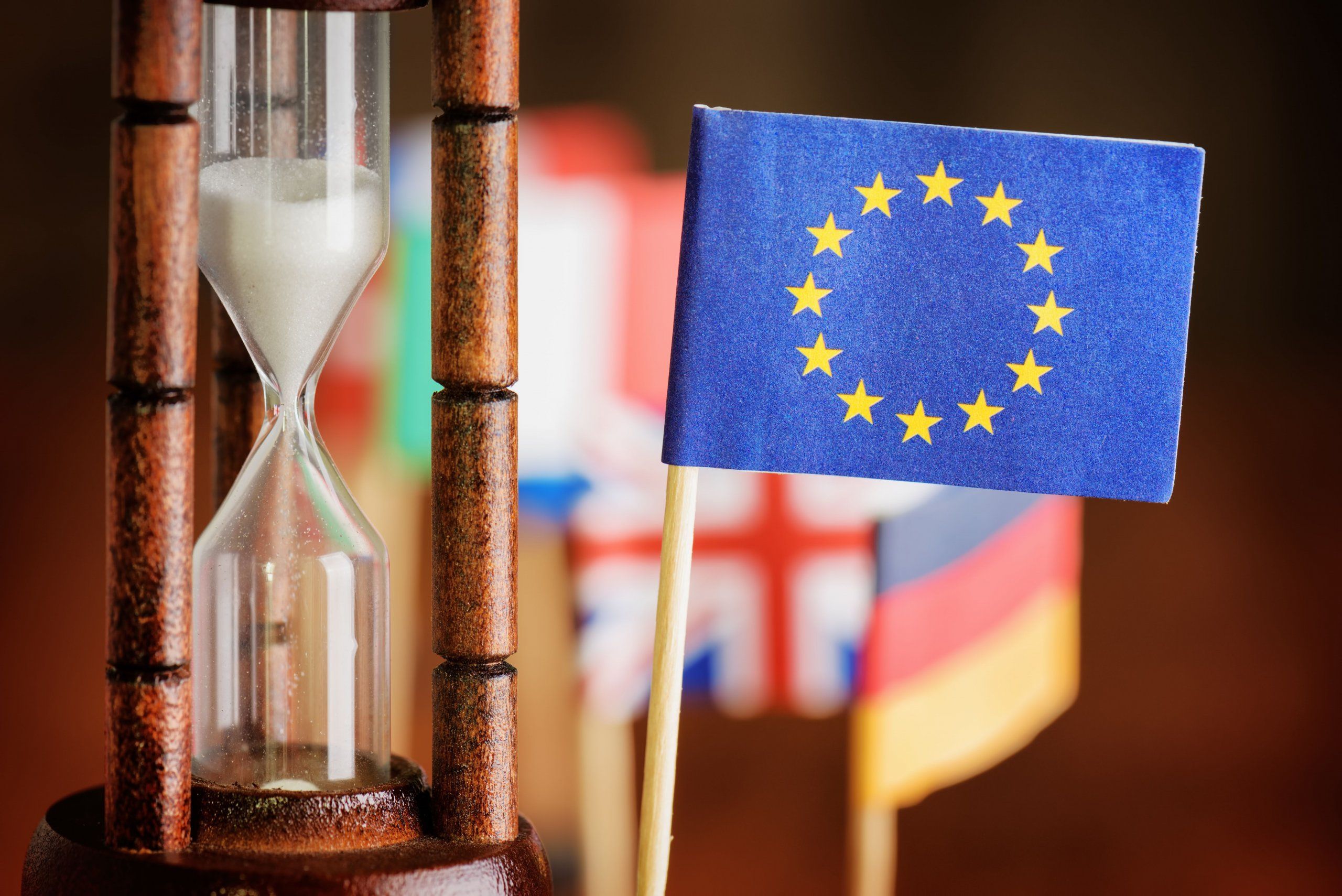
Experts continually stress that Ukraine is at a decisive stage of negotiations to join the European Union, and the environmental sphere is one of the most complex areas in the negotiation process. Ukraine must implement and enforce over 200 European directives and regulations that cover almost all areas of environmental policy, from air quality and waste management to water, industrial emissions, climate, chemical safety, and nature conservation.
This is not just hundreds of pages of new legislation. It is a gigantic workload involving the creation of monitoring systems, digital services, registries, control mechanisms, and new governmental institutions. Specialists need to be trained, enterprises checked, and actual penalties must be imposed for violations.
Public figures insist that a mega-ministry, in which the environment is not a central focus, cannot effectively manage such a scale of work. In fact, the government has weakened the relevant agency at precisely the time when its workload was expected to increase manifold.
And now, this is no longer just an internal issue of public administration. The weakness of environmental institutions could become an obstacle on Ukraine’s path to the EU.
“The fact that Ukraine does not have a separate Ministry of Environment is a significant weakening-both for our natural environment and for Eurointegration. The environment in Ukraine must be a full-fledged participant in state policy and implement a substantial portion of Eurointegration reforms, and this requires a separate, independent, and strong institution,” says Natalia Gozak, Head of the Greenpeace Ukraine office.
The Main Problem of the Mega-Ministry: Conflict of Functions and Interests
According to experts, the most acute problem of the mega-ministry is the obvious internal conflict among its various duties and objectives. Nature conservation has been merged into a single structure with the economy and the agrarian sector-that is, with areas for which the use of natural resources is one of the fundamental instruments of development.
The economic sector must stimulate production, investment, resource extraction, and the implementation of large-scale projects. The agrarian sector is interested in the use of land, water, forests, and other natural resources.
The environmental sector, on the contrary, should impose restrictions, require impact assessments, monitor pollution, and halt decisions that threaten nature and people.
In other words, one part of the ministry is supposed to accelerate economic activity, while the other is supposed to restrict it when necessary. NGO representatives are convinced that such a structure is inherently doomed to a conflict of interest.
“Environmental protection cannot be subordinated to a body whose priority is economic growth or the development of the agricultural sector, since in such a model, nature conservation issues inevitably take a back seat,” the statement reads.
When the leadership of a single agency is responsible both for economic growth and for environmental restrictions, it is easy to guess which area will carry more political weight-especially when environmental requirements prevent the rapid launch of an industrial, agrarian, or infrastructure project.
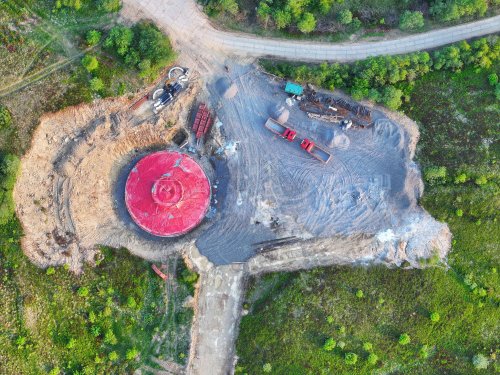
The clearest example of this was the positive environmental impact conclusion on the project to build a wind farm with 30 wind turbines on Polonyna Runa. This was granted despite the enormous risks to the unique highland environment, which eco-activists and scientists had loudly protested in numerous public appeals. Petitions to the president and the intervention of two parliamentary committees also proved ineffective.
“After encountering resistance to the wind turbines in Zakarpattia, they dissolved the Ministry of Environment and created a three-headed monster-the Ministry of Economy, which faces a conflict of interest because the economy and the environment cannot be merged. As a result, the Ministry and its head, Oleksiy Sobolev, are advancing economic and business interests in the Carpathians with clear signs of violating the laws of Ukraine, rather than acting as state protectors of nature. It was this minister who delivered the verdict for Polonyna Runa, fully aware that part of the concrete foundations and networks for the wind turbines had been built illegally,” states NGO "Save Pikuy".
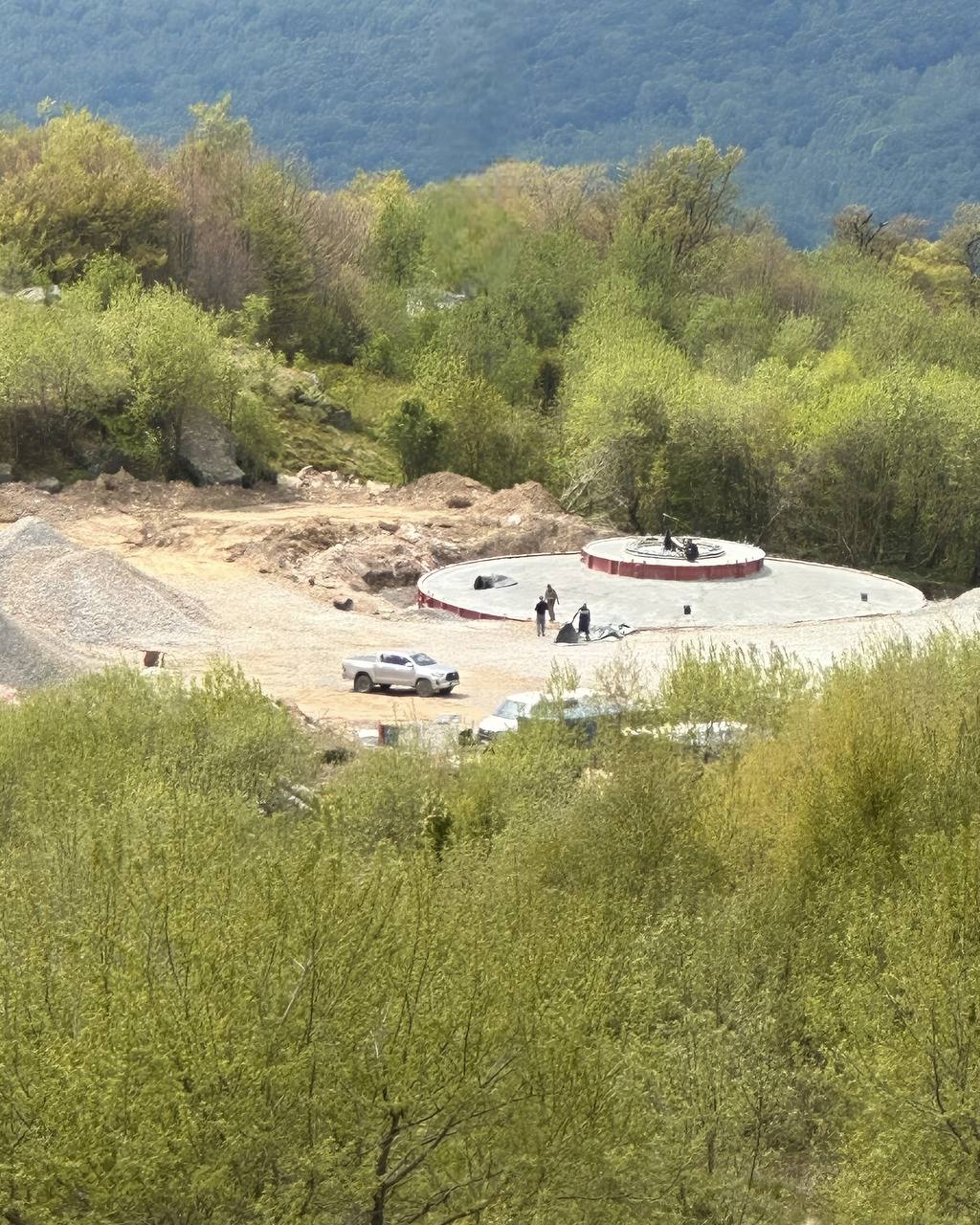
Photo: Mark Melnychenko.
Personnel shortage threatening reform implementation
Another grievance from the environmental community is the critical lack of specialists involved in shaping and implementing state environmental policy. This is evident at the highest level, where nearly all environmental work in the ministry is coordinated by just one deputy minister under Oleksiy Sobolev-Oleksandr Krasnolutskyi-as well as at lower levels.
Environmental impact assessment, strategic environmental assessment, industrial pollution, integrated permits, biodiversity, monitoring, water policy, waste, and chemical safety all require separate teams with specialized expertise. Instead, after the “optimization,” the environmental sector of the new ministry lacks enough staff even to carry out current tasks.
As a result, complex reforms risk becoming deadlocked between departments, while oversight of legislation enforcement could remain a mere formality.
It is not enough to adopt new rules. Someone must check whether they are being implemented.
Creating a register is not sufficient. Someone has to populate it with data, analyze this data, and respond to violations.
It is not enough to enshrine European standards in law. A state system with qualified specialists capable of implementing them in practice is required.
Institutional capacity? Apparently not a familiar concept
After the dissolution of a dedicated Ministry of Environment, environmental policy lost its own minister and proper representation at the Cabinet level. Now, the environmental sector is forced to compete for leadership attention alongside the economy, agriculture, industry, trade, and investment policy.
In such a system, environmental protection ceased to be a state priority and turned into just one of many items on the agenda of a so-called mega-ministry. NGOs describe this as a loss of political subjectivity.
“The first months of operation of the Ministry of Economy, Environment and Agriculture of Ukraine have already shown that such unification has not strengthened but, on the contrary, weakened the state's institutional capacity in the field of environmental protection,” the statement reads.
Experts recalled that the practice of most EU member states demonstrates the opposite approach, where environmental policy is implemented by separate specialized ministries equipped with sufficient staffing, organizational, and financial resources to fulfill their powers.
It is worth noting that the two previous ministers, through their performance and effectiveness in office, failed to justify the need for a dedicated ministry. As a reminder, in 2023, during the tenure of former minister Ruslan Strilets, Ukraine received a failing grade from the European Commission for progress in implementing environmental reforms as part of European integration. At that time, a significant portion of the adopted integration measures were only partially implemented, and the processes of developing and adopting them were consistently delayed.
His predecessor, Roman Abramovsky, did not last in office even a year. He submitted his resignation himself; however, according to media sources, the reason for this was conflicts with President Volodymyr Zelenskyy and inactivity. The ministry under his leadership did not submit a program for the President to present at the climate summit in Glasgow, and the Verkhovna Rada failed to adopt bills on emissions reduction. According to the words of the head of the “Servant of the People” parliamentary faction, Davyd Arakhamia, one of the main criticisms against Roman Abramovsky was the high level of corruption within regional environmental inspectorates.
Russia's eco-crimes must be documented
In the view of activists, documenting the damage caused by the war also requires a strong and independent body. Ukraine needs to record the destruction of forests, water and soil pollution, the devastation of protected areas, loss of ecosystems, and other consequences of Russian aggression. This data should serve as the foundation for international claims and future compensation.
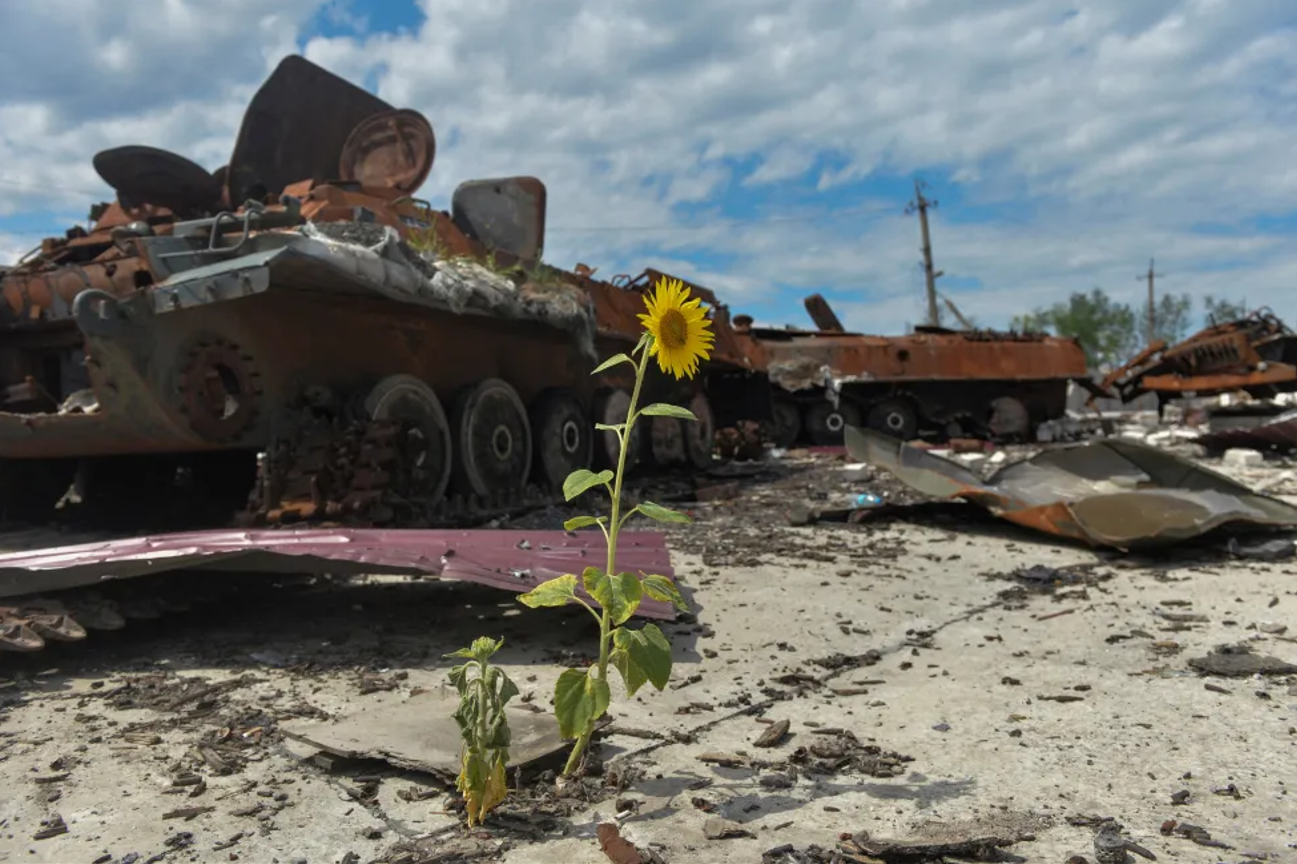
However, without a single center of responsibility, this work risks turning into a collection of disparate databases, methodologies, and reports, which are difficult to combine into a convincing evidence-based system. The price of institutional weakness in this situation may be measured not only in destroyed ecosystems but also in billions in lost compensation.
Green recovery may remain just a beautiful phrase
A particular challenge is the implementation of Ukraine’s “green” recovery. Our country will require large-scale reconstruction of housing, roads, enterprises, energy, and other infrastructure. This means thousands of projects, enormous investments, and intense political pressure to build as quickly as possible.
In such conditions, environmental requirements can easily be declared unnecessary obstacles. Environmental impact assessment can be labeled as bureaucracy. Public discussions-as delays to the process. Building restrictions-as barriers for investors.
This is why, environmentalists are convinced, the country needs an agency whose main task, not a secondary function, is environmental protection. Otherwise, “green” recovery risks remaining only in presentations, while real decisions will continue to be made by the old principle: “First we build, and then we’ll deal with the consequences.”
What the environmental community demands
Activists, scientists, and environmental organizations are calling on the president, Verkhovna Rada, and the Cabinet of Ministers to immediately restore the Ministry of Environmental Protection and Natural Resources as a separate central executive body with clearly defined powers, sufficient personnel capacity, and proper resource support.
“These days, the Ukrainian authorities have a chance to correct the glaring injustice that happened a year ago. [...] If the government is truly committed to effective change, now is the time to correct the decision that weakened the state’s environmental policy,” noted Greenpeace Ukraine.
“It is very important that all parliamentary factions raise the issue of restoring the Ministry of Environmental Protection both during faction meetings and in their group chats. And during the session of the Verkhovna Rada-it is simply essential to take the floor and emphasize that in negotiations on joining the EU, we will face a cluster where the role of the environment is extremely important,” wrote Iryna Fedoriv, leader of the public initiative “Holka.”
Meanwhile, the Association of Environmental Professionals (PAEW) takes an even broader view:
“Ukraine does not just need a new government. Ukraine needs a new architecture of state governance capable of integrating policies on security, economic development, European integration, recovery, and sustainable development into a single decision-making system.”
The environment cannot be an add-on to the economy
The debate around the Ministry of Environmental Protection is not merely a discussion about the number of ministers and officials. The real issue is whether nature conservation will have its own distinct voice within the state, or whether it will continue to remain subordinate to economic and agricultural priorities.
The conclusion reached by the environmental community is disappointing: the experiment with a mega-ministry has failed. Environmental policy has not become stronger; on the contrary, it has lost its independent voice, expertise, and political weight. Amid war, accession to the European Union, and upcoming reconstruction, Ukraine simply cannot afford an environmental policy that remains a secondary concern.