The Cabinet of Ministers of Ukraine held a meeting on June 10 fully dedicated to environmental and climate issues. As a result, a broad range of documents were approved concerning decarbonization, energy efficiency, liability for pollution, conservation of water resources, and wildlife protection. Notably, most of these are in some way connected to fulfilling commitments within the framework of European integration.
EcoPolitic has prepared a brief overview of the key approved documents based on information from the Ministry of Economy, the Ministry of Environment, and the Ministry of Agriculture.
We have prepared a separate article on Ukraine’s Long-Term Low-Carbon Development Strategy through 2050.
National Energy and Climate Plan (NECP)
The government has approved the document for the period through 2030. It determines national priorities in five areas:
- decarbonization (including renewables);
- energy efficiency;
- energy security;
- domestic energy market;
- research, innovation, and competitiveness.
The NECP is expected to serve as the foundation for investments in Ukrainian energy and climate projects.
The Ministry of Economy calls the NECP one of the key tools for Ukraine’s green transformation. Updating this document became part of Ukraine’s commitments under the European Union’s Ukraine Facility program.
Liability for violations in waste management
This concerns two bills developed in accordance with the “On Waste Management” law. They strengthen criminal and administrative liability by amending the relevant Codes of Ukraine.
Officials hope that stricter penalties will encourage compliance with regulations and help prevent violations in waste handling.
Restoration of river ecosystems
Another document, which adapts European practices to Ukrainian realities, is a bill aimed at restoring the free flow of rivers, conserving their water levels, and improving the state of water bodies. After adoption by the Cabinet of Ministers, it must still be approved by the Verkhovna Rada of Ukraine.
What is the problem?
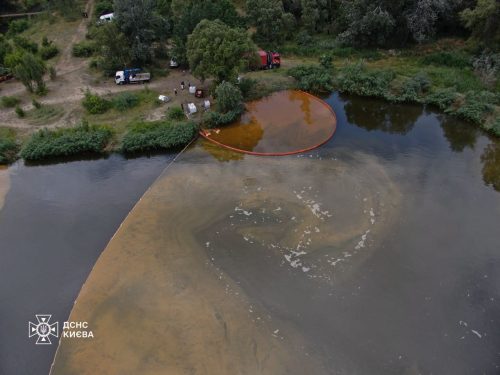
Currently, more than 30% of the area of surface waters in Ukraine suffers from excessive regulation and alteration of natural riverbeds. As a result, we face ecosystem degradation, depletion of water resources, and, overall, a major threat to water security.
It might seem that dismantling abandoned hydraulic structures could improve the situation. However, the current mechanism is overly lengthy and unnecessarily complicated.
How is it planned to be addressed?
The draft law covers the following issues:
- Obstacles to Free Flow. A mechanism will be created to identify and account for hydraulic structures. It is also planned to simplify the procedure for making further decisions – whether to continue to use the structure or dismantle it.
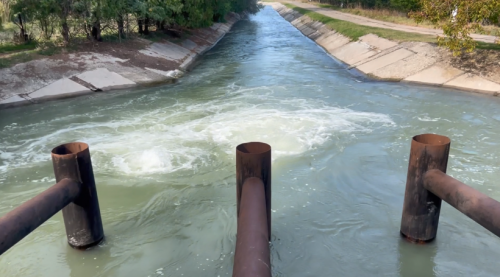
- Environmental Flow. This refers to the minimum volume of water that must be maintained in the river. It should ensure the stability of the aquatic ecosystem, the conservation of water resources, and the maintenance of appropriate water quality.
- Responsible Authorities. River basin management plans must specify specific responsible parties. Therefore, the document assigns authority to certain government bodies.
Biodiversity conservation
The Cabinet of Ministers approved the Strategy for the Conservation of Biological Diversity of Ukraine for the period up to 2035, as well as an operational action plan for its implementation in 2026–2028.
The Ministry of Economy calls this document a practical action plan and hopes that it will help better protect wildlife and engage communities in these processes.
The main objectives are fairly abstract. Among them are:
- to halt the loss of species and natural habitats;
- to restore degraded ecosystems;
- to strengthen wildlife protection;
- to integrate conservation approaches into various areas of state policy.
As with previous documents, the strategy was also adopted in fulfillment of international obligations. In particular, it should help implement the global goals of the Kunming-Montreal Global Biodiversity Framework. All 23 objectives contained in the Ukrainian strategy are aligned with this document.
EU water resource monitoring standards
The government-adopted resolution should introduce water monitoring for contaminants included in the EU watchlist. These are insufficiently studied or even new substances whose impact on the environment has not yet been fully researched.
Pesticides, pharmaceuticals, and persistent compounds will be under constant observation. The resolution also specifies concrete requirements for the frequency and methods of analysis.