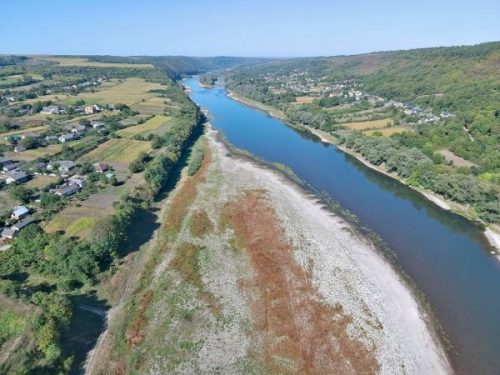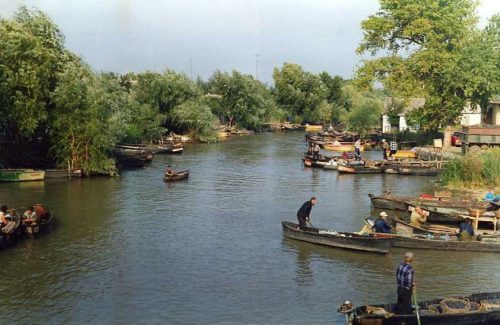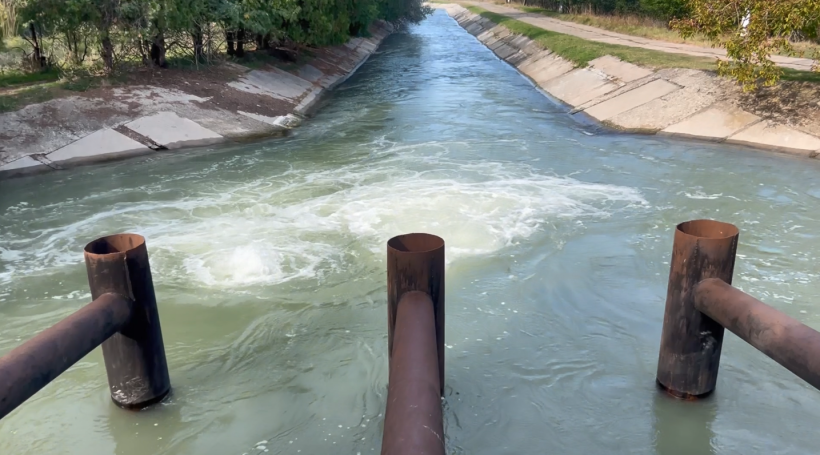
The critical drop in water levels in the Danube lakes continues despite the onset of autumn. The authorities are resorting to extreme measures — artificially pumping water from the Danube. The lakes serve as reservoirs and are a source of water for the region’s drinking and agricultural needs.
According to a statement from the Izmail District State Administration, the filling of Lake Kytay began on Tuesday, 6 October. The work is set to continue until at least the end of 2026.
The condition of the lake is appalling — it is on the verge of collapse and complete drying up. At present, the water level in the lake is 19 cm below the dead volume level, and it continues to fall.
This poses a direct threat to more than 11,000 people living in the surrounding villages.
"The inflow of fresh water will make it possible to increase the volume of the reservoir, stabilise its water regime and help to reduce the level of mineralisation. A stable water level in the lake is important for maintaining the groundwater level, which is used by the residents of these settlements for domestic purposes," the district administration emphasised.
How the reservoir ‘works’ and Lake Katlabug. They began filling it some time ago, and work is still ongoing. According to a statement from the State Agency for Land Reclamation, Fisheries and Food Programmes, the plan is to ‘top up’ the water to the normal level of 1.7 metres. This will cost 39.5 million hryvnias.
Katlabug is also of critical importance to the local economy. Water from the reservoir is used to irrigate around 24,000 hectares of agricultural land in Bessarabia via eight irrigation systems.
It should be noted that the government adopted the decision on the compulsory replenishment of lakes in the Odesa region back in May 2026. In the case of China and Katlabug, the authorities are guided by Resolution No. 503 of 27 May 2026 ‘On amendments to the annexes to the State Target Programme for the Comprehensive Water Supply of Territories Affected by Military Operations for the period up to 2030’.
The filling of Lake Katlabug began back in August.
Due to a lack of rainfall and rising global temperatures, Ukraine is facing critical problems with its water bodies. For example, in the Khmelnytskyi region, the region’s largest lake — Sviate — has finally dried up. Lake Velykyi Supii in the Kyiv region is also at risk of disappearing.
Due to rivers running dry in western Ukraine, water abstraction has been restricted for 300 businesses, including municipal water supply companies.