While large animals and birds are fleeing the combat zone en masse, their populations are growing significantly in other parts of Ukraine, not least due to the hunting ban. A new generation of animals is growing up that is unafraid of humans because they have never encountered hunters. However, other threats loom for them—from highways to agrochemicals.
Igor Dykyi, a zoologist, Antarctic expedition participant, and project manager for “Rare Species” at WWF-Ukraine, spoke about this in an interview with RBC-Ukraine.
Migration from the front lines and the return
According to the scientist, large animals fled the front lines practically in the first year of the full-scale war. This also applies to large birds, such as eagles and storks.
Only small animals that can hide in burrows can survive in those conditions; foxes are still occasionally spotted.
After the fighting ends, the animals try to return to their usual habitats. The zoologist says he has seen this in the Kharkiv region. However, the areas remain too dangerous due to landmines and tripwires.
Hunting under prohibition
Thanks to the total ban on hunting, the populations of many species in Ukraine have increased. This also applies to some Red List species, such as the moose.
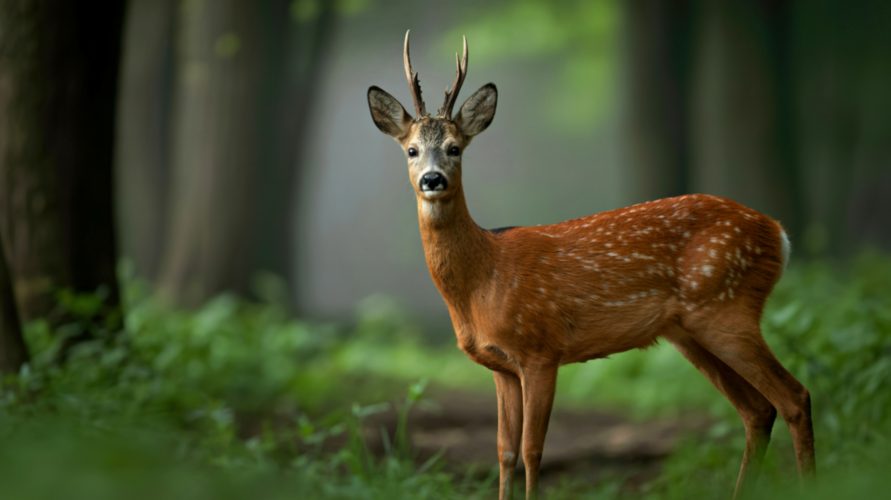
"Previously, scientists developed various programs and strategies to increase the numbers of roe deer, red deer, and other ungulates, but in reality, it was enough just to prohibit hunting. Nature was given peace and a bit of time, and it recovered," Ihor Dykyi noted.
At the same time, the number of predators is also growing. Their population is no longer controlled by culling, and there is enough food for them to avoid entering human settlements.
The disappearance of fear of people
Reports of wild animals entering cities are becoming increasingly frequent. The zoologist highlights two main reasons for this phenomenon.
On the one hand, humans are taking over territory from other creatures by expanding settlements. Some adaptable species have already been forced to adjust to new conditions. For example, foxes, badgers, and martens have learned to live near people.
Another factor is the disappearance of the fear of people. Among foxes, a generation born during the full-scale war has grown up without the experience of hunting. Humans are not an existential threat to them, as they have never experienced being chased by hunters.
However, this should not be abused so as not to harm the autonomy of the animals.
"People also need to know how to behave. Wild animals should not be fed, because they become dependent on it and later find it difficult to obtain food on their own. In addition, they can carry infections. Therefore, there must be a distance between humans and wild animals," the scientist stressed.
Life threats that have not disappeared
Many animals in Ukraine are killed by vehicles. Ukrainian highways are simply not adapted for animals – they lack both fencing and wildlife crossings.
"Just this year, three moose have already died on the roads of the Lviv region, last year, unfortunately, there were seven. Open roads are a danger both for animals and for motorists. Last year, one person died as a result of a collision between a car and a moose," the zoologist said.
Оne of the particular threats is agricultural chemicals, which farmers actively use to treat fields. Recently, there was widespread attention online regarding the poisoning of roe deer by these chemicals, with animal rescue volunteers later saving them.
According to Ihor Dykyi, this threat has existed and continues to exist not only in Ukraine but also in Europe. He recalled a case of mass crane mortality in the "Askania-Nova" nature reserve. The cause was the treatment of fields near the protected area, carried out by a local agroholding.
EcoPolitic previously reported that the Ministry of Education approved a school programme to teach children humane treatment of animals.
Work is also underway in Ukraine on a draft law that aims to strengthen the protection of pets.