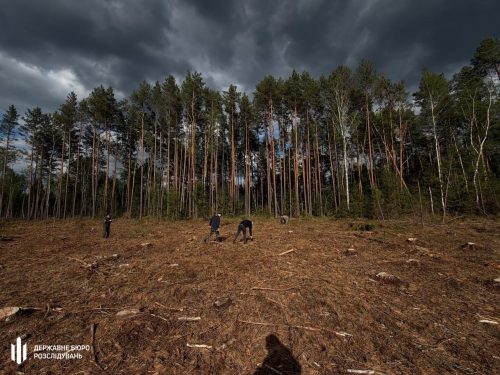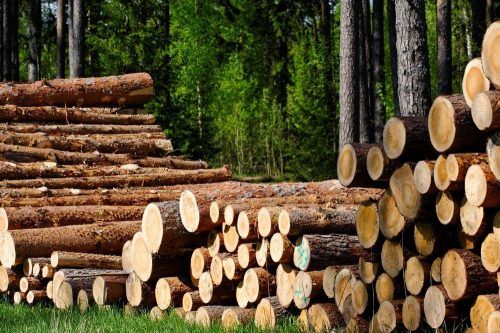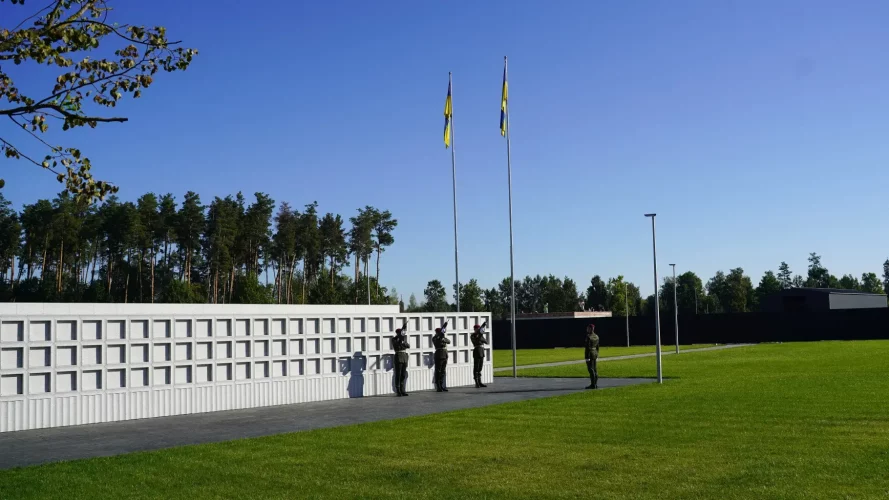
The construction of the National Military Memorial Cemetery (NMMC) in the Markhaliv Forest in the Kyiv region remains under close international scrutiny. The Bureau of the Standing Committee of the Council of Europe’s Bern Convention has not closed the case regarding the NMMC. In fact, the committee has confirmed a number of serious environmental risks and is demanding explanations from Ukraine.
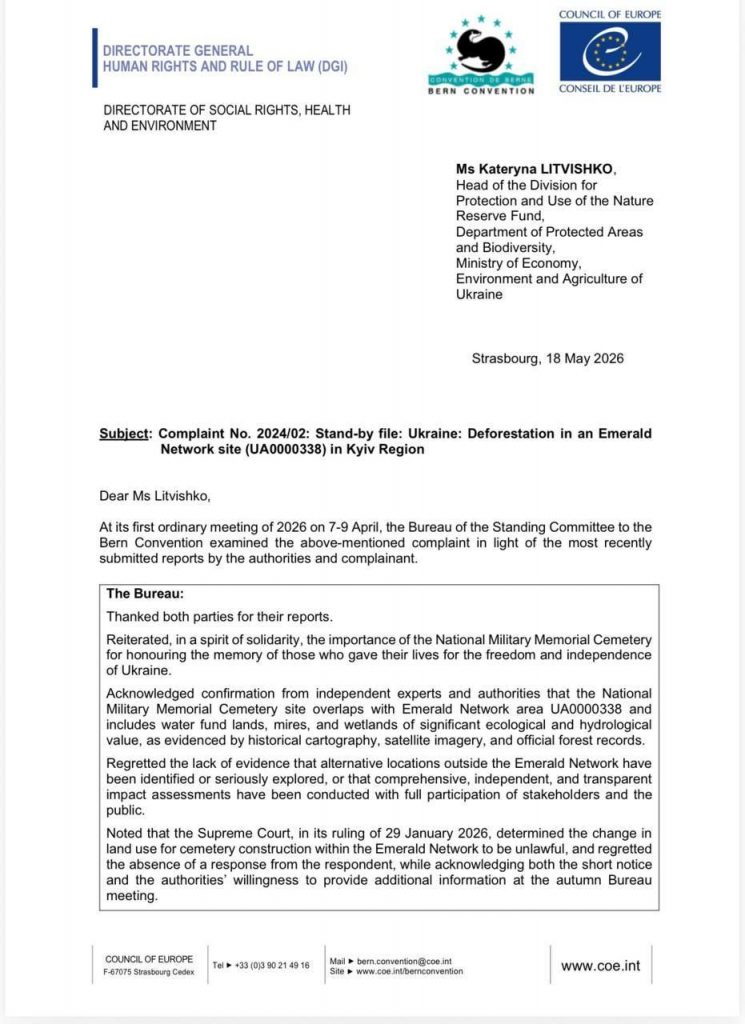
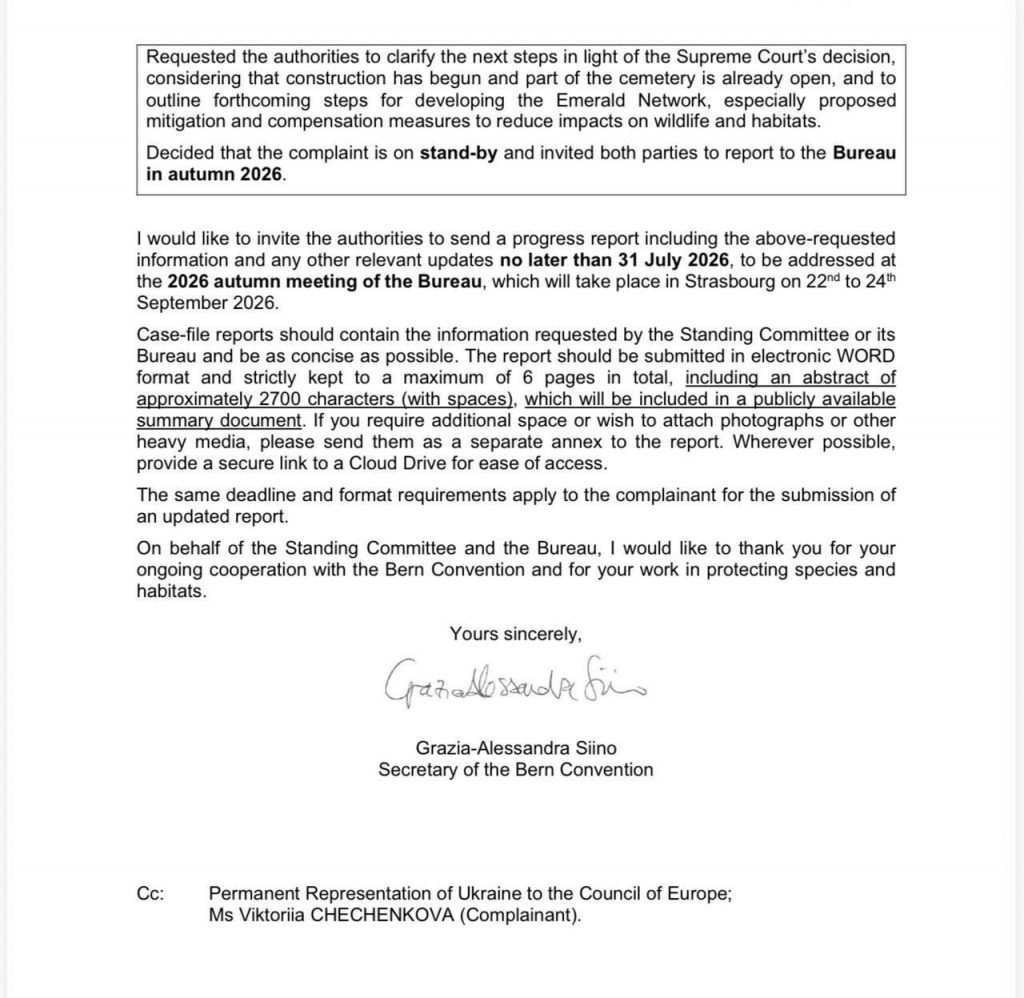
This was reported by the Kyiv Ecological and Cultural Center (KECC), citing a letter from the Bureau. The document was sent to the Ministry of Economy, Environment, and Agriculture.
During its April meeting in Strasbourg, the international body explicitly stated that the construction site overlaps with Emerald Network site UA0000338—a nature conservation area of European significance. This includes forests, swamps, and wetlands of significant ecological and hydrological value.
Main observations
High value of the territory. The document notes that these facts are supported by official forestry management materials, satellite imagery, and historical maps. Essentially, international institutions have questioned the Ukrainian side's arguments regarding the safety of the selected site.
Lack of proper search for alternatives. The Bern Committee also drew special attention to the government’s failure to provide convincing evidence that alternative locations outside the Emerald Network were sufficiently considered.
Disregard for consequences and public opinion. Strasbourg also highlighted the absence of a full, independent, and transparent environmental impact assessment with actual public participation.
An important signal is the reference to the ruling of the Supreme Court of Ukraine dated January 29, 2026. The court found the change of land use purpose for the cemetery construction illegal specifically due to the site’s location within the Emerald Network.
The Committee expects a rational response from the Ukrainian authorities
Given the Supreme Court’s prohibition, the Bern Committee expects further clarification from the Ukrainian authorities, as construction was nevertheless initiated and part of the memorial cemetery has already been opened.
Ukraine is required to submit an updated report on the situation in the Markhalivskyi Forest by July 31, 2026. The Bern Committee expects to see a plan of further actions and real measures to compensate for the damage caused to wildlife.
The Bureau will reconsider the Ukrainian case in autumn 2026 in Strasbourg.
EcoPolitic previously reported that the story of the destruction of valuable ecosystems for the cemetery construction has spread beyond Ukraine. French media outlet Radio France Internationale published its own investigative report on the case.
A year ago, the Bureau of the Standing Committee of the Bern Convention of the Council of Europe criticized the actions of the Ukrainian authorities, who allocated a protected forest area for the construction of a memorial cemetery.