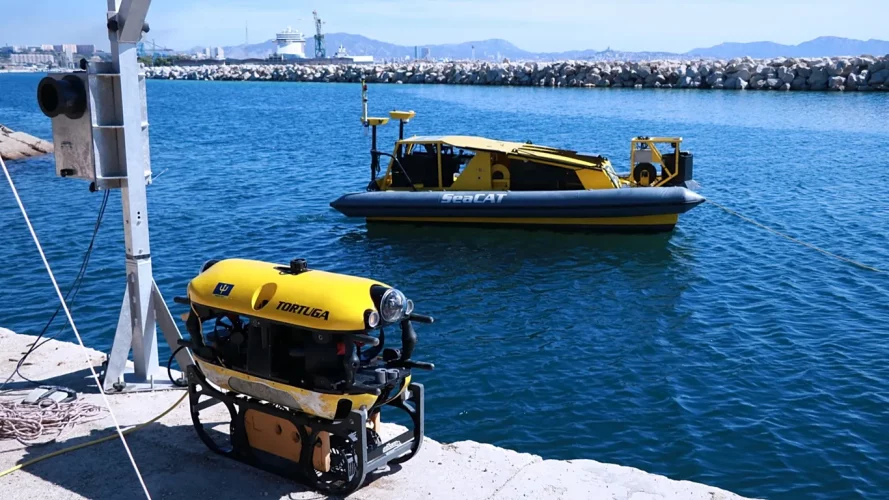
The EU is testing robotic drones capable of cleaning marine debris from the seabed. The technology has already been successfully tested in France and Germany at yacht marinas. This project is funded by the European Union, which aims to halve the amount of marine debris in its waters by 2030.
According to Euronews, the next test sites will be the waters off Venice, Dubrovnik, and Tarragona.
The SeaClear 2.0 initiative and its predecessor, SeaClear, are behind the development of an entire fleet of marine waste-collecting drones. The robots do not operate mindlessly—thanks to artificial intelligence and partial human oversight, they are capable of identifying objects. For example, they can distinguish rocks and marine life from bottles, tires, and other debris.
Drone operation scheme
Traditional seabed cleaning requires divers. There, they either lift light debris to the surface or attach cables to heavier items before lifting them from the vessel. This approach has several disadvantages, the main ones being risks for people and high costs.
SeaClear2.0 is attempting to solve this problem. Uncrewed surface vessels are deployed to designated areas. Aerial drones help detect debris and record its coordinates. Then, underwater cleaners take the stage. These robots remove debris in different ways – by suction, by grasping with a manipulator, or by attaching a "smart" grabber lowered from the vessel.
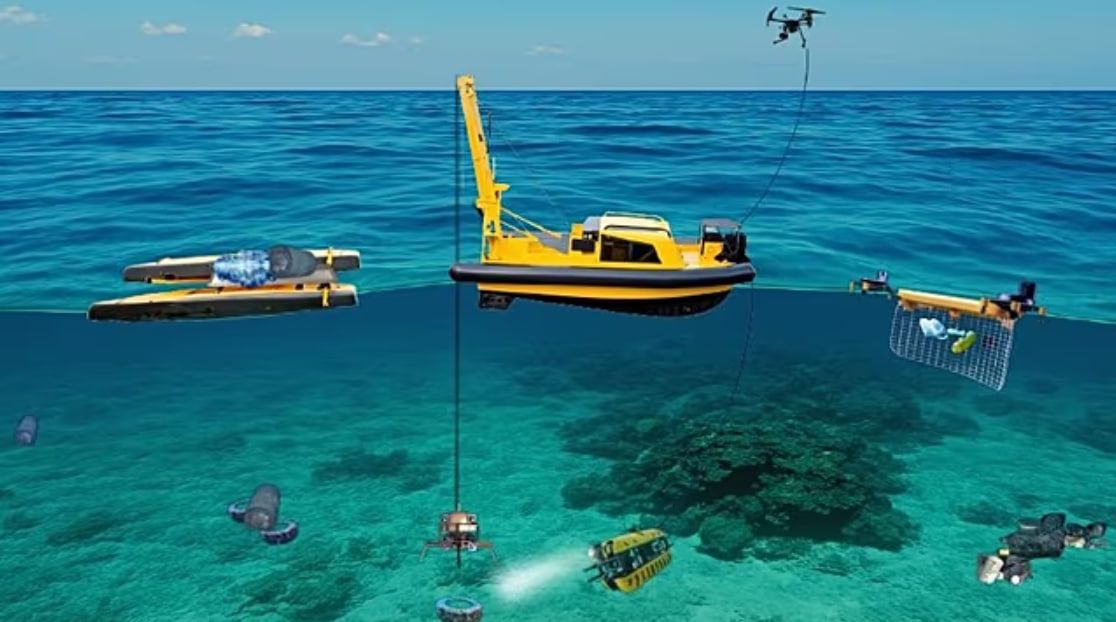
Source: SeaClear
The researchers are not stopping there. They are additionally testing an autonomous barge that functions as a floating garbage truck. The vessel will collect waste that the drones have lifted from the seabed and deliver it to shore.
“During the tests, we have already retrieved rubber tires, metal fences, and parts of ships. With the help of a crane on the surface vessel, we can lift even heavier objects,” said Bart De Schutter, professor at Delft University of Technology and coordinator of SeaClear and SeaClear2.0.
The scientists acknowledge that the technology is not yet perfect. The SeaClear2.0 project is scheduled for completion at the end of 2026, so drones are expected to be optimized by that time. In particular, the developers want to expand the range of drone applications and enable them to collect unexploded mines.
The project team hopes that by the end of the year, unmanned cleaning systems will be at the disposal of local authorities in various parts of Europe.
EcoPolitic previously reported that liquid crystals from gadget screens pollute the world's oceans. There, they are able to affect the DNA of marine life, including dolphins.