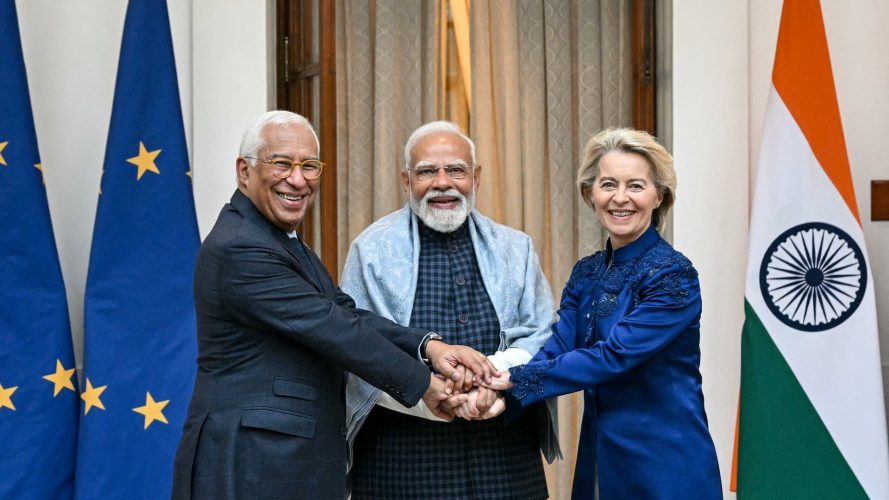
On January 27, the European Union and India successfully concluded negotiations on a free trade agreement. European businesses will now have access to the market of the world's most populous country with reduced customs tariffs. However, the obvious economic benefits and political stability in unstable times may mean much more in this agreement than saving the planet.
In its press release, the European Commission calls the agreement historic, ambitious, and the most significant in the history of relations between the countries.
"We have created a free trade area for two billion people, and both sides intend to reap the economic benefits. We have sent a signal to the world that cooperation based on rules still delivers great results," said European Commission President Ursula von der Leyen.
Economic bonuses
Trade between the EU and India already amounts to €180 billion annually. However, the agreement could double European exports to the Asian country by 2032.
The key instrument is the reduction of export tariffs. The EU expects customs duties to be reduced or eliminated altogether for 96.6% of goods and services. According to estimates, this will save up to €4 billion annually in customs payments.
For example, duties on European cars will be reduced from 110% to 10%, and tariffs on machinery, chemicals, and medicines may be abolished altogether. Duties on agricultural products, including wine and olive oil, will also be reduced.
Sustainable development and climate measures
The agreement is an opportunity to scale European environmental values to Indian realities. The document contains a separate section devoted to sustainable development. In addition to protecting workers' rights and equality, it provides for strengthening environmental protection and developing climate measures in trade activities.
The EU reports that it also plans to sign a Memorandum of Understanding with India. It provides for the creation of an EU-India platform for climate cooperation. The project will be launched in the first half of 2026.
The European Union intends to assist India in decarbonizing its industry. Over two years, the EU will provide its trading partner with €500 million for measures to reduce greenhouse gas emissions and accelerate the sustainable transformation of industry.
Environmental concessions for financial gain
India is one of the world’s largest polluters, and its authorities have previously not demonstrated significant openness to global climate efforts. As Ekopolityka previously reported, the country's leader ignored the United Nations climate conference in Brazil, as did the United States and China. Therefore, the main point of interest in signing the agreement is how the EU will adhere to its ecological principles.
As reported by Politico, India wanted to ensure that its steel would not be affected by European tariffs. This particularly concerns the Carbon Border Adjustment Mechanism (CBAM), which has been in force since January 1. The European Union decided to make concessions. According to preliminary information, it will exempt 18.3 million tonnes of Indian steel from tariffs. The volumes may still be revised.
But as for CBAM, there is currently no talk of any relaxation, at least not publicly. On the contrary, the EU has declared its willingness to help India implement this mechanism.
“Brussels will help Indian operators implement CBAM smoothly with all the technical assistance and additional consultations we can provide,” said the EU Trade Commissioner Maroš Šefčovič.
EcoPolitic reported on the initial outcomes of CBAM implementation. According to statistics from the first week of the “customs-environmental” mechanism, 98% of declared products were ferrous metallurgy products.