
Hundreds of thousands of Europeans die every year from environmental factors that trigger cardiovascular disease. According to the European Environment Agency (EEA), up to 18% of all deaths from this type of disease can be attributed to the effects of air pollution, toxic chemicals, and extreme heat.
According to Euronews, 1.7 million people died from heart and vascular diseases in 2022. This is one-third of all deaths in the European Union for that year.
Risk factors
There is a large imbalance in cardiovascular mortality caused by environmental factors. In Poland and Bulgaria, it is almost 24%, while in Sweden and Finland, it is about 10%.
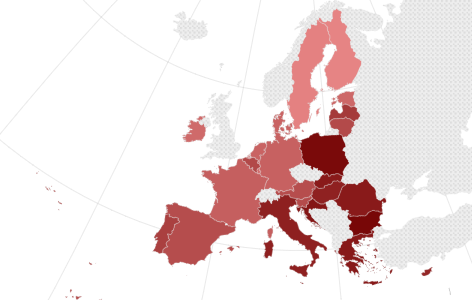
Source: European Environment Agency
One of the most fatal types of pollution is particulate matter, which enters the air through the burning of fossil fuels, transport emissions, and industrial activity. With prolonged exposure, this type of pollution increases the risk of heart attacks, strokes, and heart failure.
Europeans are also dying from noise pollution caused by transport. Every year, there are 66,000 premature deaths. A third of these are linked to cardiovascular disease.
Economic dimension
The spread of vascular and heart disease leads to an increase in the number of people with disabilities. At the same time, the poor health caused by these diseases pushes people to skip work or retire early.
Cardiovascular diseases cost Europe more than €280 million. This is only due to the decline in labor productivity.
Earlier, EcoPolitic reported that every minute, one person dies from heat in the world. This is evidenced by the Countdown on Health and Climate Change study by Lancet.