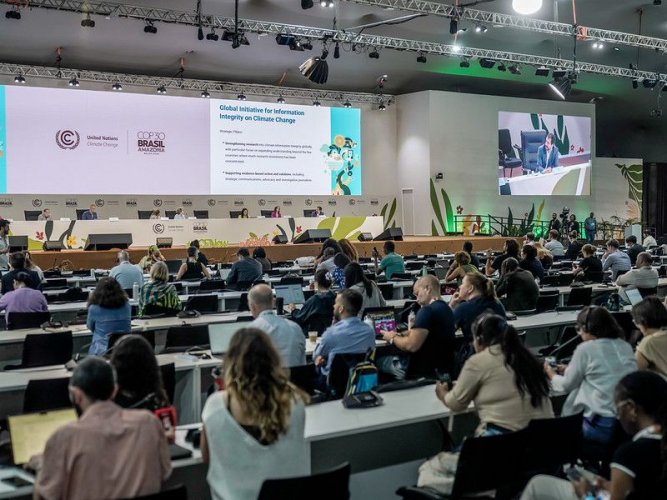
Education, health, and human rights are fundamental to societies' efforts to combat the climate crisis. These topics were the focus of discussions among delegates at the COP30 Climate Change Conference, currently underway in Belém, Brazil.
More details about the results of the events held on November 13 were reported on the COP30 website.
Main events
- Resilient healthcare. The Belém Health Action Plan (BHAP) has been adopted. This is a global plan to adapt healthcare systems to climate change. Developed under Brazil’s leadership in cooperation with the World Health Organization (WHO), it serves as a strategy for strengthening global health while considering the link between climate and public health. The plan includes research, change analytics, implementation of innovations, and development of evidence-based medical protocols. More than 35 charitable organizations, including the Rockefeller Foundation, Wellcome Trust, and IKEA Foundation, have supported BHAP. Initial funding for the plan’s implementation will amount to $300 million through the Climate and Health Funders Coalition.
- Climate literacy. It is precisely an educational system built on the principles of justice and “green” values that forms a new society – responsible and proactive. Education as a catalyst for transformation was discussed at a round table organized jointly with UNESCO. The Greening Education Partnership initiative demonstrated the link between integrating climate literacy into curricula and the ability of the younger generation to become leaders in the fight against climate change.
- Financing as a tool for protecting humanity and economies. The Fostering Investible National Planning and Implementation (FINI) initiative will direct $1 trillion to adaptation projects by 2028. The initiative will combine resources from banks, philanthropists, and insurers to implement sustainable solutions in countries vulnerable to climate change. In addition, a “Debt for Resilience” program has been launched for Caribbean nations to boost their readiness for natural disasters.
- Justice and human rights. “Justice Day” at COP30 was intended to unite the efforts of international judicial systems and find legal avenues in the fight against climate change.
Read about the results of the previous day of the conference in the article by EcoPolitic.