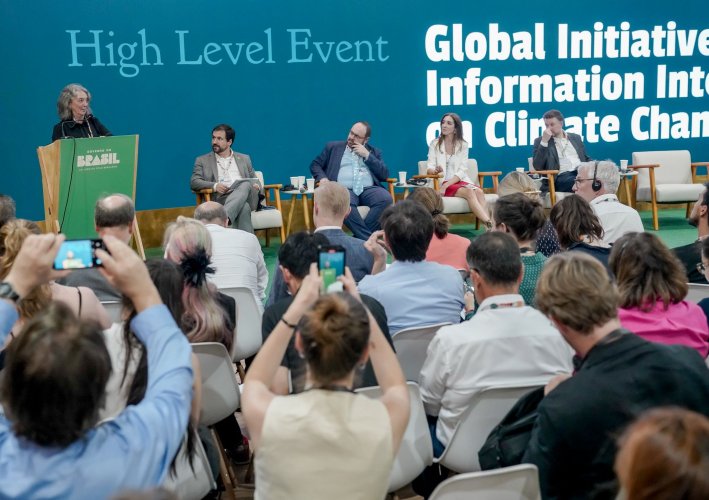
The 30th Conference of the Parties to the UN Framework Convention on Climate Change is underway in Brazil. The third day of COP30 featured events aimed at supporting the creation of new jobs for a sustainable economy, defining a global strategy for financing climate initiatives, and combating climate misinformation.
The COP30 communications team reported on the results of November 12 in detail.
Key events
- Human potential for a sustainable economy. The Global Initiative on Jobs and Skills for the New Economy has been launched. As part of the global green transition, people with new knowledge and professions are needed. Therefore, the implementation of climate programs, carbon-free projects, and other transformational measures could create more than 650 million jobs over the next decade. According to the initiative's report, this includes 375 million jobs in the climate transition and another 280 million in adaptation measures.
- Combating climate misinformation. In the 2024 UN report, misinformation is recognized as a global vulnerability to joint climate efforts. Therefore, the topic of communications was first placed on the COP agenda. Six more countries—Belgium, Canada, Finland, Germany, Spain, and the Netherlands—joined the Global Initiative on Climate Change Information Integrity. An Action Plan for 2028 was also launched to support legal regulation, mobilize funding, and establish principles for responsible climate advertising.
- Environmental priorities for public procurement and investment. The transition to carbon-free production and fair labor requires significant funding. This raises the question of how to prioritize public and private investors. UNIDO/IDDI has launched the Plan on Sustainable Public Procurement. It aims to coordinate the transfer of experience between countries that already give preference to sustainable development projects in public financing. The involvement of private capital in climate projects and sustainable technologies was discussed at the Asset Owners Summit.
- The role of indigenous peoples. Traditional knowledge, together with local self-government, are tools for supporting the sustainability of regions and the world as a whole. Therefore, the Indigenous Adaptation event discussed, in particular, the obligation to financially support projects implemented by indigenous peoples.
- The role of culture. Art was included in the COP30 agenda for the first time. Delegates recognized the importance of culture as a voice of democracy and the climate crisis, capable of attracting attention, reaching out to society, and influencing global processes.
EcoPolitic previously reported on the results of the previous day of the world's largest climate event.
At the climate conference, Ukraine presented its national pavilion, "Time Capsule," and called for restrictions on Russia's illegal reporting on the temporarily occupied territories.