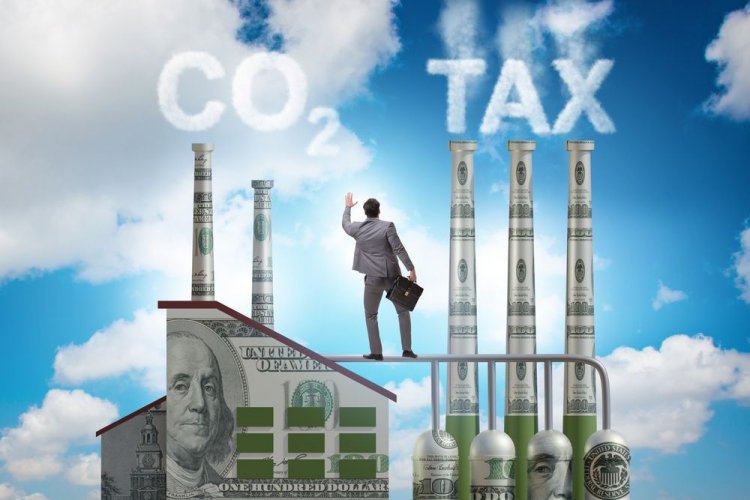
The Ukrainian government should urgently initiate negotiations with the European Union on postponing the implementation of the CBAM mechanism for our country, arguing that the war is a force majeure situation that causes serious damage to the country's economy and industry.
Oleksandr Kalenkov, president of the association of enterprises "Ukrmetalurgprom", expressed this vision.
He reminded that as of January 1, 2026, Ukrainian manufacturers will be forced to pay the carbon duty within the framework of the cross-border carbon adjustment mechanism (CBAM), which will become fully operational from that date.
According to it, goods imported into the EU and the production of which is associated with significant carbon emissions will be subject to an additional tax. In this way, the European Union wants to protect its producers, who already make special payments within the European system of trading quotas for carbon emissions, and prevent carbon leakage.
From 2026, it will be necessary to confirm emissions data with the help of independent verification companies and to purchase relevant emission certificates in case of exceeding EU norms during production.
In the first phase, CBAM will be applied to products of the cement industry, iron, steel, aluminum, fertilizers and electricity. In the future, the EU plans to expand this list.
Oleksandr Kalenkov says that the EU directives provide for the possibility of postponement due to force majeure circumstances, which have devastating consequences for the country's economy and industry. According to the president of Ukrmetalurgprom, the war is such a force majeure. Therefore, he considers it critically important to talk with European partners about the use of this mechanism and the postponement of CBAM for Ukrainian goods.
"In a situation where we export most of our products to Europe, it will be a big blow to the Ukrainian economy if we don't deal with it now. And it is not only about metallurgy, as the new regulation will affect any product that consumes electricity, for example. Everyone will pay – some more, some less," he is sure.
Earlier, EcoPolitic wrote that under CBAM fall under 20% of goods from the total export of Ukraine to the EU.
We also told how EU companies are preparing until the full introduction of the cross-border carbon adjustment mechanism in 2026.