The European Commission has passed a law requiring that all buildings constructed from 2030 onwards must be energy efficient and completely carbon neutral.
This is reported by the press service of the European Commission.
This legislation establishes a framework for EU member states to reduce emissions and energy consumption in all types of buildings, including residential, commercial, educational and healthcare facilities.
Each country must adopt its own national strategy to reduce the average primary energy consumption of residential buildings by 16% by 2030 and by 20-22% by 2035. For non-residential buildings, 16% of the least energy efficient buildings should be reconstructed by 2030 and 26% by 2033.
"In a climate-neutral Europe, we must be able to heat and cool our homes and buildings with minimal emissions. We have the technology to do this, but we need to create a stronger economic base for renovations. The new Energy Performance of Buildings Directive will help mobilize additional finance and increase supply chains construction costs," said Climate Commissioner Wopke Hoekstra.
The directive will increase Europe's energy independence under the REPowerEU plan by reducing the use of imported fossil fuels and making "zero emissions" the standard for new buildings.
This means that all new buildings must have zero fossil fuel emissions as of:
- January 1, 2028 for state buildings;
- January 1, 2030 for all other new buildings (subject to certain exceptions).
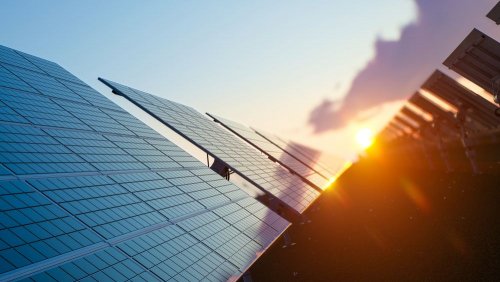
It is noted that the directive includes a requirement to phase out the use of fossil fuels for heating and promote the implementation of solar power plants, taking into account national conditions.
Buildings are responsible for around 40% of energy consumption in the EU, more than half of gas consumption (mainly for heating, cooling and hot water) and 35% of energy-related greenhouse gas emissions. Currently, about 35% of EU buildings are over 50 years old, and almost 75% of the building stock is not energy efficient. At the same time, the average annual rate of renovation of buildings for the purpose of energy saving is about 1%.
As EcoPolitic previously reported, for a "green" transition in Europe by 2030 almost €600 billion of investment in high-voltage power lines, transformers and wires is needed.