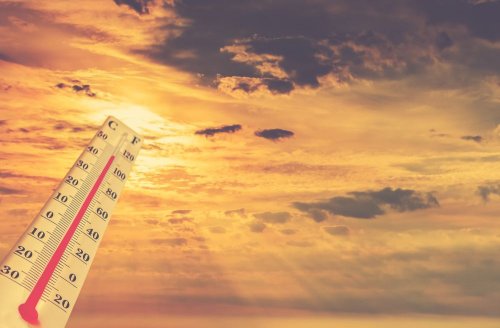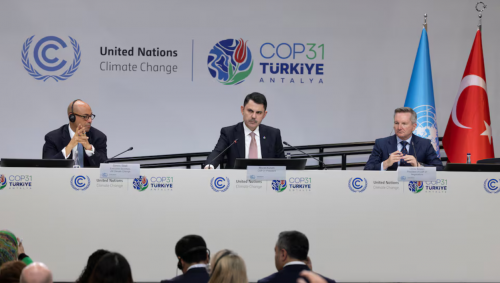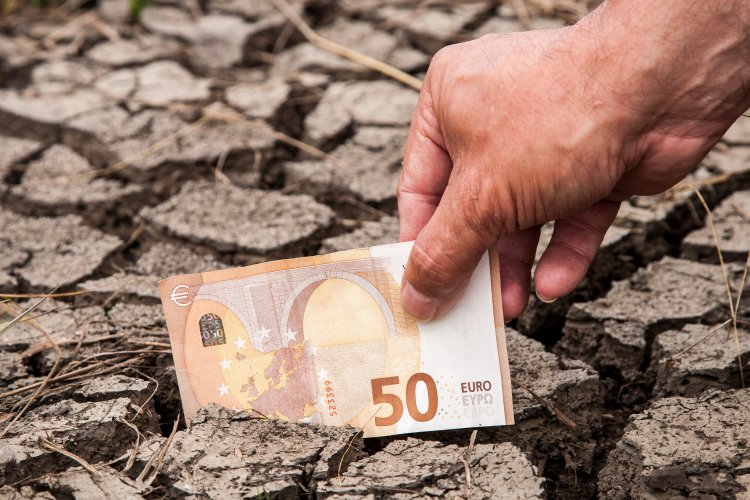
A report by the World Meteorological Organization (WMO) confirmed that 2023 was the warmest year on record with global temperatures exceeding 1.45°C (±0.12°C), yet climate finance accounts for only about 1% of global GDP.
While annual climate investment needs to increase more than sixfold to reach nearly $9 trillion by 2030 to limit warming to 1.5°C, the cost of inaction is even higher, the WMO report says.
It is noted that in 2023, records will also be broken for:
- greenhouse gas levels;
- surface temperature, heat and ocean acidification;
- sea level rise;
- melting of sea ice in Antarctica;
- glacial retreat.
The 2023 State of the Global Climate Report showed that rapidly intensifying heat waves, floods, droughts, forest fires, and tropical cyclones have caused misery and chaos, upending the daily lives of millions and causing economic losses worth many billions of dollars.
"The sirens are wailing on all the major indicators. Some records aren't just topping the charts, they're shattering the charts. And the changes are accelerating," said UN Secretary-General Antonio Guterres.
It is noted that in 2021-2022, global climate-related financial flows reached almost $1.3 trillion, which is almost twice as much as in 2019-2020. However, there is still a large funding gap.
The report emphasized that in order to limit global warming to 1.5°C, funding should increase to $10 trillion by 2050. Over the period 2025-2100, the total cost of inaction is estimated at $1266 trillion, but this figure is likely to be a sharp underestimate.
The WMO added that funding for adaptation continues to be insufficient. Although it reached an all-time high of $63 billion in 2021-2022, the global adaptation financing gap is growing. It is estimated to reach $212 billion a year by 2030 in developing countries alone.
The WMO Director-General emphasized that climate change is much more than temperature and the world is as close as possible to the 1.5°C lower limit set by the Paris Agreement on Climate Change.
"The WMO community is issuing a red alert to the world," she said.
It is noted that the increase in green energy capacity "gives hope" for a chance to limit global warming.
Earlier, EcoPolitic wrote, that a risk assessment by the European Environment Agency (EEA) showed that Europe is not ready for rapidly growing climate risks, including increased forest fires, extreme weather conditions, etc.
As EcoPolitic previously reported, a study of archival documents and articles in the United States showed that the oil and gas industry has been informed about the potentially dire consequences of burning fossil fuels for the climate since 1954.