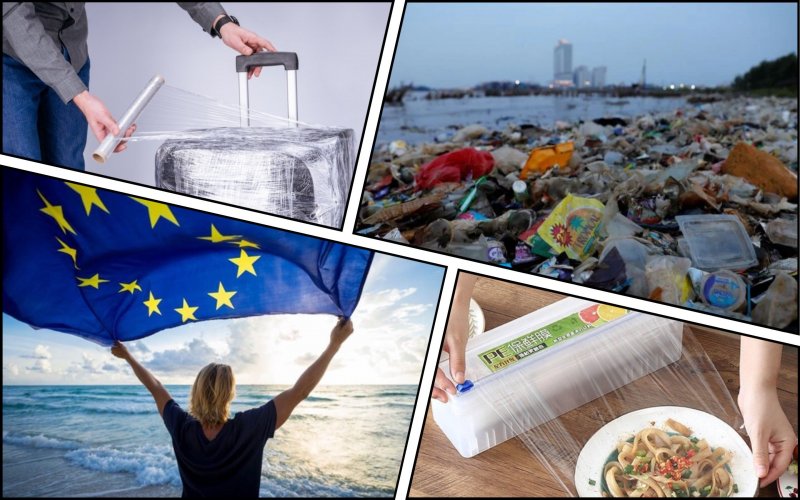
The European Parliament and the Council of the EU have reached a preliminary agreement on a regulation on packaging and packaging waste that, among other things, envisages a ban on certain formats of single-use plastic packaging from 2030.
The ban will apply to packaging for unprocessed fresh produce, food and drinks in cafes, miniature packaging for toiletries and suitcase wrapping at airports, the European Parliament's press office said.
Under the new rules, all packaging must be recyclable. However, materials such as lightweight wood, cork, textiles, rubber, ceramics, porcelain or wax may be an exception. It is also planned to reduce the amount of unnecessary packaging and minimize the content of harmful substances.
It is noted that the regulation also provides for:
- ambitious goals to reduce packaging volumes – by 5% by 2030, by 10% by 2035 and by 15% by 2040;
- reducing plastic packaging waste in EU member states;
- a ban on perpetual PFAS chemicals in food contact packaging, which would be a significant step toward safer food handling and packaging;
- minimum targets for recycled plastic content in packaging;
- a commitment to separate collection of 90% of single-use plastic and metal drinks containers by 2029 through a deposit return system.
- introduction of reusable packaging for drinks other than milk, wine, and flavored wine. By 2030, at least 10% of such packaging must be reusable.
The press service emphasized that under the new rules, distributors of drinks and takeaway food will be required to allow customers to bring and use their own containers, which will encourage reuse.
“These comprehensive measures are aimed at reducing, reusing and recycling packaging materials with the overall goal of making packaging safer and more environmentally friendly, as well as promoting a circular economy in the European Union,” the press service emphasized.
It is noted that in the EU in 2021 the amount of packaging waste increased to 84 million tons, and in 2009 this figure reached 66 million tons. The new rules aim to stop this trend and create a more sustainable and environmentally conscious future.
“For the first time, EU environmental legislation has set targets for reducing packaging consumption, regardless of the material used,” said MEP Frederik Rees. “We call on all industrial sectors, EU countries and consumers to play their part in the fight against excessive packaging.”
She added that banning forever chemicals in food packaging is a big win for the health of European consumers.
Rees stressed that environmental ambitions must be matched by industrial reality. The agreement therefore promotes innovation and provides exceptions for micro-enterprises.
It is noted that the agreement must be officially approved by the European Parliament and the EU Council.
Earlier, EcoPolitic wrote, that Europe's packaging recycling industry faces a similar existential challenge as farmers, as a flood of cheap plastic waste from other countries threatens the profitability of recycling in Europe.
As EcoPolitic previously reported, a number of EU lawmakers are pushing to strengthen a planned microplastic pollution law after millions of plastic pellets washed up on the coast in Spain.