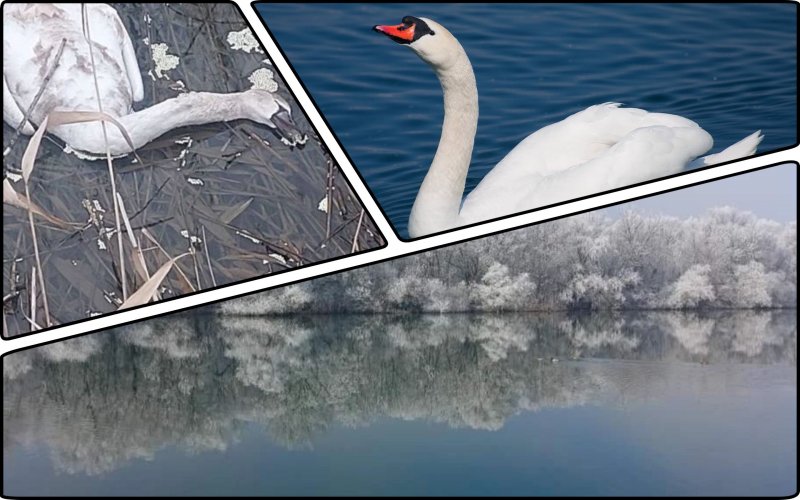
Swans have been dying en masse in Odesa region on the territory of the Lower Dniester National Nature Park for a month – according to preliminary estimates, hundreds of birds have died.
This was reported by the national park's zoologist Mykola Rozhenko, who emphasized that not all areas have been examined yet, Yug.Today reports.
"I can't tell you the final figure right now. We are still counting. Our inspectors are examining individual areas and counting the swans found. For example, about thirty birds were found within Lake Bile," he said. "This will be a serious number. It will be hundreds."
Rozhenko noted that the probable cause of the swans' death is a viral infection. Scientists do not believe the cause of the pestilence is poisoning from food from the fields.
"Swans fly to the fields when the water is frozen. And now there is no ice, and they have more than enough food in the floodplains," he said, adding that the relevant services are now doing all the necessary tests to determine the causes of the pestilence.
It is noted that Ukrainians have also recorded cases of bird deaths on the shores of the Tiligul estuary.
On the Instagram page of the national park, it was reported that on February 6, an urgent meeting was held in the Bilyaiv City Council regarding the death of birds.
Yuliya Ternova, a representative of the Nizhny Dniester National Park, suggested that, in addition to infection, the mass death could have been caused by visitors. After all, people feed swans with bread, which causes indigestion and can even kill them.
At the meeting, it was decided to produce informational posters regarding the rules for feeding birds and products dangerous for them in the near future.
View this post on Instagram
As EcoPolitic reported earlier, at the end of 2022 in Odesa region thousands of mammals and birds died, in particular more than 1000 pheasants, hundreds of gray crows, rooks, badgers, foxes, jackals, etc.