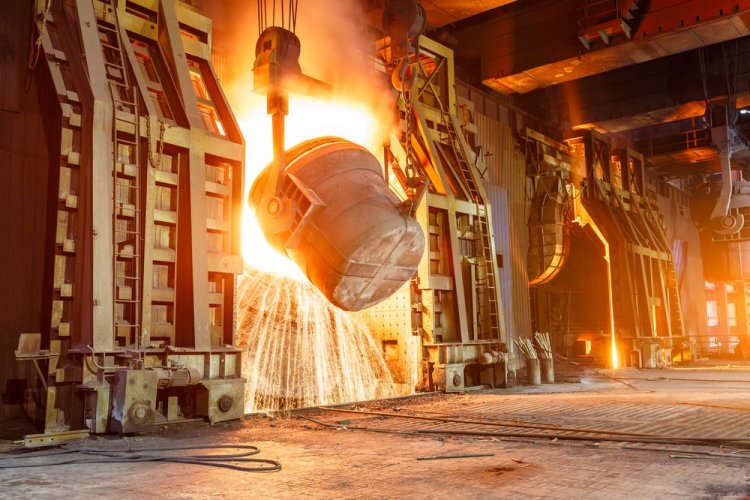
In Germany, metallurgical company Thyssenkrupp Steel Europe has announced a tender for the supply of up to 151,000 tons of green or blue hydrogen by 2036 for its largest plant in the country in Duisburg.
The company plans to sign a ten-year contract for the supply of 104,000 tons of hydrogen in 2028, with a gradual increase to 151,000 tons in 2036-2037, Hydrogen Insight reports.
It is noted that until 2028, the plant will operate on natural gas, which will be part of the mixture until 2037. The capacity to produce 2.5 million tons of direct reduced iron (DRI) per year is planned to be completed by 2026.
The article says that the production of green steel will require about 1.5 GW of electrolyzers and probably 3 GW of new renewable energy. Hydrogen will be delivered through a planned national network of hydrogen pipelines.
The company added that the plant will need electricity from 500 wind turbines to run exclusively on green hydrogen. However, the capacity of these turbines was not specified.
It is noted that Thyssenkrupp Steel's hydrogen tender for Europe will be the second after the initiative of the French oil giant TotalEnergies.
"As a hydrogen supplier for Thyssenkrupp Steel, you will accompany one of the world's largest decarbonization projects and one of the most significant corporate transformations in Germany since the beginning of industrialization," the company appealed to potential applicants.
The statement added that Thyssenkrupp Steel will help develop the EU's hydrogen economy and the necessary infrastructure, which will create millions of new jobs.
Earlier, EcoPolitic wrote, that Hy24 investment hydrogen fund invests €13 million in the development of the Norwegian supplier of hydrogen systems Hexagon Purus.
As EcoPolitic previously reported, a study by the German consulting company Roland Berger showed that by 2030, the annual world production of hydrogen will increase to 110 million metric tons and probably to 240 Mt by 2040. By 2030, capacities will reach p' of the lower part from those required to limit warming to 1.5°C.