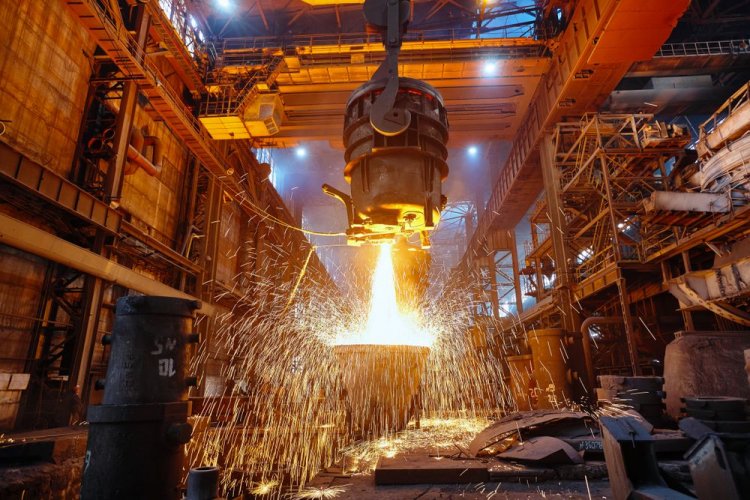
Israeli space startup Helios has invented a technology to produce steel by burning sodium, which can halve energy consumption and eliminate direct carbon emissions.
The startup will demonstrate the technology's capabilities in 2024 at the first pilot plant, which will be able to produce several tons of steel per day, NoCamels reports.
It is noted that the researchers found this method by accident during research on the production of oxygen from lunar soil. Scientists realized that the technology has the potential to solve an acute environmental problem on Earth, namely large carbon dioxide emissions during melting. After all, smelting a ton of steel creates two tons of CO2.
"It is the single alloy that humanity produces the most – 10 times more than all other metals combined," said Helios co-founder and CEO Jonathan Geifman.
He emphasized that the technology requires half the energy compared to traditional steelmaking. After all, sodium in the proprietary equipment needs to be heated to just 400°C to separate oxygen from the iron in the ore. The oxygen then combines with the sodium to form sodium oxide. If the substance is heated to 500°C, the sodium is reduced and ready for use again. In traditional production, carbon must be heated to 1400°C.
It is noted that the startup has already raised $17 million through grants from the government and mining companies. The startup is currently working on expanding the technology. After the launch of the pilot plant, the company plans to sell and license its equipment to conventional steel mills rather than compete with them.
"Our agenda is to decarbonize the industry, and we want to do that as widely as possible," Heifman explained.
He added that commercializing the technology to produce green clean steel is also the shortest path to funding and achieving the ultimate goal of space mining.
Earlier, EcoPolitic wrote, that the Boston Metal company received $20 million from the International Finance Corporation of the World Bank (IFC) for the development of the final technology production of green steel without hydrogen by means of electrolysis.
As EcoPolitic previously reported, scientists from India have developed a new energy-efficient technology at IIT Bombay's NCoE-CCU for capturing carbon dioxide and converting it to CO, with potential for applications in the metallurgical sector.