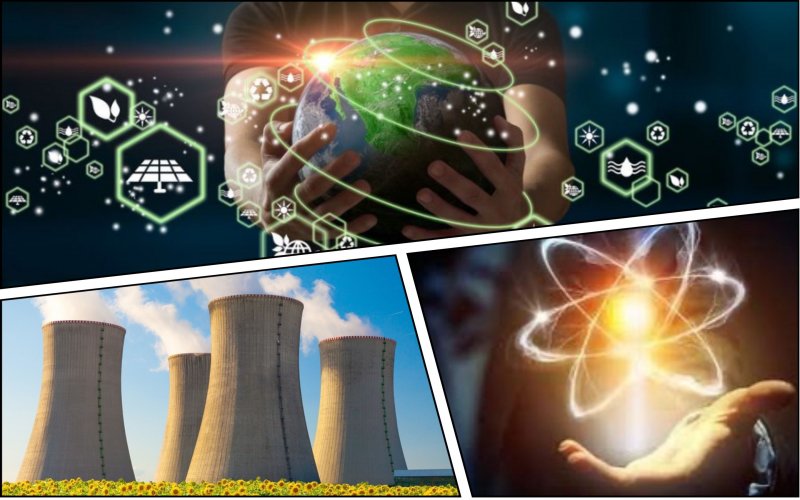
At the COP28 climate summit, 22 countries from four continents signed the Declaration on Tripling Nuclear Power Capacity by 2050.
Such a decision will play a key role in achieving climate neutrality and limiting global warming to 1.5°C, according to the US Department of Energy.
It is noted that the declaration provides for joint work to achieve the goal of tripling nuclear power capacity worldwide by 2050. It also calls on shareholders of international financial institutions to encourage the inclusion of nuclear energy in energy lending policies.
The report said that the following countries had joined the agreement:
- USA;
- Bulgaria;
- Canada;
- the Czech Republic;
- Finland;
- France;
- Ghana;
- Hungary;
- Japan;
- Republic of Korea;
- Moldova;
- Mongolia;
- Morocco;
- Netherlands;
- Poland;
- Romania;
- Slovakia;
- Slovenia;
- Sweden;
- Ukraine;
- United Arab Emirates (UAE);
- United Kingdom.
UN News reported that 123 countries also signed the Declaration on Climate and Health at the summit. It recognizes the need for governments to protect communities and prepare health systems to deal with climate-related health impacts such as extreme heat, air pollution and infectious diseases.
The Declaration covers a number of areas of action related to climate and health, including:
- creating more climate-resilient health care systems;
- strengthening intersectoral cooperation to reduce emissions;
- maximizing the health benefits of climate action;
- increasing funding for climate and health solutions.
"Despite the fact that the climate crisis is a health crisis, COP27 passed without a serious discussion of health," said the Director-General of the World Health Organization, Dr. Tedros Adhanom Ghebreyesus.
He emphasized that environmental health, sea level rise, wildfires, heat waves and melting glaciers directly affect human health. Between 2030 and 2050, climate change is expected to cause tens of thousands of additional deaths per year from malnutrition, malaria, diarrhea and heat stress alone.
The Ministry of Environment and Natural Resources reported that COP28 also announced a number of new financial commitments on climate and health, including commitments to:
- $300 million Global Fund for Health Systems Training;
- The Rockefeller Foundation – $100 million to scale climate and health solutions;
- the government of Great Britain – up to 54 million pounds.
"This event is of historic significance, demonstrating cooperation and determination in creating a sustainable future in the face of the climate crisis," the message emphasized.
Earlier, EcoPolitic wrote, that more than 60 countries have agreed to support the agreement of the EU, the USA and the UAE to triple the use of renewable energy by 2030 and abandon the use of coal.
As EcoPolitic previously reported, the Committee of the European Parliament on Industry, Research and Energy reached an agreement on the inclusion of all types of nuclear energy in the list of green technologies for the revival of EU industry.