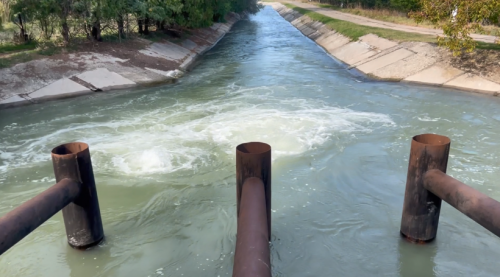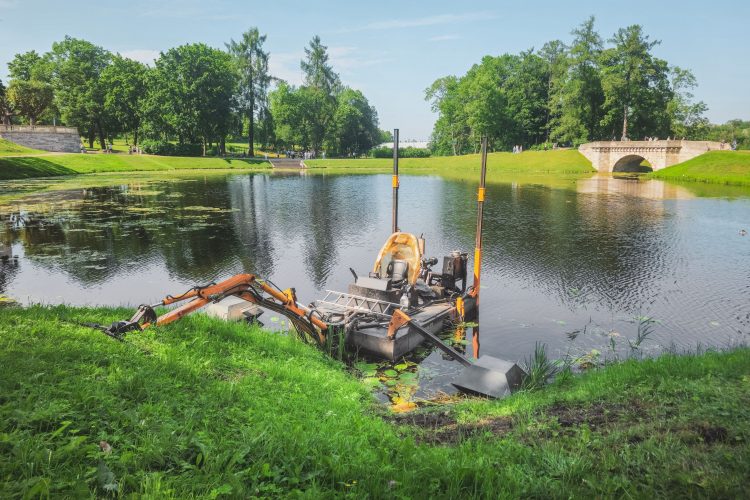
In the Kryvyi Rih district, near the new water intake structures built following the destruction of the Kakhovka Hydroelectric Power Station, 13 km of the Ingulets riverbed is to be dredged. The silting up of the river has already been declared a man-made emergency. The work is scheduled to be completed by the end of 2027 and will cost 608.25 million hryvnias.
This was reported on the ‘Nashi Hroshi’ website.
About the contractor and the scope of works
The Infrastructure Restoration and Development Service in the Dnipropetrovsk region has already signed a contract with White Ltd. The funding for 2026 amounts to 145.37 million UAH and will be provided from a special fund within the local community budget. The remainder is to be paid next year from other sources.
The clearing work will be carried out within the Novolativska community. The main aim is to maintain water levels and the hydrological regime.
UAH 1.8 million has been allocated for design and expert assessment. These activities are to be completed by the end of 2026.
Construction work will be the most expensive part of the project, costing 606.45 million UAH. The project brief specifies the implementation of measures for silt filtration and bank reinforcement. This is intended to ensure the trouble-free operation of the ‘Ingulets River – Pivdenne Reservoir’ water pipeline, which supplies water to Kryvyi Rih. It was built after the Russians destroyed the dam at the Kakhovka Hydroelectric Power Station, thereby disrupting the standard water supply system to the city.
The procurement was carried out without a tender, given the objective circumstances preventing compliance with standard deadlines. The justification also refers to a pilot project by the Cabinet of Ministers, which accelerates the implementation of measures within the framework of comprehensive sustainability plans. It should be noted that this is the very same pilot scheme to which the Kyiv authorities refer when felling over 600 trees to lay a heating pipeline in the Teremky district.
The scale of the problem
The severe silting up and blockage of a 13-kilometre stretch of the Ingulets riverbed is already being described as a man-made emergency. It poses a risk of incidents in the water supply system, which could occur at a local level and escalate to a regional scale.
The project also notes that there is no time to delay the work. Given the threat of damage to water supply facilities from Russia, the city could find itself without a centralised water supply. This, in turn, risks a deterioration in the sanitary and epidemiological situation and disruption to the functioning of critical infrastructure.
EcoPolitic reported that there has been a critical decline in river water levels in Ukraine. In western Ukraine, the highest alert level has been declared due to low water levels, and water abstraction limits have been imposed on 300 businesses.
Overall, over the past 30 years, around 30 per cent of rivers in Ukraine have dried up or become fragmented.