In France, the share of renewable energy reached 20.7% of gross final consumption in 2022, up 1.4% from 2021.
During this time, a record 5 GW of green capacities were put into operation, reports EURACTIV.
The French Ministry of Energy explained that such indicators were achieved due to the increase in green capacities in combination with:
- reduction of final energy consumption due to energy saving measures;
- low availability of nuclear energy;
- record high energy prices.
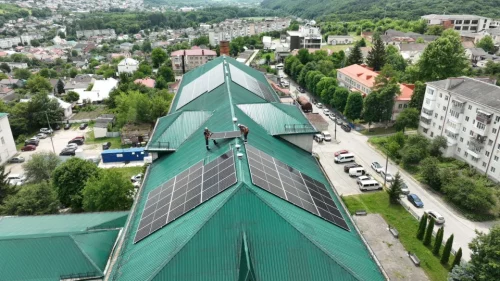
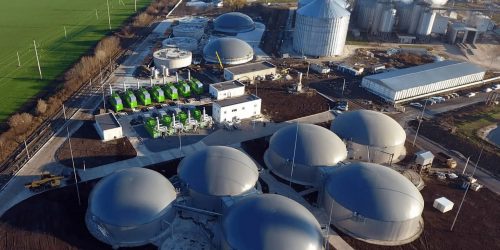
It is noted that the greatest development of renewable energy has occurred in three sectors. So in 2022 capacity wind energy increased by 9%, biogas - by 13%, and solar energy - by 31%.
The material emphasized that the share of renewable energy sources in France is constantly growing. However, such an increase is not enough to meet the country's ambitious new goal of 100 GW of solar and 40 GW of offshore wind power by 2050.
Since 2015, France has been following a pace similar to Germany, Energy Minister Agnes Pannier-Runashe said. Thus, in 2021, France and Germany reached 19.3% and 19.2% of the share of renewable energy sources in their gross final energy consumption.
The country failed to meet the target set in the Renewable Energy Directive (RED) 2018 of 23% of final energy consumption from renewable sources by 2020. Germany had to reach the target of 18%.
Representatives of the main French electricity transmission operator RTE said that although the country is on the right track, efforts are still not enough to achieve national and EU goals. Therefore, their acceleration is still important.
Earlier, EcoPolitic wrote, that France's Energy Transition Minister Agnes Pannier-Runachet said that in the 4th quarter of 2022, the country reduced emissions by 8.5%.
As EcoPolitic previously reported, in March 2023, the European Commission began drafting a zero-emissions industry law to speed up permit procedures for key projects in 5 green technology areas.