Moving away from gas may seem like a distant prospect, but in Chortkiv, in the Ternopil region, they are already turning this into concrete projects. The town has secured millions of euros and is installing solar power stations and batteries.
The mayor of Chortkiv, Volodymyr Shmatko, spoke about this in an interview with the media outlet ‘Espreso’.
There is no one-size-fits-all solution
Every town is unique in terms of its energy infrastructure, so there is currently no one-size-fits-all solution. In Chortkiv, they have analysed the actual situation and are gradually building a system that is more resilient to crises.
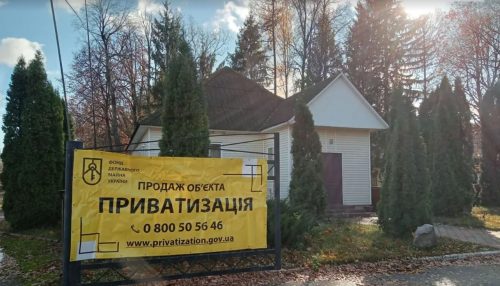
Since 2017–2018, the housing stock has been ‘cut off’ from the centralised heating supply — residents have switched to individual heating. The town provided subsidies to low-income residents. It is also now the second year that six boiler houses belonging to the regional energy company, which heat public sector buildings, have been transferred to Chortkiv. According to the mayor, they can run not only on gas but also on solid fuel, and are also equipped with generators.
Moving away from gas
In May 2026, Chortkiv signed the Declaration of Gas-Free Cities. Volodymyr Shmatko emphasised that this was a considered and deliberate move.
"This is about energy management, about energy efficiency, about reducing CO₂ emissions into the environment, about our climate strategy, and about our community development strategy. We are steadily moving towards the goal of reducing our consumption of all forms of energy," emphasised the mayor of Chortkiv.
Of course, the phase-out should be gradual — by 2050. And it applies primarily to the public sector, rather than the general public.
International funding: challenges in its use
At the same time, the community is constantly seeking funding for alternative sources of energy generation. Chortkiv is ready to serve as a pilot site for the development of a carbon-neutral energy sector, so the authorities are openly appealing to partners for support. For instance, Greenpeace is set to assist in finding partners for the procurement of heat pumps.
Chortkiv’s certification in energy management also paves the way for funding. The town is a participant in the ‘European Energy Award’.
According to the mayor, an entire department is working on securing grants. In 2026 alone, the city secured funding of one million euros, but was unable to accept it all because it lacked the necessary funds for co-financing.
A particular challenge is the length of the process and the specific European procedures.
"It takes three years to secure international funding. For example, to insulate a school at a cost of 3 million euros, the firm has been running a tender in accordance with European Union rules for the second year running. The grant was signed in 2025 (the funds are provided by the Norwegian government), but we haven’t even started the work yet. In other words, the system works, but very slowly, given the European and Ukrainian bureaucracy. These are lengthy processes, so not all local authorities are happy with this,” said the mayor.
The most advanced solar power generation
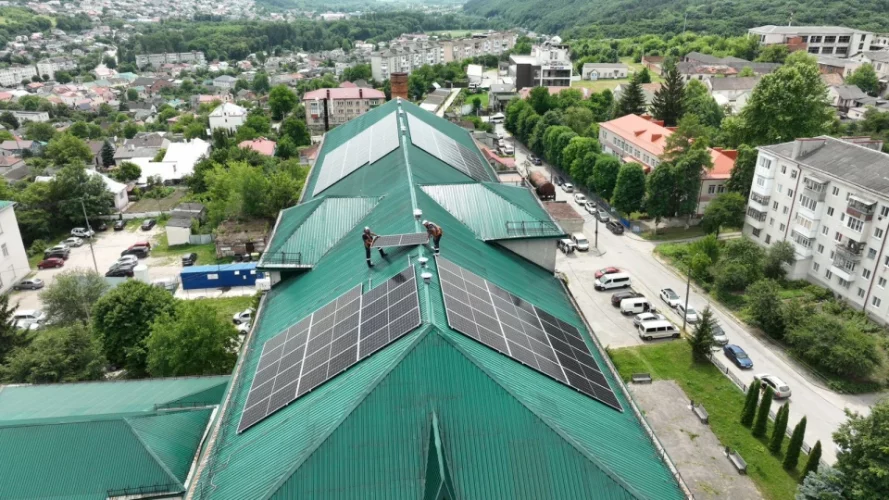
Chortkiv currently has one of the largest municipal networks of solar power stations in Ukraine. By the end of the year, the town plans to reach 1 MW of generation capacity, including storage. The network covers schools, nurseries, social centres and other municipal institutions.
Six more solar power stations with batteries are currently being installed in the city — for nurseries. The stations were provided to the city by the UNDP, and the Red Cross is responsible for their installation.
In Chortkiv, too, plans are being considered to create their own ‘energy island’. The town has transformer substations that were handed over to the local community following the decommissioning of military facilities. However, there are no power lines connecting them, and this is also a rather costly undertaking.
"Our approach is to maximise the use of solar power stations and batteries so that all facilities can operate autonomously for as long as possible. Generators are only for emergencies. At the same time, I am inspired by the Danish example of using heat pumps to conserve heat," emphasised Volodymyr Shmatko.
However, the mayor is not quite so optimistic about using waste as fuel for power generation. He says the local population is rather conservative. Chortkiv does not even have its own waste sorting plant, as there is not enough waste to make the project viable. And the local population would not welcome the acceptance of waste from neighbouring communities, bearing in mind the experience of the Lviv waste crisis.
EcoPolitics previously reported that the combined capacity of wind and solar power stations in Ukraine currently exceeds 8.4 GW. Solar power accounts for the lion’s share — 7.4 GW.
Ukrainian companies are stepping up the development of their own solar power stations in order to remain self-sufficient during power cuts. EcoPolitics reported on the experiences of individual businesses in a separate article.