A study by climate think tank Ember found that global carbon emissions from energy production peaked in 2022 and will begin to decline.
This is due to the growth of solar and wind energy capacities, Bloomberg reports.
It says that the pace of CO2 reduction in the energy sector is critical to limiting global warming and preventing further damage from climate change.
According to the researchers, emissions will begin to decrease little by little from 2023. The trend will continue until at least 2026 as renewable energy sources continue to grow.
"This is the beginning of the end of the fossil fuel era," said Ember analyst Malgozhata Vyatros-Motyka.
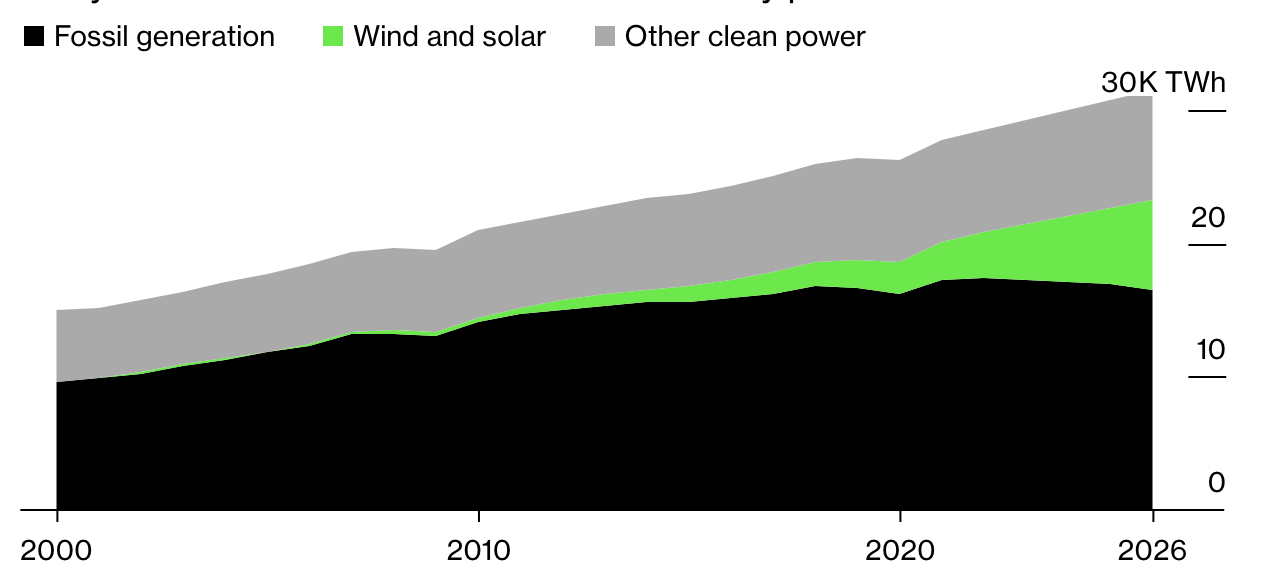
The peak of electricity production from fossil fuels falls on 2022
The article emphasized that despite the surge in the construction of wind power plants and solar parks, these technologies have not yet been able to stop the demand for burning fossil fuels.
According to the International Energy Agency, in 2022 RES helped meet the vast majority of additional electricity needs. However, despite a global commitment to phase out fossil fuels, coal-fired generation has reached new record levels.
It is noted that the energy crisis helped push energy security to the top of the political agenda. This helped push countries to use local "green" energy.
Ember predicts that in 2023 renewable capacity will grow enough that overall fossil fuel electricity generation will decline slightly and continue to decline until at least 2026. In 2023, renewable energy sources may receive additional support from:
- the weak global economy, which may affect the demand for electricity;
- restoring nuclear and hydropower plants after maintenance problems and drought.
“While any reduction in fossil fuel-based electricity generation is positive for the fight against climate change, the figures show how far we still have to go to meet the Paris Agreement's goal of limiting global warming to 1.5°C.” – it is stated in the material.
The study showed that despite the reduction in the use of fossil fuels, in 2026, energy production from "dirty" sources is expected to increase by 3% from the level of 2015 (the year of the signing of the Paris Climate Agreement).
Earlier, EcoPolitic wrote, that a new study by the UN Intergovernmental Panel on Climate Change (IPCC) showed that by the beginning of the 2030s, the world will exceed the warming limit by 1.5°C, and by 2100 it will reach 3.2°C.
As EcoPolitic previously reported, the climate ministers of the G7 (G7) countries may advocate new investments in gas supply, despite globally agreed goals on climate change.