In the Sea of Azov, in the area from the village of Primorskyi Posad to the city of Berdyansk, Zaporizhzhia region, specialists of the Operational Headquarters for Fixing Ecocrimes discovered an oil spill on an area of 1,434 square kilometers – both a thick and a thin layer.
The spill took place in the territory temporarily controlled by the Russian army, but the occupiers are not taking any measures to eliminate the consequences, writes Olena Kryvoruchkina, a deputy from Sluga Naroda and a member of the environmental parliamentary committee, on Facebook.
The catastrophic situation was recorded using satellite imagery on Friday, September 2, when its size reached 811.11 km2. However, the analysis of satellite data for September 3 showed that its size had increased to 1,434 square kilometers.
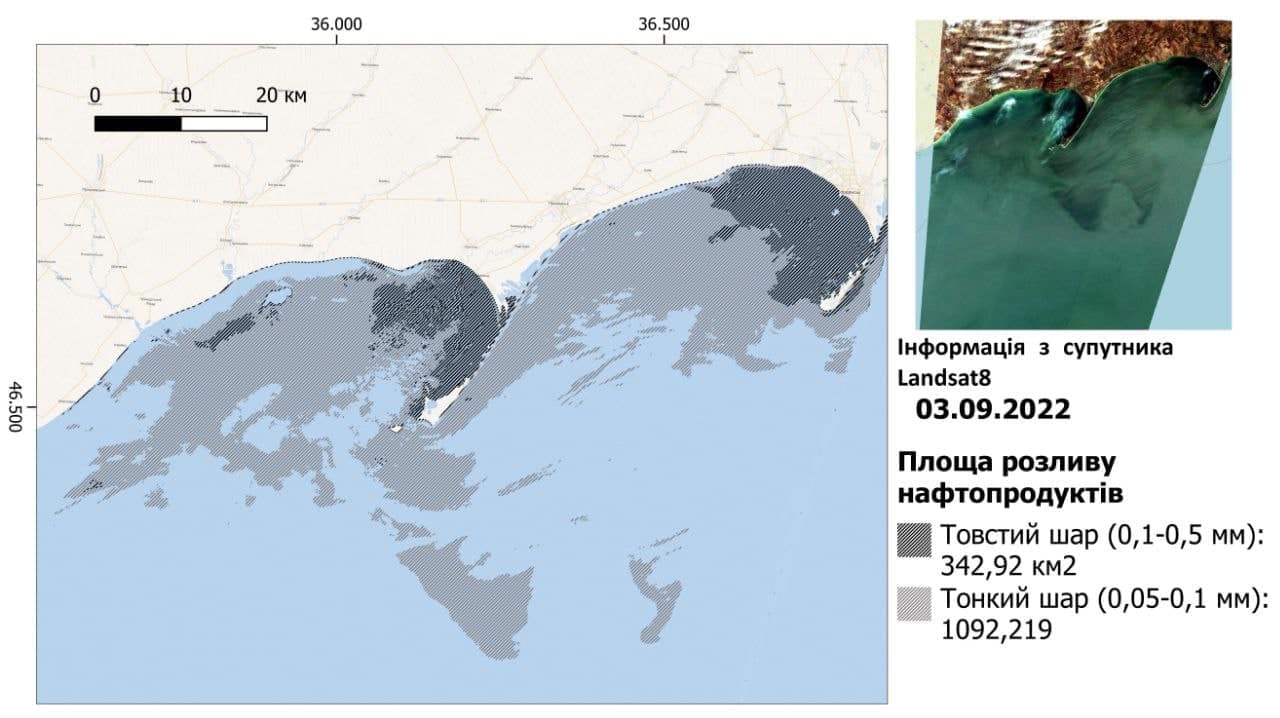
"Currently, it is impossible to carry out additional examinations related to the sampling of water and coastal soils, because the spill occurred within the territory temporarily controlled by the army of the occupying country. There are also currently no reliable data on the causes of these oil stains," Kryvoruchkina said.
She also emphasized that the Operational Headquarters continues to monitor the situation, and the event has already been entered into the unified register of eco-crimes.
Earlier, EcoPolitic wrote, that in the village of Rudnya, Zhytomyr region, the depressurization of the pipeline and the spilling of the substance on the topography of the area were recorded, similar to diesel fuel.
As EcoPolitic previously reported, russian occupation authorities in captured Mariupol, Donetsk region, banned swimming in the Sea of Azov and hid the reasons.