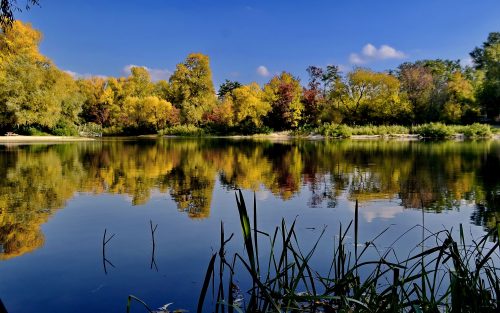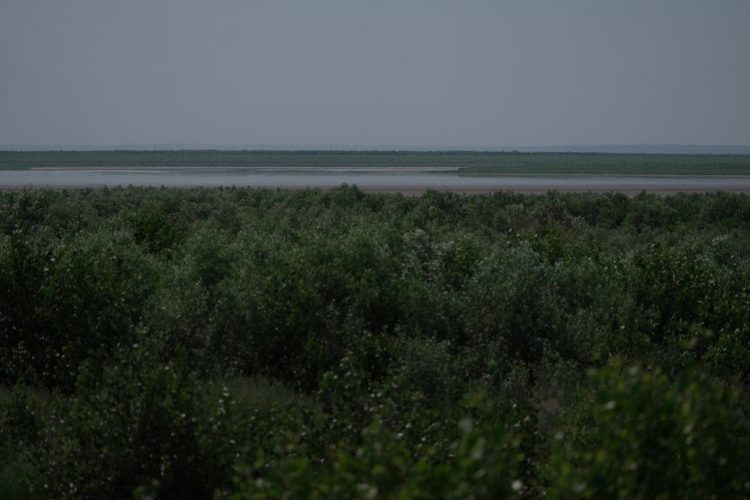
Instead of a vast reservoir, there are now picturesque young forests and floodplains teeming with birds, insects and small mammals. This is what Velykyi Lug looks like today, having begun to recover following the destruction of the Kakhovka hydroelectric power station dam by the Russians. Rare birds and fish are returning to the area, and this entire natural complex has the potential to become one of Ukraine’s finest nature reserves.
The media organisation ‘Suspilne’ reported on this in a series of articles; its journalists, together with environmentalist Vadym Manyuk, investigated the area.
The forest is getting taller and taller
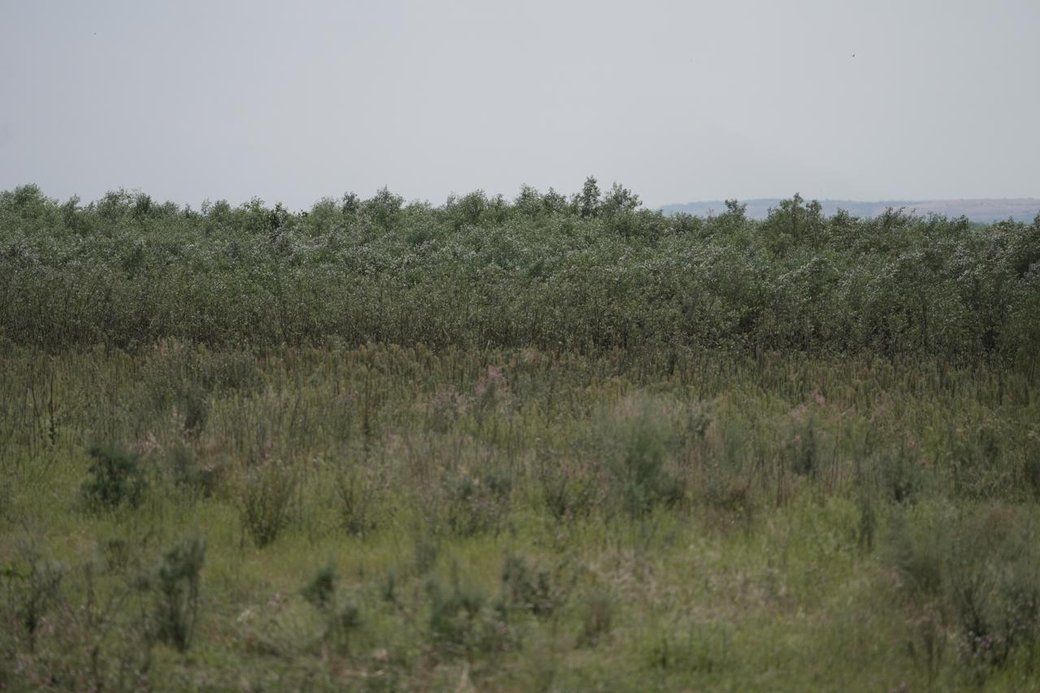
The bed of the former reservoir is now covered with a young floodplain forest. In some places, the trees have already grown to a height of 10 metres. The forest consists mainly of willows and poplars.
The ecologist noted that the trees’ root systems must already have penetrated to the water-bearing layers. This makes the forest more resilient to droughts. However, he observed that the rate of growth had slowed compared with previous years.
"It’s hard to say what the decisive factor is here: whether it’s the fact that there were droughts, or simply that the trees have grown taller – that’s normal. In the early years, trees grow very quickly, and then their growth gradually levels off and they grow more slowly," remarked Vadym Manyuk.
Source: Suspilne
It’s all down to water
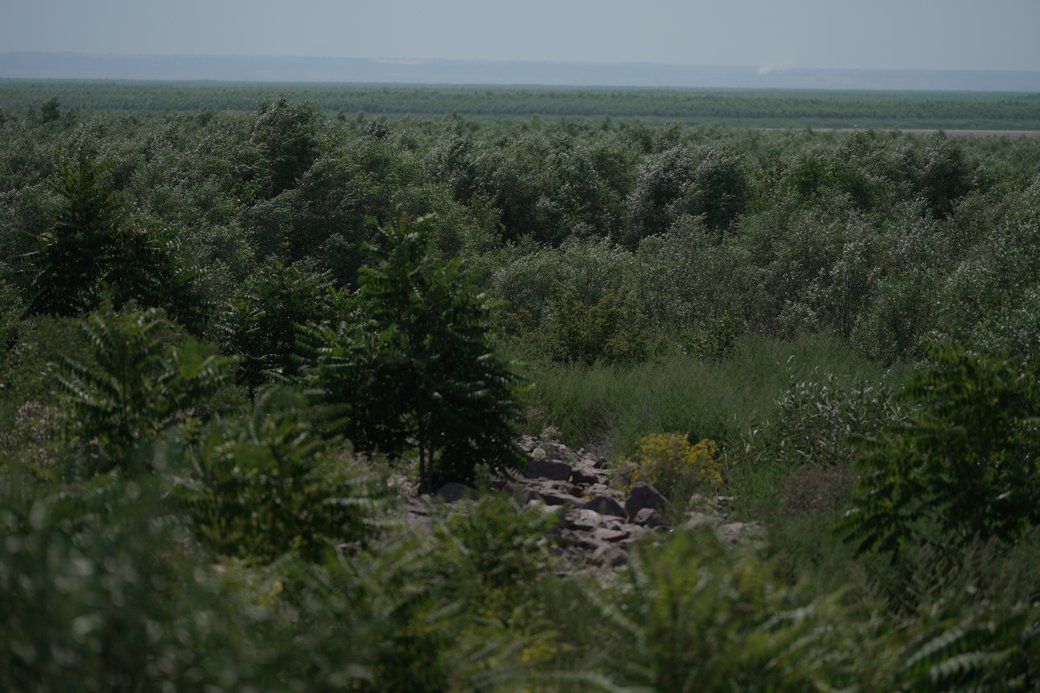
The landscape of the new Velykyi Luh began to take shape in the very first years following the disaster. Trees began to grow in the low-lying areas with damp soil. In places where water lingers for longer, marshes are forming.
At the same time, the structure of the floodplains changes every year. This year, there is more water there than before. And every year, environmentalists record the accumulation or erosion of small islands.
"Because the floodplains have filled with water this year, of course, the grass, insects, amphibians and birds will now thrive there. Water is the lifeblood of the floodplains. Even a rise of just 10 centimetres makes a significant difference. It literally transforms the ecosystem — it comes alive and flourishes,” says Manyuk.
Generally speaking, there are more marshes and floodplains in the lower part of the Velykyi Luh, closer to Nikopol. The upper, Zaporizhzhia part, on the other hand, is drier. Willow forests predominate there.
And the soil in this area is still quite young. It needs at least 50 years to fully form.
Source: Suspilne
A burst of biodiversity
As the natural conditions become more favourable, the Velykyi Lug is becoming home to an increasing variety of plant and animal species, including some rare ones.
Scientists have recorded at least 320 species of flowering plants here. The number of bird and insect species is on the rise. Another trend is the increase in the number of forest species in young floodplain forests, particularly foxes and hares. These are sometimes spotted by military drones.
"There will be more and more of them. Small in size, various birds from the passerine order, various warblers, and perhaps even titmice and swallows. Swallows always stick together; there seem to be more of them, as specific species of insects live in the canopy of the trees," noted the ecologist.
For the second year running, pelicans have been spotted in Velykyi Luz. Whilst there is as yet no evidence that they are nesting there, they are undoubtedly using the area. And this year, Red List sturgeons have been spotted in the Dnipro.
Military threats
It is currently extremely difficult to explore the Velykyi Lug — enemy positions are already in place on the other side of the river. ‘Suspilne’ reported that, due to the risk of drone attacks, they were only able to stay at each location for no more than 10 minutes.
There is also a part of the meadow that is completely inaccessible for security reasons. It is therefore not known for certain what the situation is there in terms of the ecosystem.
However, the Velykyi Lug is already showing the potential to become a thriving multi-layered forest with floodplain ecosystems. And, according to the ecologist, destroying it a second time by building a dam would be an act of ecocide.
"If we leave everything as it is, we will end up with a unique natural site in Ukraine’s steppe region. It could be the finest biosphere reserve. It might even rival the Chernobyl Biosphere Reserve in some respects. They share a similar fate. That one was formed as a result of a disaster, and this one has been formed as a result of a disaster,” emphasised Vadym Manyuk.
EcoPolitic reported that back in June this year, around a hundred organisations called for the Velykyi Luh to be recognised as a UNESCO World Heritage Site. It is valuable not only from an environmental perspective, but also from a historical one — as the cradle of the Ukrainian Cossacks.