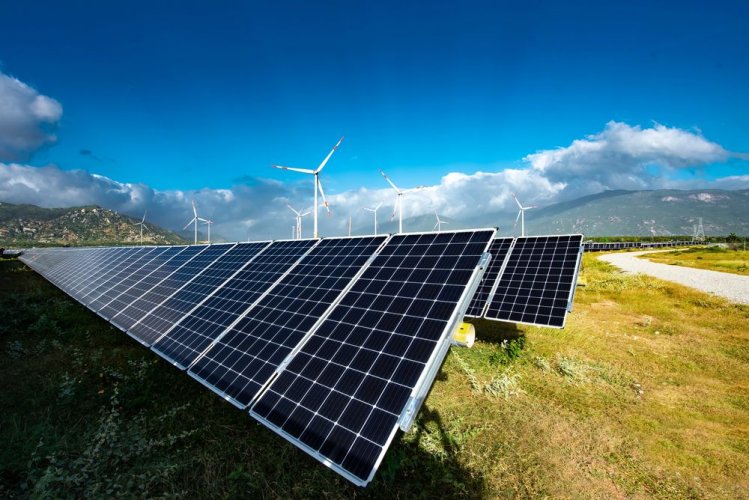
Scientists from Stanford University, USA, have developed a cheap lens for solar panels that can collect up to 90% of light and increase its brightness by 3 times.
Passive light focusing technology on photocells Axially Graded Index Lenses (AGILE) can help reduce the area of SPPs, reports Nature.
The researchers explained that solar energy will play an important role in meeting sustainable future energy needs. The technology can help install solar panels on small areas where this was previously impossible.
AGILE does not require sun tracking and adheres to the maximum limit of cosine projection, concentrating light falling on it from all angles.
Thanks to AGILE, focusing systems can be used without pointing (without the need to follow the Sun), which reduces the amount of photovoltaic material needed, and also effectively absorbs stray light. After all, light scattering due to cloud cover and the atmosphere can reach 20% even on a sunny day.
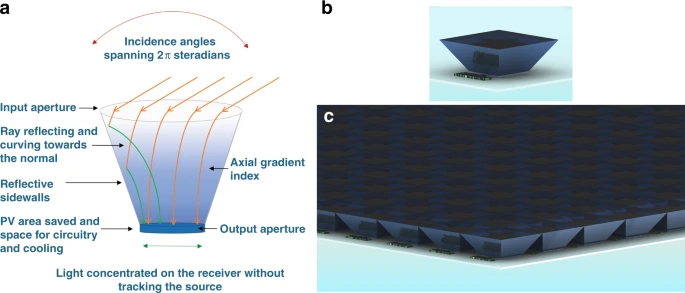
AGILE concept
The AGILE hub matrix system consists of a repeating block that absorbs all incident light and therefore appears dark.
These graded-index immersion optics also have applications in areas such as light control in solid-state lighting, laser couplers, display technology, and more.
The scientists used strong, broadband transparent and inexpensive graded materials for two AGILE prototypes: a glass pyramid made by stacking different glass plates, and a polymer array of overlapping cones.
“Results from functional prototypes demonstrate that graded immersion index technology can dramatically improve the way light is concentrated and combined. AGILE has the potential to significantly improve optoelectronic systems by reducing cost, increasing efficiency, providing a scalable focusing system with built-in anti-reflection and encapsulation without the need for tracking," the researchers concluded.
We will remind they launched at the US military base a large floating SPP.
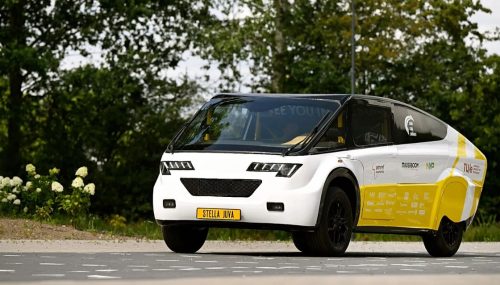
As EcoPolitic previously reported, electric car on solar batteries was created first in the world in the Netherlands.